 Save
Save My mother always said the best desserts are the ones that make people pause mid-conversation, and pavlova does exactly that. There's something almost magical about cracking into that crisp exterior and discovering the marshmallow-soft center waiting beneath—it's like edible drama. I stumbled onto making this for her Mother's Day brunch after finding her old recipe card tucked in a cookbook, complete with coffee stains and underlined warnings about humidity. That first attempt taught me more about patience and precision than any dessert I'd made before.
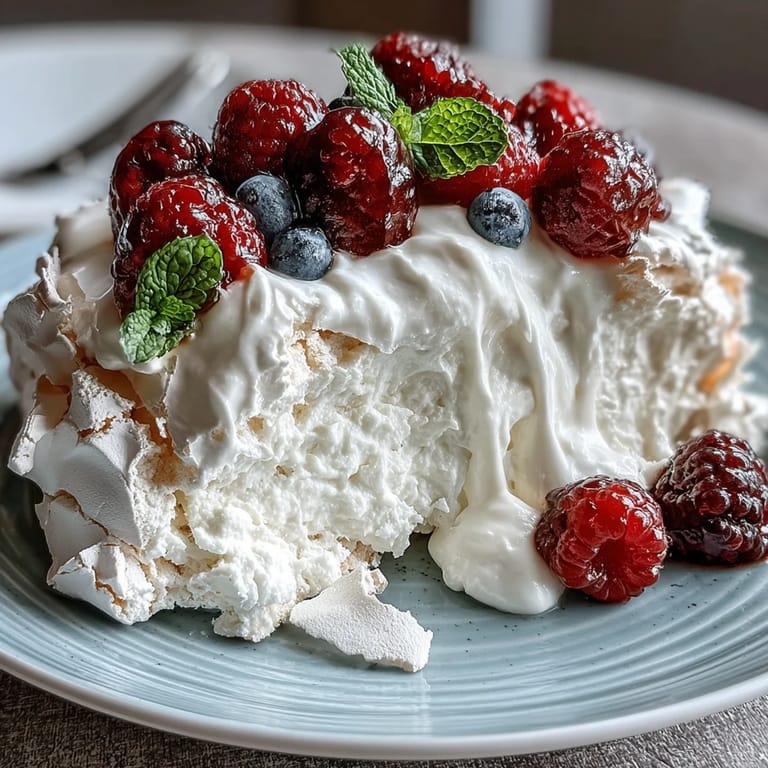
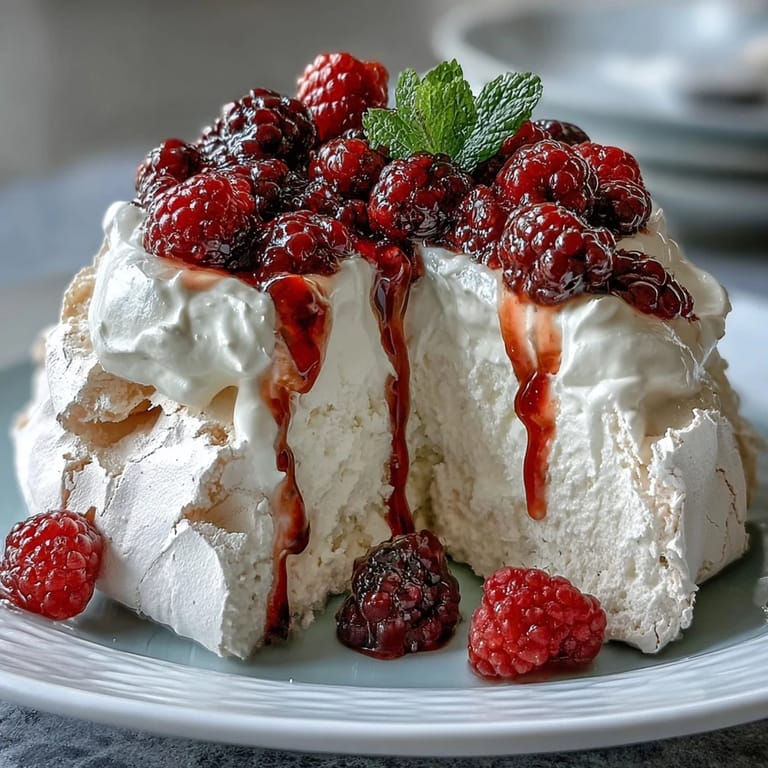
The year I actually nailed this, my sister arrived early to find me standing in front of the oven with a notebook, tracking the color change like some kind of dessert scientist. She laughed at my intensity until the pavlova emerged perfectly pale gold, and then she got it—this dessert demands respect. Watching my mother's face when she saw it sitting there, glistening with cream and berries, made every careful second worth it.
Ingredients
- Egg whites (4 large, room temperature): Room temperature whites whip to greater volume and stability—cold eggs are stubborn and won't reach those glossy peaks.
- Superfine sugar (1 cup): This dissolves completely into the meringue, creating that signature glossy finish; regular sugar can leave grittiness.
- Cornstarch (1 tsp): This hidden ingredient prevents the meringue from weeping and helps maintain that crisp-exterior, soft-interior magic.
- White vinegar (1 tsp): Stabilizes the meringue and keeps it from collapsing—don't skip it even though you won't taste it.
- Pure vanilla extract (1 tsp for meringue, 1 tsp for cream): Use pure, not imitation, for a cleaner flavor that doesn't compete with the berries.
- Heavy whipping cream (1 cup, chilled): Cold cream whips faster and holds peaks better—warm cream becomes butter before it becomes clouds.
- Mixed berries (4 cups total): Use the freshest berries you can find, and add them just before serving so they don't weep onto the cream.
- Powdered sugar (3 tbsp total): A light dusting at the end adds elegance without overwhelming the delicate structure.
Tired of Takeout? 🥡
Get 10 meals you can make faster than delivery arrives. Seriously.
One email. No spam. Unsubscribe anytime.
Instructions
- Prepare your workspace:
- Preheat the oven to 250°F and line a baking sheet with parchment paper, tracing a 9-inch circle as your guide. Make sure your mixing bowl and whisk are absolutely clean and dry—any trace of oil or yolk will sabotage your meringue.
- Build the meringue foundation:
- Beat the egg whites with a pinch of salt until soft peaks form, then gradually add the superfine sugar one tablespoon at a time while beating. This slow addition ensures the sugar dissolves completely and the mixture becomes glossy and thick, taking about 5 to 6 minutes total.
- Fold in the stabilizers:
- Gently fold the cornstarch, vinegar, and vanilla into the meringue using a spatula, being careful not to deflate those precious air bubbles. The mixture should look silky and hold stiff peaks when you lift the spatula.
- Shape your nest:
- Spoon the meringue onto the parchment circle, creating slightly raised edges to form a shallow nest that will cradle the cream and berries. Don't stress about perfection—rustic edges add charm.
- The long, slow bake:
- Bake for 1 hour 15 minutes at 250°F, which dries out the meringue rather than cooking it harshly. Turn off the oven and leave the door slightly ajar while it cools completely—this gentle transition prevents cracking.
- Whip the cream:
- While the pavlova cools, chill your bowl and beat the heavy cream with powdered sugar and vanilla until soft peaks form. Stop as soon as the peaks hold their shape—overbeating turns it grainy.
- Assemble with care:
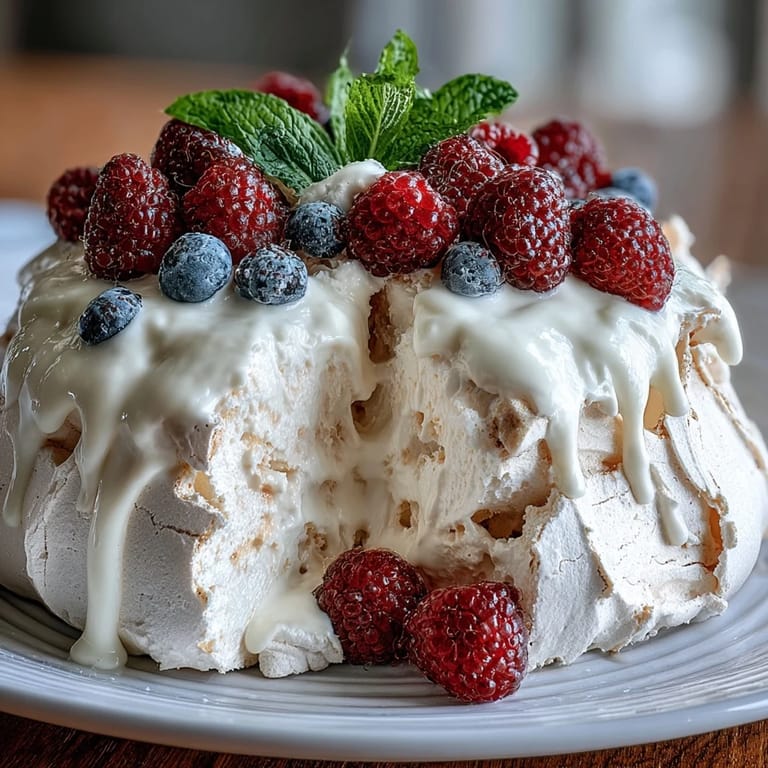
- Once cooled, transfer the meringue to your serving platter and spread or dollop the whipped cream generously over the top. Arrange the mixed berries and fresh mint leaves on top, creating pockets of color.
- Finish with flourish:
- Just before serving, dust lightly with powdered sugar if desired, giving it that bakery-window shine. Serve within a couple of hours so the meringue stays crisp.
 Save
Save There's a peculiar joy in slicing into a pavlova at the table and hearing that satisfying crack of the shell collapsing into soft clouds. It's one of those dishes where the eating experience becomes the memory—the conversation pauses, someone closes their eyes for a moment, and you realize food can be poetry.
Mastering the Meringue
The meringue is where all the drama lives, and once you understand what it needs, you'll make it fearlessly. I learned that the transformation from foamy egg whites to glossy peaks is a visual conversation—you're watching the meringue tell you when it's ready, not watching the clock. The gradual sugar addition isn't just fussy technique; it's the difference between a cloud and a collapsed disappointment.
Berry Selection and Timing
Fresh berries are non-negotiable here because they're the final flavor statement on an otherwise mild-mannered dessert. I once made this in late August when the farmers market was overflowing with blackberries and raspberries that had clearly ripened in actual sunshine, and the difference was stunning. The tartness of fresh fruit against the sweet meringue and cream creates a balance that makes you want another spoonful immediately.
Creating Restaurant-Quality Presentation
This dessert is naturally photogenic, but a few small choices elevate it from homemade to showstopping. The scattered mint leaves and final powdered sugar dusting take thirty seconds but transform the whole thing into something you'd see in a fancy bakery case. Arrange your berries with slight intention—a few clustered together, others scattered—rather than trying to make it symmetrical, which actually looks less refined.
- Transfer the cooled pavlova to a serving platter at least an hour before guests arrive so you're not stressed during the moment.
- Keep the whipped cream chilled until the last possible second, and assemble no more than two hours before serving to maintain texture contrast.
- Offer a sharp spoon or cake server for slicing, as the meringue demands a decisive cut rather than gentle pressure.
 Save
Save Pavlova is one of those desserts that tastes like celebration without requiring you to be a professional baker. Make it for someone you want to impress, and watch how a simple combination of whipped egg whites becomes an edible occasion.
Recipe FAQs
- → How do I achieve the perfect meringue texture?
Beat egg whites with a pinch of salt until soft peaks form, then gradually add superfine sugar until stiff peaks and glossy texture appear. Fold in cornstarch, vinegar, and vanilla gently.
- → Can I substitute the berries?
Yes, seasonal fruits like kiwi, peaches, or passionfruit can be used for variety and color.
- → Why is slow baking important for this dessert?
Slow baking at a low temperature ensures the meringue crisps on the outside while keeping a soft, marshmallow-like center.
- → How should the pavlova cool after baking?
Turn off the oven and leave the pavlova inside with the door slightly ajar to cool completely and prevent cracking.
- → What is the role of vinegar and cornstarch in the meringue?
Vinegar stabilizes the egg whites, while cornstarch helps create a soft center and crisp shell texture.
- → Can this dessert be made gluten-free and vegetarian?
Yes, this pavlova is naturally gluten-free and vegetarian-friendly, using egg whites and cream in its preparation.