 Save
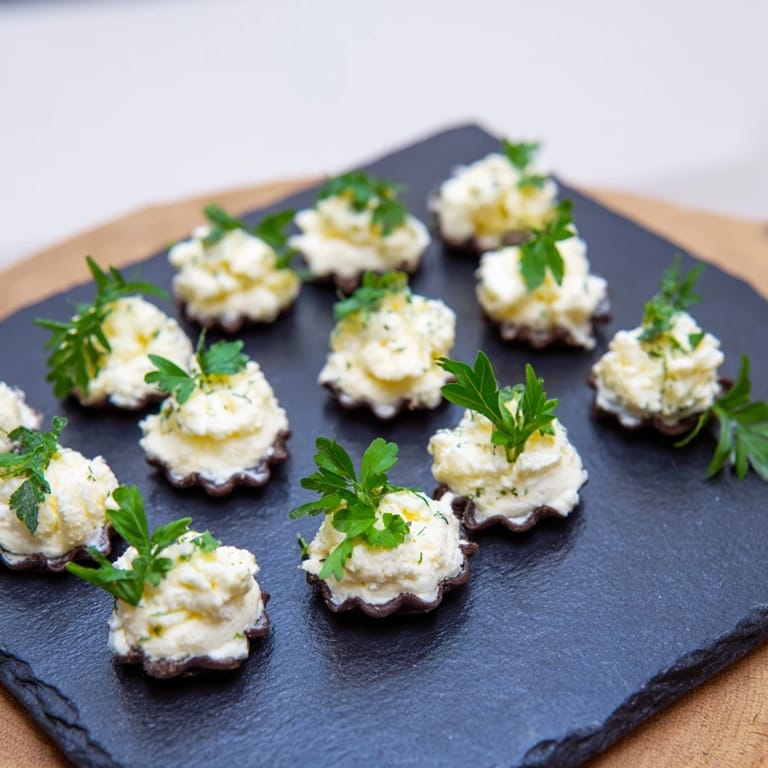
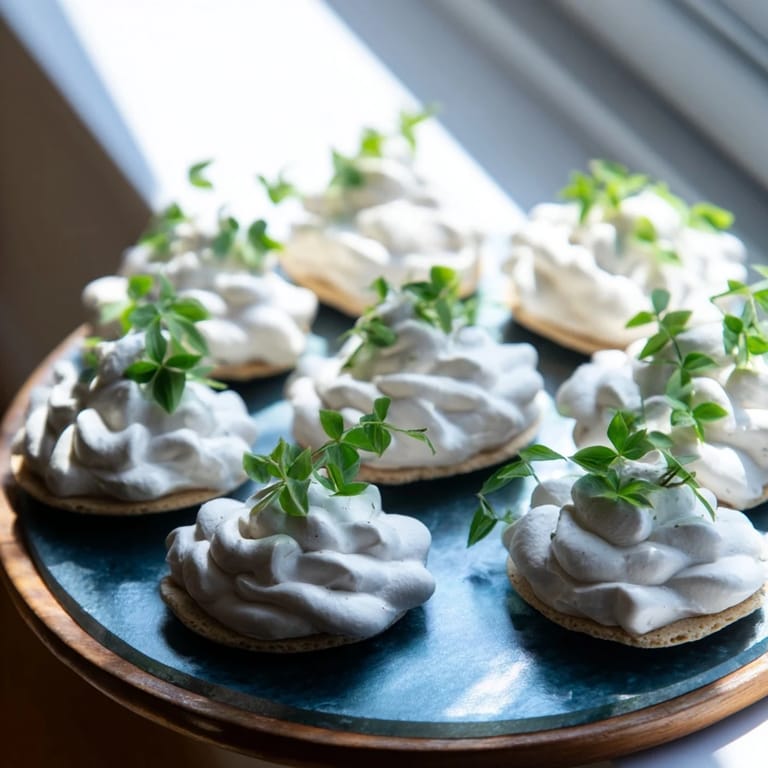
Save I discovered this dish at a gallery opening where the catering table was almost empty by the time I arrived—except for a lone slate platter with these stunning grey crackers topped with white cheese peaks. The visual drama stopped me cold: it genuinely looked like storm waves frozen mid-crash. One bite and I was hooked on the simplicity of it, the way the tangy goat cheese contrasted with the earthiness of the charcoal cracker. I spent the rest of the evening asking the caterer questions instead of mingling.
I made this for a dinner party last winter when the mood felt a bit heavy, and something about the theatrical presentation—the dark slate, the white dollops, the grey waves—shifted the entire energy. My friend picked one up, paused, and said it was too pretty to eat. Then she ate four more anyway. That's when I knew this wasn't just appetizer filler; it was a conversation starter.
Ingredients
- Charcoal or squid ink crackers (18–24 wavy-shaped): The wavy texture is non-negotiable here—it's doing the visual heavy lifting. Squid ink crackers add a whisper of briny flavor that feels intentional, not accidental.
- Fresh goat cheese (150 g chèvre), softened: Room temperature makes all the difference; cold cheese won't spread smoothly. If yours comes straight from the fridge, let it sit for 10 minutes while you arrange the crackers.
- Heavy cream (1 tbsp, optional): This softens the cheese without diluting the tang, making it spreadable without becoming fluffy. Skip it if your chèvre is already soft enough to dollop.
- Fresh dill fronds or edible flowers (optional garnish): These aren't decoration—they're the final note that says ocean. A single frond per mound is enough.
Tired of Takeout? 🥡
Get 10 meals you can make faster than delivery arrives. Seriously.
One email. No spam. Unsubscribe anytime.
Instructions
- Build your ocean:
- Lay the crackers on your dark blue slate in overlapping rows, tilting them slightly to catch the light. The angle matters more than precision here—think of storm waves that don't follow rules.
- Prepare the whitecaps:
- Whip the goat cheese with cream (if using) in a small bowl until it's smooth and dollop-able. Taste it; it should taste bright and slightly tart, never dull.
- Crown each wave:
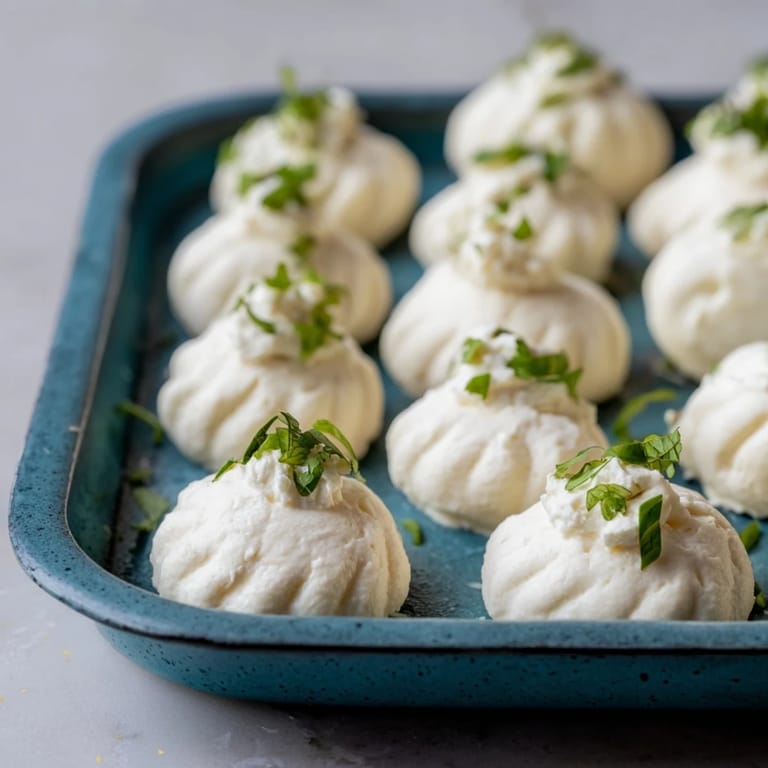
- Using two teaspoons or a piping bag, place a small mound of goat cheese on top of each cracker. Two teaspoons is the more forgiving method—dip one spoon in water, use it to push the cheese from the other spoon onto the cracker.
- Add the finishing touch:
- Perch a single dill frond or tiny edible flower on each mound. Less is more; you're aiming for elegant, not fussy.
- Serve immediately:
- This dish doesn't improve with time. The crackers will soften if they sit too long, losing that satisfying crunch that makes people reach for another.
 Save
Save A friend once told me that food that's beautiful makes people slower down and actually taste what they're eating instead of just refueling. This dish proved her point. I watched people pause with these little bites in their hands, actually present for a moment.
Sourcing Your Crackers
The charcoal and squid ink crackers are the star here, and they're worth hunting for. Specialty food shops, upscale grocery stores, and online retailers carry them, often in the imported or gourmet section. If you can't find wavy ones, thin rectangular crackers work, though you'll lose some of the visual drama. Squid ink crackers have a subtle briny edge that echoes the sea theme, while charcoal crackers are earthier and let the goat cheese shine. Either way, choose ones that feel crisp when you open the package, not soft or stale.
Playing With Flavor
The beauty of this dish is how open it is to small variations. Try mixing the goat cheese with a pinch of fleur de sel and white pepper, or a hair of smoked paprika stirred in. I once added a tiny drop of truffle oil to the cream before whipping it, and the whole thing felt suddenly luxurious. Lemon zest folded into the cheese is bright and unexpected. Even tiny tweaks transform the flavor profile without changing the structure.
Making It Your Own
This appetizer is more template than fixed recipe, which is why it works. The dark slate can be swapped for a black tile, a dark wooden board, or even a charcoal-grey ceramic platter. If dill isn't your thing, microgreens, tiny herb leaves, or even edible nasturtiums work beautifully. You could even top each cracker with a single caper or a thin shaving of lemon peel for a different taste and look. The principle stays the same: contrast, simplicity, and a little theater.
- Make these up to 2 hours ahead and refrigerate, but add the dill garnish just before serving so it stays fresh and perky.
- If you're feeding a crowd, double or triple the recipe—they disappear faster than you'd expect.
- Pair with something crisp and cold: a dry Sauvignon Blanc, a good sparkling water with lemon, or even a cold IPA if you want to go unexpected.
 Save
Save This dish taught me that sometimes the most memorable food is the simplest, and that presentation isn't shallow—it's part of how we experience taste. Serve it with confidence and watch people light up.