 Save
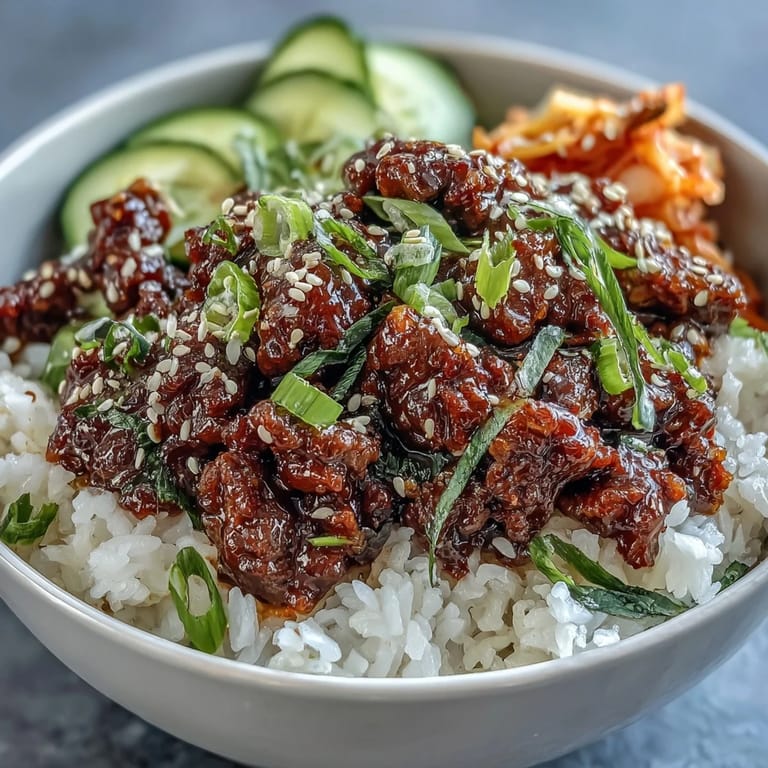
Save There's something about the sizzle of ground beef hitting a hot pan that makes me stop whatever I'm doing. That particular Thursday, my kitchen filled with the unmistakable aroma of garlic and ginger colliding with heat, and suddenly I understood why Korean beef bowls had become such a weeknight staple in my life. It wasn't fancy or complicated, but it tasted like someone had spent hours coaxing out layers of flavor when really, everything came together in less than forty minutes. The gochujang sauce clung to each grain of rice like it belonged there, and those quick-pickled vegetables provided the brightest, most unexpected crunch.
I made this for my roommate on a random Tuesday when she mentioned craving something spicy but didn't want to leave the apartment. Watching her eyes light up after that first bite, the way she immediately started tweaking her bowl with extra sesame seeds and more green onions—that's when I realized this wasn't just dinner, it was a moment where simple ingredients became something worth gathering around.
Ingredients
- Lean ground beef (1 lb): Use the leanest option you can find because the beef will release enough fat during cooking, and you want the gochujang sauce to coat rather than compete with grease.
- Vegetable oil (2 tbsp): This gets the pan properly hot and helps the garlic and ginger bloom into aromatic perfection before the beef goes in.
- Garlic (3 cloves, minced) and fresh ginger (1 tbsp, grated): Don't skip mincing the garlic fine or you'll end up with harsh chunks; the ginger should be grated rather than chopped so it dissolves into the sauce.
- Gochujang (3 tbsp): This fermented chili paste is the soul of the dish, bringing umami and heat that soy sauce alone could never achieve.
- Soy sauce (2 tbsp): Choose a good quality soy sauce because it's doing more work than you'd think—anchoring all those bright, spicy flavors.
- Brown sugar (1 tbsp): A small amount balances the heat and saltiness without making the dish sweet, rounding out the sauce's personality.
- Rice vinegar (1 tbsp): This adds the brightness that keeps the bowl from feeling heavy, plus it mingles with the gochujang in a way white vinegar simply won't.
- Toasted sesame oil (1 tsp): A little goes a long way—this is where the warmth and depth come from, so don't substitute regular sesame oil which tastes pale by comparison.
- Green onions (2, thinly sliced): Split them between the sauce and garnish so you get their sharpness in two different ways.
- Carrot and daikon radish (1/2 cup each, julienned): These pickle quickly and add a brightness that cuts through the rich beef.
- Rice vinegar for pickling (1/2 cup) with sugar and salt: This simple brine is what transforms raw vegetables into something that feels intentional and complete.
- Cooked white or brown rice (4 cups): Use freshly cooked rice while it's still warm so it absorbs the sauce's flavors.
- Cucumber and radish (for topping): Keep these raw and thinly sliced so they provide textural contrast and coolness against the warm, spiced beef.
- Kimchi (1 cup, chopped): Buy good quality or make your own—this is your insurance policy that every bite has funk and fermented complexity.
- Toasted sesame seeds (1 tbsp): Toast them yourself if you can; store-bought works but fresh-toasted ones have an aroma that's honestly worth the two minutes.
Tired of Takeout? 🥡
Get 10 meals you can make faster than delivery arrives. Seriously.
One email. No spam. Unsubscribe anytime.
Instructions
- Start the pickled vegetables first:
- Combine the rice vinegar, sugar, and salt in a small bowl and stir until the sugar completely dissolves—you'll know it's ready when the liquid looks clear and tastes bright. Toss in your julienned carrot and daikon radish, mix gently, and let them sit while you handle the beef.
- Get your pan screaming hot:
- Pour the vegetable oil into a large skillet and turn the heat to medium-high, waiting until the oil shimmers and moves freely across the pan. Add the minced garlic and grated ginger, and listen for that immediate sizzle—this is your signal that the aromatics are about to release their magic.
- Brown the beef properly:
- Once the garlic and ginger have been sautéing for about a minute, add the ground beef and break it up immediately with a spoon or wooden spatula, stirring frequently so it browns evenly rather than clumping up. Keep going for five to six minutes until you don't see any pink and the edges are catching color.
- Build the sauce:
- Drain any excess fat from the pan if there's a noticeable pool sitting on the surface, then stir in the gochujang, soy sauce, brown sugar, rice vinegar, and sesame oil all at once. Cook for another two to three minutes, stirring constantly so the gochujang dissolves fully and the sauce reduces slightly into a glossy coating.
- Finish with green onions:
- Remove the pan from heat and stir in half of your sliced green onions, reserving the other half for garnish. This way you get the fresh sharpness of raw green onions hitting both the warm sauce and the finished bowl.
- Assemble with intention:
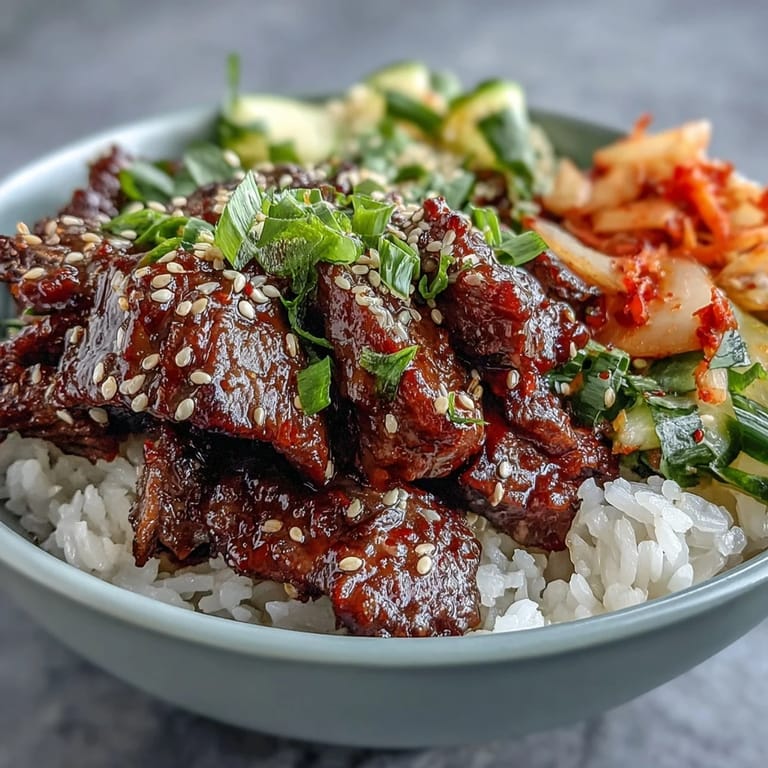
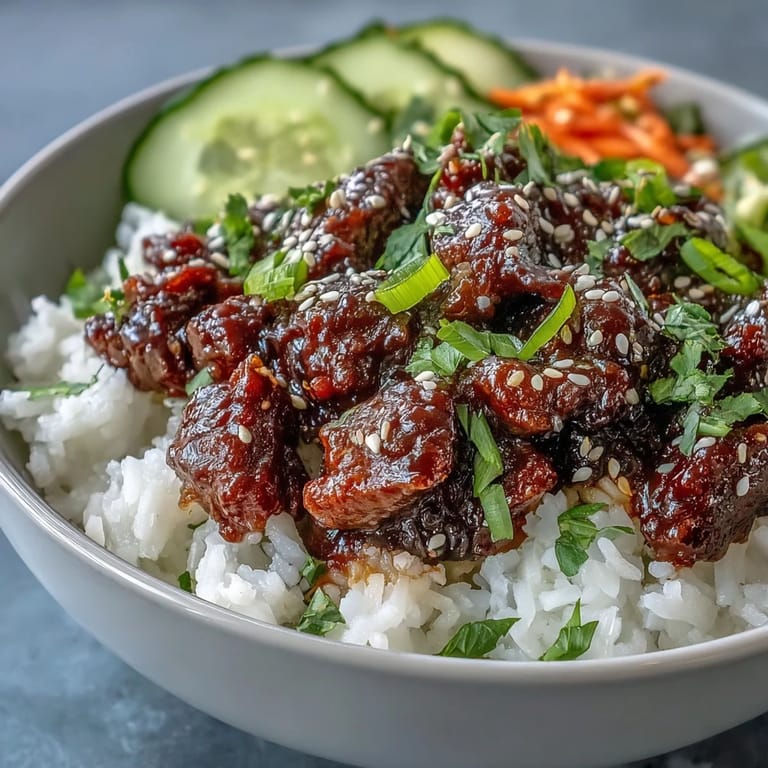
- Divide warm rice into four bowls, making a small well in the center of each mound where you'll nestle the beef mixture. Arrange the pickled vegetables, fresh cucumber slices, radish slices, and chopped kimchi in sections around the beef like you're creating something beautiful.
- Garnish and serve:
- Top each bowl with the remaining green onions and a generous scatter of toasted sesame seeds, then serve immediately while the rice is warm and the vegetables still have their crispness.
 Save
Save One evening, my daughter asked why I was making something that smelled so different from our usual weeknight meals, and when she tasted it, she requested it twice more that same week. It became our secret signal that we needed something spicy and alive, something that felt like a tiny adventure in the middle of an ordinary Tuesday.
The Magic of Temperature Contrast
The reason this bowl feels so satisfying is because you're playing with temperatures and textures in ways that keep your mouth interested. The warm, glossy beef sits on hot rice that absorbs the sauce, while cool cucumber and crisp pickled vegetables provide resistance and brightness. This temperature play is why you can't make this bowl the night before—it needs to be assembled fresh and eaten within minutes of finishing the sauce.
Building Your Own Bowl Philosophy
The beauty of a bowl situation is that once you've made the beef and cooked the rice, everything else is toppings you control. Some people go heavy on kimchi, others prefer their bowls cooler with more raw vegetables and less heat. I've discovered that watching someone build their own bowl tells you something about how they eat—whether they want chaos and funk, or balance and freshness.
Scaling and Storage Wisdom
The beef sauce actually tastes better the next day after the flavors have had time to get acquainted, but rice and pickled vegetables are texture-dependent and demand freshness. I usually make the beef and the pickled vegetables ahead on Sunday, then come Wednesday evening I've got most of the work already done.
- The beef keeps for three days in the refrigerator and reheats beautifully in a skillet over medium heat with a splash of water.
- Pickled vegetables will last up to a week, so make extra and use them on salads, tacos, or wherever you need brightness.
- Rice should always be freshly cooked or reheated just before serving so it's warm enough to wake up the sauce.
 Save
Save This bowl has become my answer to the question of what to cook when everyone's tired but nobody wants to eat the same thing twice in a row. It's fast enough for a weeknight, impressive enough for guests, and flexible enough that no two bowls have to be identical.
Recipe FAQs
- → What is gochujang?
Gochujang is a Korean fermented chili paste that adds a unique sweet-spicy-umami flavor to dishes. It's made from red chili powder, glutinous rice, fermented soybeans, and salt.
- → Can I make this less spicy?
Yes, reduce the gochujang to 1-2 tablespoons or substitute with half miso paste and half gochujang for a milder flavor while maintaining depth.
- → How long do pickled vegetables last?
The quick-pickled vegetables will keep in the refrigerator for up to one week in an airtight container, making them great for meal prep.
- → Can I use different proteins?
Ground chicken, turkey, or even crumbled tofu work well as alternatives. Adjust cooking time slightly—poultry may need an extra minute or two.
- → Is this dish freezer-friendly?
The seasoned beef freezes beautifully for up to 3 months. Store separately from rice and fresh toppings for best results. Thaw overnight and reheat gently.
- → What can I serve alongside this bowl?
A light crisp lager, chilled green tea, or simple cucumber salad complements the bold flavors. Miso soup also makes a nice starter.