 Save
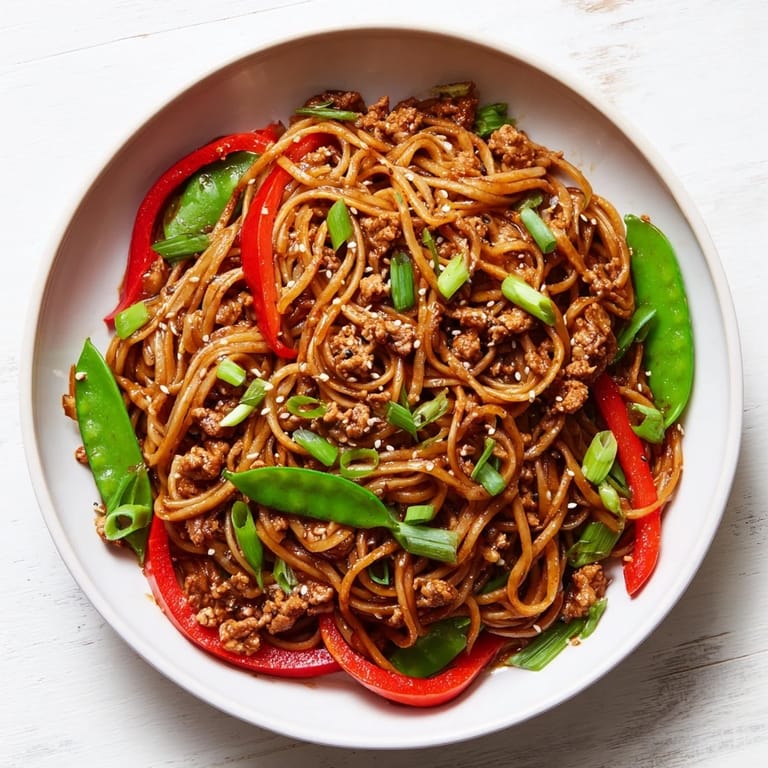
Save There's something about the sizzle of ground chicken hitting hot oil that instantly transports me back to a weeknight when I was desperately trying to use up some hoisin sauce before it expired. I'd never made an Asian-inspired pasta before, but the combination felt natural somehow—why not take the best of a stir-fry and toss it with linguine? Twenty minutes later, I was amazed at how the pasta soaked up that savory, slightly sweet sauce like it was meant to be there all along.
I made this for my sister on a random Tuesday, and she asked for the recipe before she'd even finished her plate. That's when I knew it was special—not restaurant-special, but the kind of dish that makes people want to recreate the moment in their own kitchens, with their own hands stirring the wok.
Ingredients
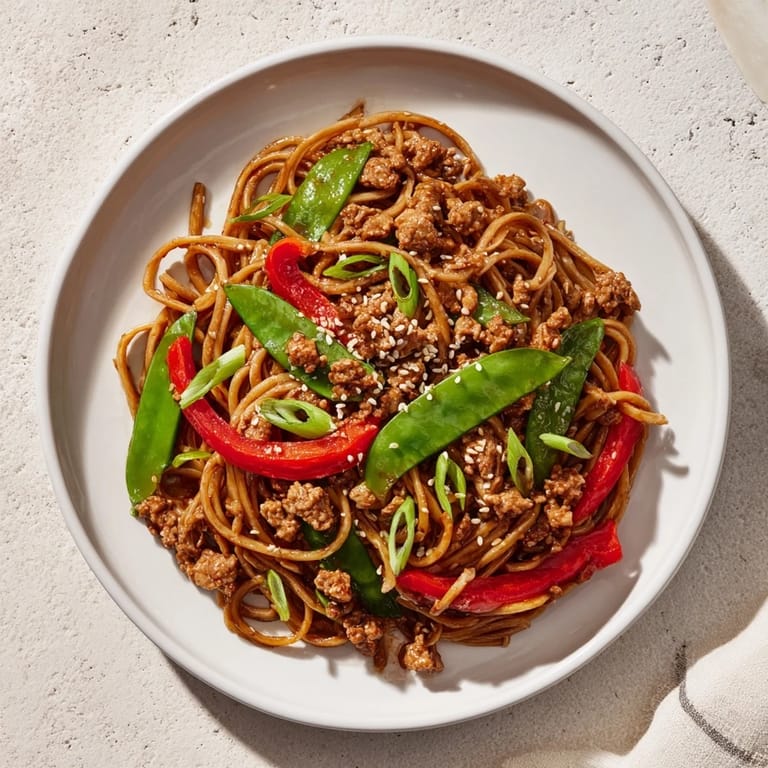
- Linguine (350 g): The thin strands catch the sauce beautifully and cook just fast enough that timing feels forgiving.
- Ground chicken (450 g): Keep it cold until the last moment so it browns properly instead of steaming in the pan.
- Red bell pepper: The sweetness balances the savory hoisin, and thin slicing means it stays crisp even with the heat.
- Snap peas: They're the texture hero here—they stay snappy and keep the whole dish from feeling heavy.
- Green onions: Use half during cooking for flavor and save half for the finish so you get that fresh onion bite at the end.
- Fresh garlic and ginger: These are non-negotiable; they're what make your kitchen smell incredible while you're cooking.
- Hoisin sauce: This is the backbone—deep, savory, slightly sweet, and it carries the entire flavor profile.
- Low-sodium soy sauce: The salt amplifies everything, so low-sodium gives you control over the final seasoning.
- Rice vinegar: A small splash cuts through the richness and keeps the dish from tasting one-dimensional.
- Toasted sesame oil: Use just enough to finish—it's potent and nutty, and a little goes a long way.
- Chili garlic sauce: Optional, but it's your chance to add heat if you like that tingle on your tongue.
- Honey: A spoonful softens the sharpness and rounds out the sauce into something almost velvety.
- Toasted sesame seeds: These add the final textural surprise and that distinctive sesame flavor that makes everything feel intentional.
Tired of Takeout? 🥡
Get 10 meals you can make faster than delivery arrives. Seriously.
One email. No spam. Unsubscribe anytime.
Instructions
- Start the pasta:
- Bring salted water to a rolling boil—you want it aggressive so the linguine cooks evenly and stays al dente. Don't skip reserving the pasta water; that starchy liquid is your secret weapon for coating the noodles later.
- Make your sauce:
- Whisk the hoisin, soy sauce, vinegar, sesame oil, chili garlic sauce, and honey in a small bowl until smooth. This moment of prep work means you won't be scrambling once the chicken hits the pan and everything moves fast.
- Brown the chicken:
- Heat your skillet or wok until it's genuinely hot, then add a splash of neutral oil. The chicken should hit the pan with a confident sizzle, and you'll break it apart as it cooks until no pink remains—about five minutes of gentle stirring with a wooden spoon.
- Build the aromatics:
- Add minced garlic, grated ginger, and most of the green onions to the chicken for just a minute. The kitchen will smell incredible as these release their oils into the pan, and that fragrance tells you you're on the right track.
- Add the vegetables:
- Stir in your bell pepper and snap peas and let them cook for two to three minutes. You want them to lose their raw edge but still have a slight bite when you taste one—this is where the dish gets its personality.
- Bring it together:
- Pour your prepared sauce over the chicken and vegetables, tossing everything until it's evenly coated and glossy. Then add the drained linguine to the skillet and toss again, drizzling in reserved pasta water a little at a time until the sauce coats every strand without pooling at the bottom.
- Finish with care:
- Remove from heat, sprinkle with toasted sesame seeds and remaining green onions or cilantro, and serve immediately while everything is still warm and the pasta is at its best.
 Save
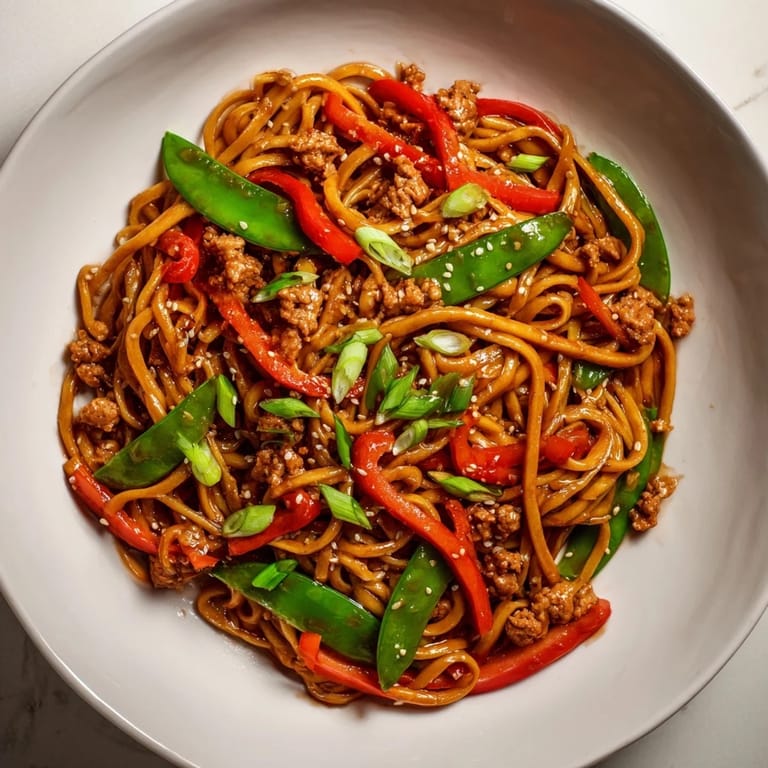
Save What struck me most about this dish wasn't the taste alone—it was how it became this bridge between two cuisines in my own kitchen, proof that sometimes the best things happen when you stop overthinking and just let ingredients speak to each other. It made me realize that fusion cooking isn't about breaking rules; it's about listening to what flavors want to become together.
The Sesame and Hoisin Magic
The pairing of sesame oil and hoisin sauce is deceptively simple, but it's where the entire dish gets its soul. Hoisin brings this deep, fermented umami that feels almost meaty, while sesame adds a toasted nuttiness that makes you want to lean in and taste it again. What took me a while to understand was that these two ingredients are stronger together than either one is alone—they create this multiplier effect where the whole becomes genuinely greater than the sum of its parts. The honey softens the intensity just enough that it doesn't overwhelm your palate, and the rice vinegar acts like a spotlight, making each note of flavor clearer and brighter.
Why Ground Chicken Works Here
I used to think of ground chicken as a lean substitute, something you make when you're being healthy but without real enthusiasm. This recipe changed my perspective entirely. Ground chicken cooks quickly, absorbs sauce like a sponge, and has a tender texture that feels almost buttery when done right. It also lets the flavor of the sauce and aromatics take center stage instead of competing with you. Plus, because it browns faster than larger cuts, you get that caramelized surface that adds complexity without needing to babysit the pan.
Timing and Flexibility in the Kitchen
One of my favorite things about this dish is how forgiving it actually is once you understand the basic rhythm. The pasta cooks on its own timeline, the sauce can be made ahead and stored in the fridge, and the vegetables can be prepped hours before you need them. I've made this on nights when I had twenty free minutes and nights when I did a little prep work earlier in the day. The only thing that needs real attention is the moment when you bring everything together in the skillet—that final minute of tossing and adjusting until the sauce coats everything evenly. If you're interrupted during cooking, the worst that happens is your vegetables get a little softer or your pasta sits for an extra minute, and honestly, neither is a disaster.
- You can substitute ground turkey or pork for the chicken and the cooking time stays nearly identical.
- For a vegetarian version, use firm tofu crumbled into bite-sized pieces or a store-bought plant-based ground meat alternative and make sure your hoisin sauce is vegetarian certified.
- Keep extra pasta water nearby so you can adjust the sauce consistency in those final moments—it's the difference between pasta that's glossy and pasta that's swimming.
 Save
Save This dish has become the one I reach for when I want something that feels a little special but doesn't ask me to perform in the kitchen. It's honest food that comes together quickly and tastes like you cared, which maybe is the best kind of cooking there is.
Recipe FAQs
- → What type of pasta works best with this dish?
Linguine is ideal as it holds the hoisin-sesame sauce well while providing a sturdy yet tender base for the ingredients.
- → Can I substitute the ground chicken?
Yes, ground turkey or pork can be used, or firm tofu for a plant-based variation while maintaining the texture and absorbing the sauce nicely.
- → How can I adjust the spice level?
Add more chili garlic sauce to the hoisin blend for extra heat or omit it entirely for a milder taste.
- → What vegetables complement the flavors here?
Snap peas and red bell peppers provide sweetness and crunch, while green onions and garlic add aromatic depth.
- → How do I prevent the pasta from drying out?
Reserve some pasta water to toss with the dish; it helps loosen the sauce and bind it evenly to the noodles.