 Save
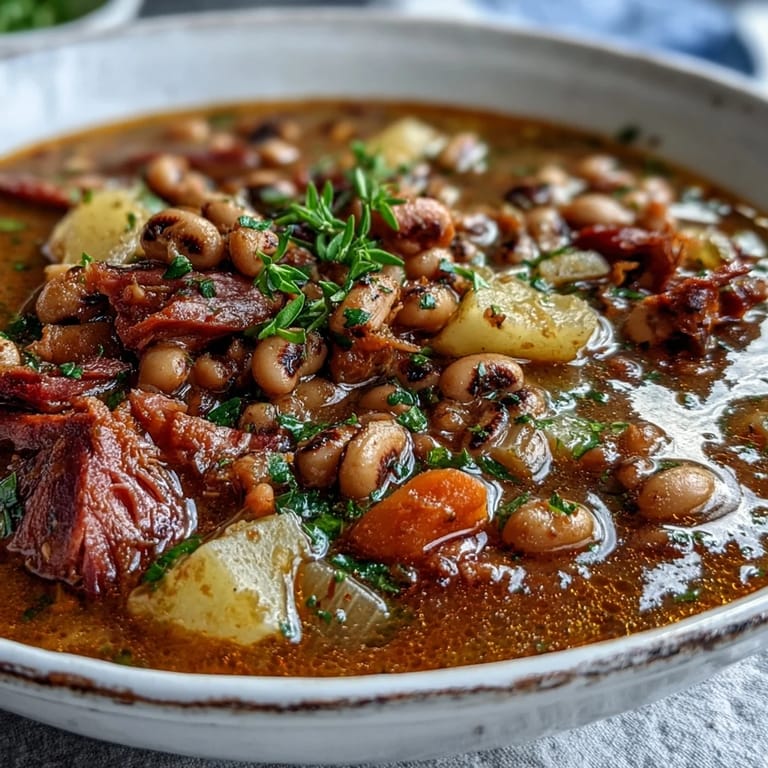
Save My grandmother used to make this stew every New Year's Day, and I'd watch the kitchen fill with steam while she stirred that big pot with a wooden spoon worn smooth from decades of use. The smell of smoked ham mixing with thyme would drift through the house by mid-morning, and neighbors would inevitably knock on the door asking what she was cooking. It wasn't until I tried making it myself that I understood why she'd simmer it so patiently for hours—the longer it sits, the more the flavors deepen and the peas become impossibly tender.
I made this for my partner on a cold February evening when we'd both had rough days at work, and something about ladling out bowls of this warming stew seemed to reset everything. We ate it straight from the pot while sitting on the kitchen counter, and by the time we finished, we were laughing about things that had bothered us hours earlier. Food doesn't always fix things, but there's genuine comfort in knowing someone cared enough to spend two hours making something nourishing.
Ingredients
- Smoked ham hocks: These are the backbone of the entire stew, infusing everything with a deep, smoky richness that you simply can't replicate any other way.
- Dried black-eyed peas: Soaking them overnight is worth the planning ahead—they'll cook more evenly and have a better texture than if you skip this step.
- Onion, carrots, and celery: This aromatic trio is your flavor foundation; don't rush the sautéing, as it develops the depth everything else builds on.
- Potatoes: They add heartiness and help thicken the broth naturally as they break down slightly during cooking.
- Diced tomatoes: The acid cuts through the richness beautifully and prevents the stew from feeling one-dimensional.
- Garlic: Just a minute of cooking releases its magic without letting it turn bitter.
- Broth: Use low-sodium so you can control the final salt level; the ham hocks will season the liquid as it simmers.
- Bay leaves and thyme: These herbs whisper in the background, adding an understated elegance that makes people ask what the secret ingredient is.
- Smoked paprika and cayenne: The paprika deepens the smoky notes from the ham, while cayenne offers a gentle heat that wakes up your palate.
Tired of Takeout? 🥡
Get 10 meals you can make faster than delivery arrives. Seriously.
One email. No spam. Unsubscribe anytime.
Instructions
- Prepare your peas the night before:
- Soak dried black-eyed peas in plenty of cold water overnight, then drain and rinse thoroughly before using. This step softens them and reduces cooking time significantly.
- Build your flavor base:
- Heat oil in a large Dutch oven over medium heat and sauté the diced onion, carrots, and celery for about five minutes until they soften and become fragrant. You're coaxing out their natural sweetness here, so don't rush it.
- Wake up the garlic:
- Stir in the minced garlic and cook for just one minute—any longer and it'll turn acrid and bitter. You want to catch it right as the raw edge disappears.
- Combine everything in the pot:
- Add the ham hocks, soaked peas, potatoes, tomatoes with their juice, broth, bay leaves, thyme, smoked paprika, black pepper, and cayenne pepper. Stir everything together so nothing sticks to the bottom.
- Bring to a boil and reduce to a gentle simmer:
- Let it come to a rolling boil, then drop the heat to low, cover the pot, and let it bubble gently for about two hours. Stir occasionally to ensure even cooking, and listen for that quiet, contented simmer—it should barely whisper.
- Shred the ham and finish the stew:
- Once the ham hocks are falling apart, remove them carefully and let them cool slightly. Shred the meat into bite-sized pieces, discarding skin and bone, then return it to the pot. Taste and adjust salt as needed.
- Thicken if desired and serve:
- If you prefer a thicker stew, simmer uncovered for another ten to fifteen minutes. Ladle into bowls, garnish with fresh parsley, and serve with hot sauce on the side.
 Save
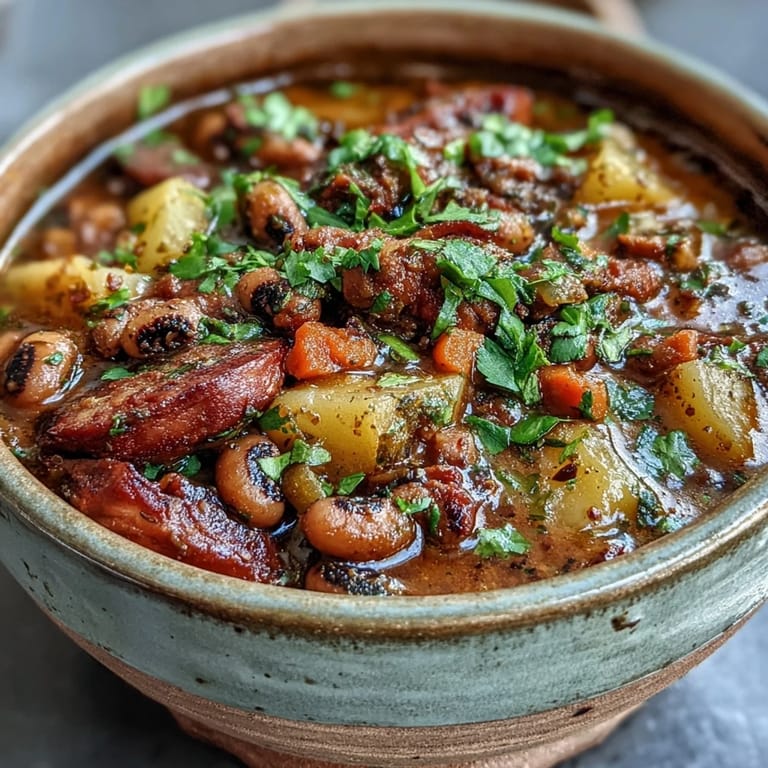
Save There's a particular moment near the end of cooking when you lift the lid and the steam rolls out, and you can see the peas have surrendered completely to the heat, the broth has turned a rich amber color, and the whole thing has transformed into something greater than the sum of its parts. That's when you know you've done it right.
Why This Stew Matters in Winter
This isn't a light, quick weeknight dinner—it's a project that rewards patience, and there's something grounding about committing two hours to a single pot. The time investment means you're intentionally slowing down, which feels increasingly rare. When you serve it, people linger longer at the table because the food itself invites that kind of presence.
Stretching Your Batch Further
One of my favorite things about this stew is that it tastes markedly better on day two or three as the flavors continue merging and deepening in the refrigerator. I often make a double batch and freeze half in individual containers, so I can pull out a warm, comforting meal without any effort on nights when cooking feels impossible. Cornbread or steamed rice on the side transforms it into something that feels complete.
Making It Your Own
The beauty of this stew is its flexibility—I've made it with different vegetables depending on what I have on hand, added hot peppers for extra kick, and even stirred in fresh greens near the end for brightness. Your kitchen is your laboratory, and a good stew is forgiving enough to accommodate your improvisation while still tasting intentional and delicious.
- For a vegetarian version, omit the ham hocks entirely and use liquid smoke or extra smoked paprika to create depth.
- Leftovers keep beautifully for up to three days in the refrigerator and freeze excellently for up to two months.
- Serve with a crusty bread or over rice to catch every drop of that gorgeous broth.
 Save
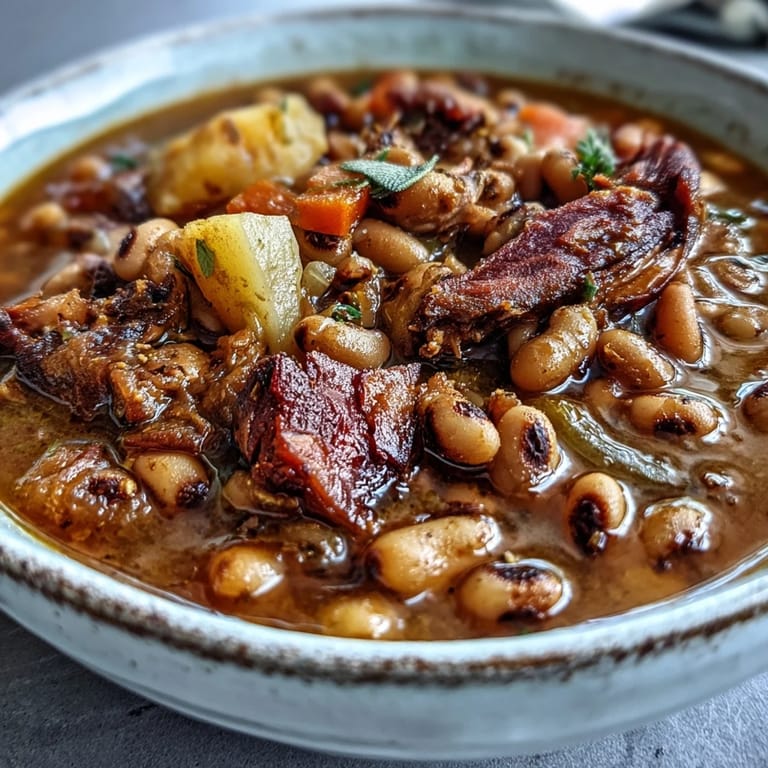
Save This stew is an investment in comfort, both in the moment you're eating it and in the memories it creates around your table. Make it when you have time to be present, and it'll become something you return to again and again.
Recipe FAQs
- → Do I need to soak the black-eyed peas overnight?
Yes, if using dried black-eyed peas, overnight soaking ensures even cooking and tender texture. Alternatively, use canned peas rinsed and drained to skip the soaking step entirely.
- → Can I make this vegetarian?
Absolutely. Simply omit the ham hocks and use vegetable broth instead of chicken broth. Add extra smoked paprika or a few drops of liquid smoke to maintain that deep, smoky flavor profile.
- → What should I serve with this stew?
Buttery cornbread is the classic pairing, soaking up the flavorful broth perfectly. You can also serve it over steamed white rice, with crusty bread on the side, or alongside Southern-style collard greens.
- → How long do leftovers keep?
This stew actually tastes better the next day as flavors continue to develop. Store in an airtight container in the refrigerator for up to 3 days. Reheat gently on the stovetet, adding a splash of broth if needed.
- → Can I use a pressure cooker or slow cooker?
Yes. In a pressure cooker, reduce cooking time to about 35-40 minutes. For a slow cooker, cook on low for 6-8 hours or high for 3-4 hours until peas are tender and ham falls off the bone.
- → What cut of meat can substitute for ham hocks?
Smoked turkey wings or legs work beautifully as a lighter alternative. Thick-cut bacon or smoked sausage can also add smoky flavor, though they'll require less cooking time than ham hocks.