 Save
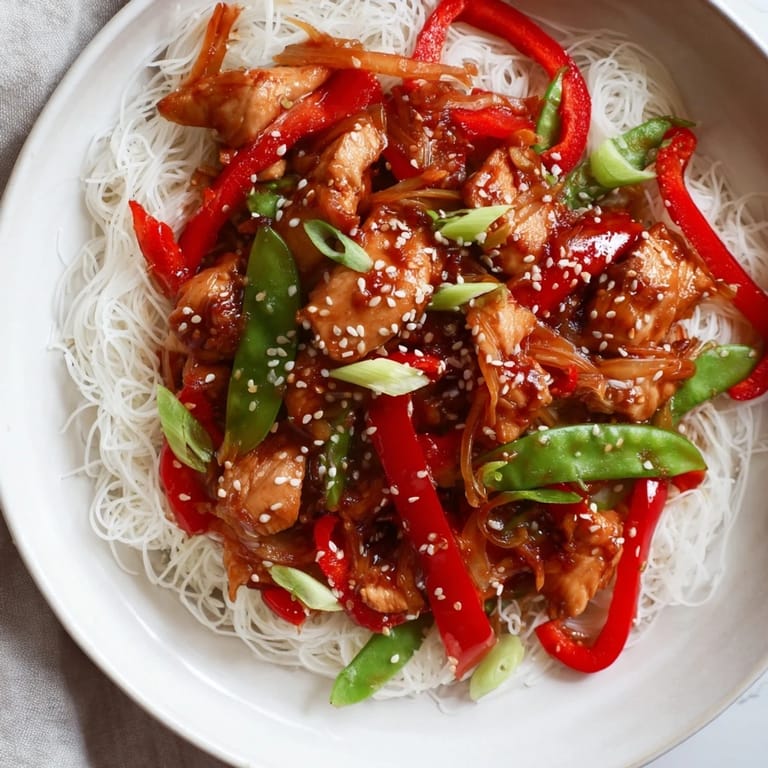
Save There's something about the sizzle of chicken hitting a hot wok that never gets old. The first time I made Mongolian chicken, I was trying to rescue a half-empty box of rice noodles from my pantry and a craving for something bold and sweet. Twenty minutes later, my kitchen smelled like garlic and ginger, and I had a dish that felt restaurant-worthy but tasted like home. It's become the kind of meal I make when I want something satisfying without overthinking it.
I made this for my partner on a random Tuesday when they mentioned missing Chinese takeout, and watching them eat in silence before finally looking up to say it was better than any restaurant version felt like winning. That moment taught me that simple ingredients, when treated with care, can become something people actually remember.
Ingredients
- Chicken thighs or breasts: Thighs are more forgiving and stay juicier, but either works; slice them thin so they cook evenly and absorb the sauce.
- Cornstarch: This is your secret for silky, tender chicken that won't dry out in the hot pan.
- Soy sauce, hoisin, and oyster sauce: Together they build a umami backbone that makes the whole dish sing without tasting one-dimensional.
- Brown sugar and rice vinegar: The balance between these two is everything; the sweetness needs that sharp vinegar edge or it becomes cloying.
- Sesame oil: Just a teaspoon adds a toasted, nutty finish that elevates the entire sauce.
- Fresh garlic and ginger: Mince them fine; they should almost disappear into the sauce rather than announce themselves in chunks.
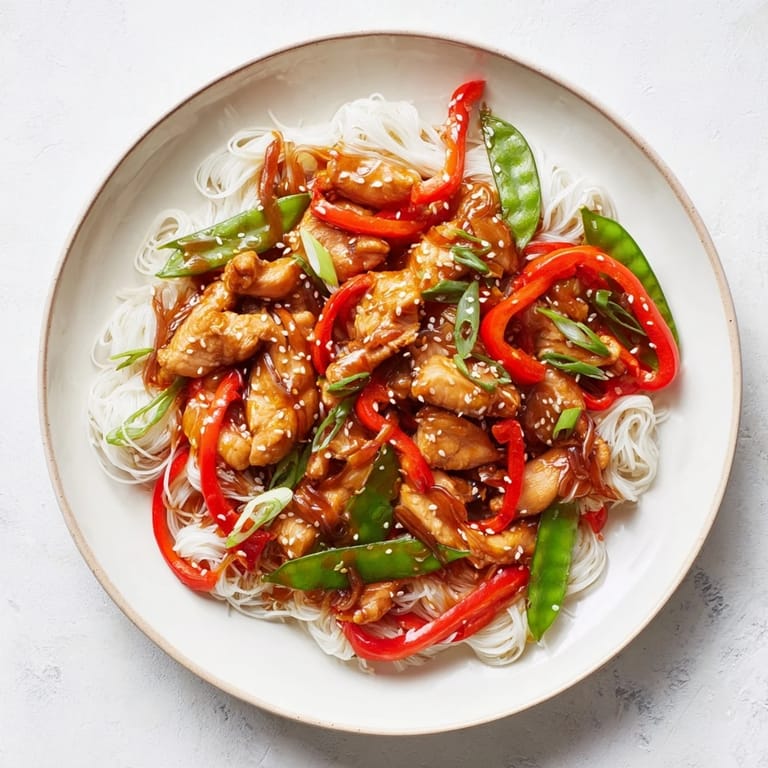
- Red bell pepper and snap peas: They cook quickly and keep their brightness; don't overcook them or they become mushy.
- Rice noodles or leftover pasta: Either works beautifully; the starch catches the sauce and creates something cohesive on the plate.
- Spring onions: Add some during cooking for flavor and more at the end for freshness and that slight onion bite.
Tired of Takeout? 🥡
Get 10 meals you can make faster than delivery arrives. Seriously.
One email. No spam. Unsubscribe anytime.
Instructions
- Cook the noodles:
- If using dried rice noodles, follow the package timing, then drain and rinse them under cold water to stop the cooking. This keeps them from turning to mush later.
- Coat the chicken:
- Toss your sliced chicken with cornstarch, salt, and pepper in a bowl, making sure every piece gets an even dusting. This coating is what gives you that silky texture.
- Mix your sauce:
- Whisk all the sauce ingredients together in a small bowl and taste it straight; it should be bold, slightly sweet, a bit salty, and with that ginger-garlic warmth underneath. Adjust to your preference before it hits the pan.
- Sear the chicken:
- Heat one tablespoon of oil in your wok over medium-high heat until it shimmers, then add the chicken in a single layer. Don't crowd the pan or stir immediately; let it sit for a minute so it develops golden edges, then toss it around for about 4-5 minutes until cooked through. Remove it to a plate.
- Cook the vegetables:
- Add the remaining oil to the pan and stir-fry the bell pepper and snap peas for 2-3 minutes; you want them tender but still with a slight crunch.
- Bring it together:
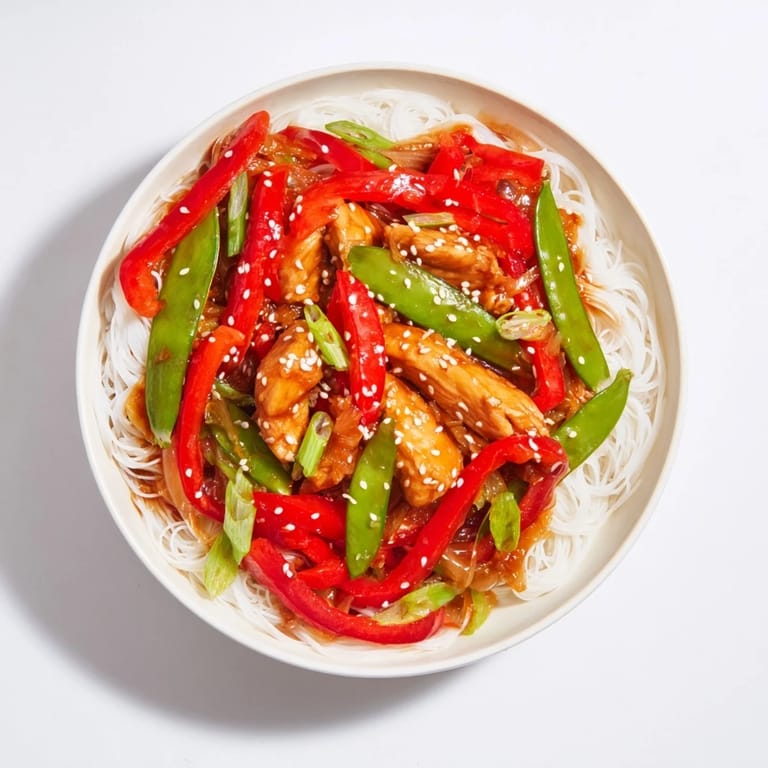
- Return the chicken to the pan with the spring onions, pour in the sauce, and stir everything so the chicken and vegetables are coated. Let it simmer for 1-2 minutes until the sauce thickens slightly and clings to everything.
- Add the noodles:
- Toss in your cooked noodles and mix gently but thoroughly until every strand is glossy with sauce and warmed through.
 Save
Save There's a moment right when you combine everything in the wok—the steam rising, the smell of caramelized sauce wrapping around the kitchen, the chicken glistening—where you realize you've made something that looks and feels like real cooking. That's when I know it's going to be good.
Building Layers of Flavor
What makes this dish more interesting than a simple stir-fry is that the sauce does multiple things at once. The soy sauce brings salt and depth, the hoisin adds umami and subtle sweetness, and the brown sugar rounds everything out with a glossy caramel undertone. But without the rice vinegar and sesame oil, it would feel flat and one-dimensional. Those two ingredients are the ones that make you go back for another bite without quite knowing why.
Protein and Vegetable Flexibility
This dish doesn't demand chicken if you have something else on hand or if you're cooking for different preferences. Firm tofu works beautifully and soaks up the sauce like a sponge, shrimp cooks in about the same time as chicken, and even mushrooms or broccoli can anchor the dish. The vegetables are equally flexible; use whatever is fresh or leftover in your crisper drawer. The real magic is in the sauce and the technique of building it in layers.
Timing and Temperature
The entire dish, once you've prepped everything, comes together in about 15 minutes of active cooking. Medium-high heat is where this works best; too low and the chicken steams instead of searing, too high and the vegetables burn before they soften. Keep everything moving with a wooden spoon or spatula, and don't be afraid of the sizzle.
- Have all ingredients prepped and within arm's reach before you start cooking, because once that heat is on, things move fast.
- Taste the sauce one more time before serving; you can always add a tiny splash of soy sauce or rice vinegar to wake it up.
- The sesame seeds and extra spring onions at the end aren't garnish, they're texture and flavor, so don't skip them.
 Save
Save This is the kind of dish that tastes even better the next day, when the flavors have settled and mellowed. Keep it in the fridge and reheat gently in a wok or skillet with a splash of water.
Recipe FAQs
- → Can I use other proteins instead of chicken?
Yes, tofu or shrimp can be substituted to suit dietary preferences or add variety.
- → What type of noodles work best for this dish?
Rice noodles are traditional, but leftover pasta can be used for a convenient alternative.
- → How can I adjust the sauce's sweetness?
Modify the brown sugar quantity to balance the sweet and savory flavors to your liking.
- → Are there any suggested vegetables to add for extra crunch?
Water chestnuts and baby corn are excellent additions for added texture and freshness.
- → What cooking tools are recommended?
A large wok or skillet works best for quick, even stir-frying along with basic kitchen utensils like a knife and mixing bowls.