 Save
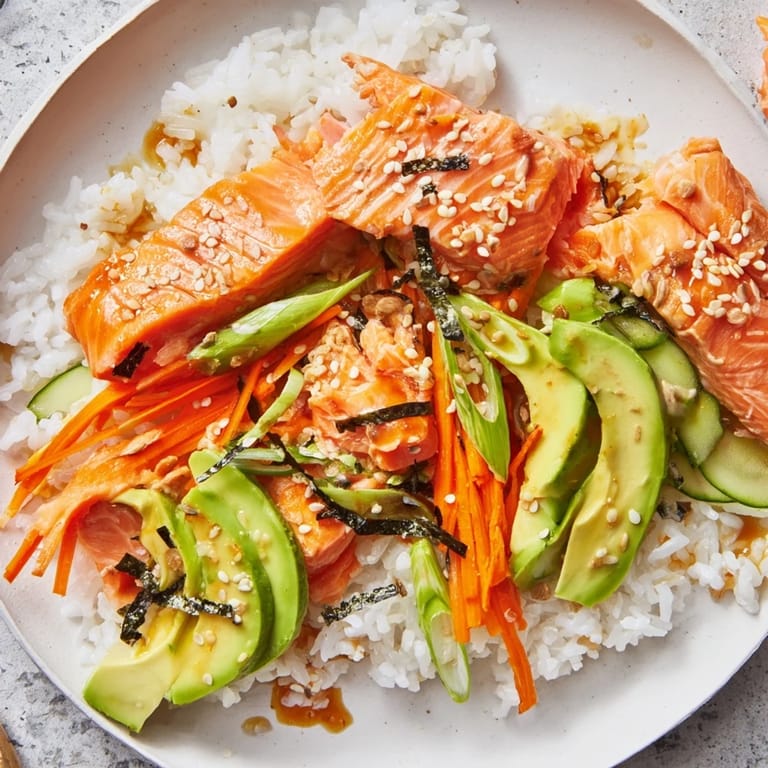
Save There's something about the first time you nail a rice bowl that makes you feel like you've unlocked a secret. Mine came on a Tuesday evening when I was determined to use up salmon and chicken before they expired, and instead of panicking, I reached for soy sauce and mirin. The bowl that came together was so vibrant and balanced that my partner asked for seconds before I'd even sat down. Now, whenever I need something that feels both comforting and restaurant-quality, this is where I turn.
I remember bringing this to a potluck and watching people hover around the bowls like they couldn't quite believe how good it looked. Someone asked if I'd made it at a restaurant that morning, and I felt a quiet pride knowing it took me less than an hour. That's when I realized this recipe isn't just easy—it's the kind of dish that makes people think you spent all afternoon in the kitchen.
Ingredients
- Salmon fillets: They cook so quickly that you want them thick enough not to dry out, around 1 to 1.5 inches—any thinner and they'll flake into tiny pieces.
- Boneless, skinless chicken thighs: These stay juicy even when you're not paying attention, unlike breasts which can turn tough if you overcook by 30 seconds.
- Soy sauce, mirin, and sake: This trio is the backbone of the marinade—together they create that glossy, savory-sweet coating that makes everything taste intentional.
- Sesame oil: A little goes a long way, so resist the urge to splash; it's meant to whisper, not shout.
- Japanese short-grain rice: It's stickier than long-grain and actually helps the bowl feel cohesive when you mix it with sauce.
- Avocado: Add it last so it stays creamy; if you slice it too early, it turns gray and loses its appeal.
- Cucumber and carrot: Keep them crisp by slicing them just before assembly—they add a textural contrast that makes each bite interesting.
- Toasted sesame seeds: Buy them already toasted; you'll actually use them if they're ready to go.
Tired of Takeout? 🥡
Get 10 meals you can make faster than delivery arrives. Seriously.
One email. No spam. Unsubscribe anytime.
Instructions
- Rinse and cook the rice:
- Run your rice under cold water, stirring with your fingers until the water clears—this removes starch and helps each grain stay separate. Cook it in a rice cooker with exactly 2 1/2 cups water, or on the stovetop if you prefer; either way, let it steam undisturbed for 10 minutes before fluffing.
- Prepare the marinade:
- Whisk soy sauce, mirin, sake, sesame oil, and honey together until the honey dissolves completely. The mixture should smell deep and savory with a subtle sweetness.
- Marinate the proteins:
- Divide the marinade between two shallow dishes and nestle your salmon in one and chicken in the other, making sure they're submerged. Even 10 minutes makes a difference, but 15–20 is ideal if you have the time.
- Cook the chicken:
- Get your skillet hot over medium heat, then add the chicken thighs skin-side down if they still have skin, or smooth-side down for even browning. Cook 4–5 minutes per side until golden and just cooked through—the internal temperature should hit 165°F, but don't let it go past that.
- Cook the salmon:
- In the same warm pan, place your salmon fillets skin-side up and cook 2–3 minutes per side until it flakes gently with a fork and is still slightly translucent in the very center. This is where restraint pays off; overcooked salmon tastes dry.
- Prepare the toppings:
- Slice your avocado lengthwise, remove the pit, and scoop or peel thin slices. Slice cucumber paper-thin on a mandoline if you have one, julienne the carrot into matchsticks, and slice your scallions at a sharp angle so they look intentional.
- Make the sauce:
- Whisk together soy sauce, rice vinegar, sesame oil, and sugar in a small bowl, stirring until the sugar fully dissolves. Taste it—it should be balanced between salty, tangy, and subtle sweetness.
- Assemble the bowls:
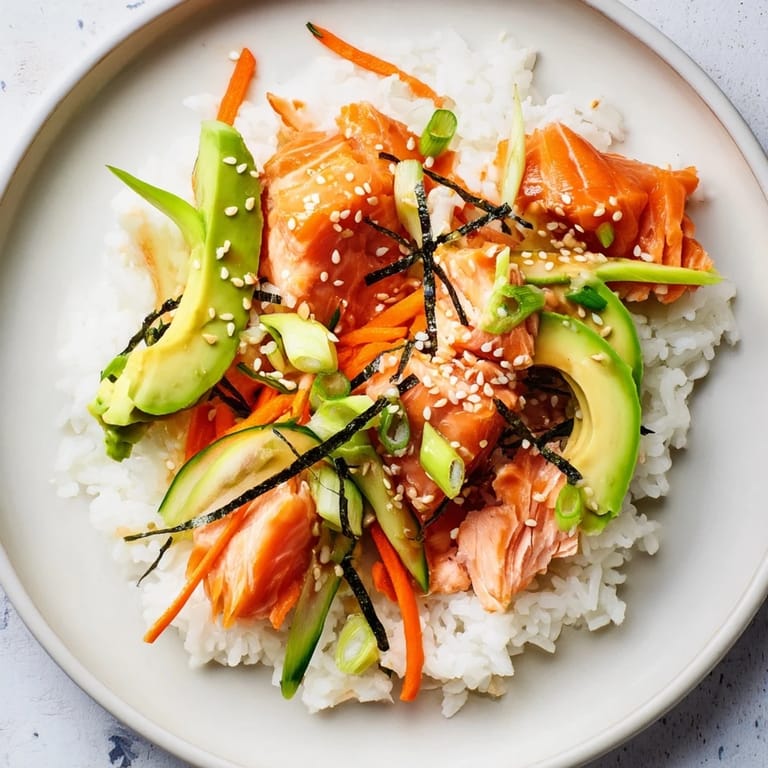
- Divide your fluffy rice among four bowls, then arrange chicken slices, salmon flakes, avocado slices, cucumber, carrot, and scallions on top in whatever pattern feels right. Drizzle the sauce over everything, sprinkle with sesame seeds and nori strips if using, and serve immediately.
- Ice cube hack for reheating:
- If you're reheating a pre-made bowl later, place an ice cube in the center of the rice, cover loosely with microwave-safe wrap, and microwave on high for 1–2 minutes. The ice melts slowly and steams the rice from the inside out, keeping it soft and moist instead of chewy—it's a game-changer for meal prep.
 Save
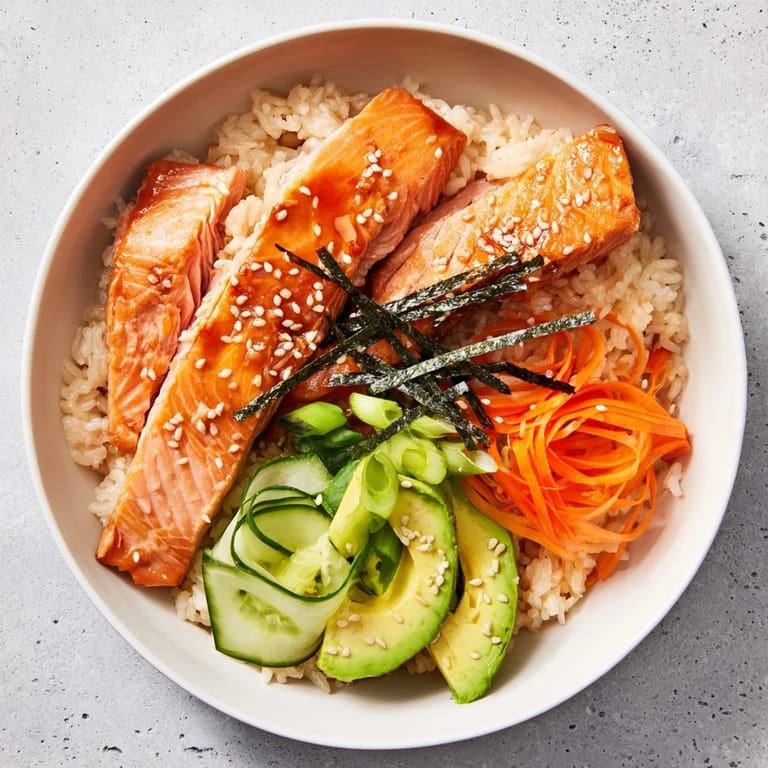
Save I learned this dish's real value one morning when I woke up late for work and realized I'd made four of these bowls the night before. I grabbed one from the fridge, threw in an ice cube, and had a hot, delicious lunch ready in two minutes. That's when I understood this isn't just a recipe—it's a form of kindness you do for your future self.
The Marinade Magic
The beauty of this marinade is that it's forgiving and flexible, which is why it became my go-to when I wanted to elevate simple proteins. Mirin adds a subtle sweetness that soy alone can't deliver, while sake opens everything up with a delicate richness. I've made this marinade dozens of times now, and I've learned that the proportions matter less than tasting it along the way—if it's too salty, add a drop of honey; if it feels flat, squeeze in a tiny bit of lime juice.
Why This Works as Meal Prep
What I love most about this bowl is that you can make the components separately and assemble them whenever you're ready. Cook the rice on Sunday, marinate and cook the proteins Monday morning, and keep your vegetables prepped in the fridge. When you're ready to eat, it takes five minutes to pull everything together and make it feel like you've just finished cooking.
Customization and Swaps
After making this bowl countless times, I've discovered that it's actually a framework rather than a fixed recipe. I've swapped avocado for steamed broccoli when I wanted something warmer, used shrimp instead of salmon when I felt like something lighter, and even added a soft-boiled egg when I wanted extra richness. The core—the marinade, the rice, the sauce—stays the same, but everything else is negotiable based on what's in your fridge.
- Try adding a soft-boiled egg or a drizzle of sriracha if you want more heat and richness.
- Edamame or steamed snap peas work beautifully if you want to skip the avocado.
- A small handful of pickled ginger on the side adds brightness and aids digestion.
 Save
Save This bowl has become my answer to the question of what to cook when you want something that feels restaurant-quality but doesn't demand hours in the kitchen. Make it once and you'll understand why it works.
Recipe FAQs
- → How does the ice cube help when reheating rice?
Placing an ice cube in the center of the rice before microwaving slowly releases steam as it melts, keeping the rice moist and preventing it from drying out.
- → Can I substitute the salmon or chicken with other proteins?
Yes, tofu or edamame can replace salmon or chicken for a vegetarian version, and other seafood or lean meats work well too.
- → What type of rice works best for this bowl?
Japanese short-grain rice provides a sticky, tender texture ideal for this style of bowl, but medium-grain rice is a good alternative.
- → How long should I marinate the salmon and chicken?
Marinate both proteins for at least 10 minutes to let the flavors develop without overpowering their natural taste.
- → Can I prepare toppings ahead of time?
Yes, slicing avocado, cucumber, carrot, and scallions in advance will save time, but avocado is best added just before serving to avoid browning.
- → Is the sauce served warm or cold?
The sauce is typically served at room temperature, drizzled over the assembled bowl for balanced flavor.