 Save
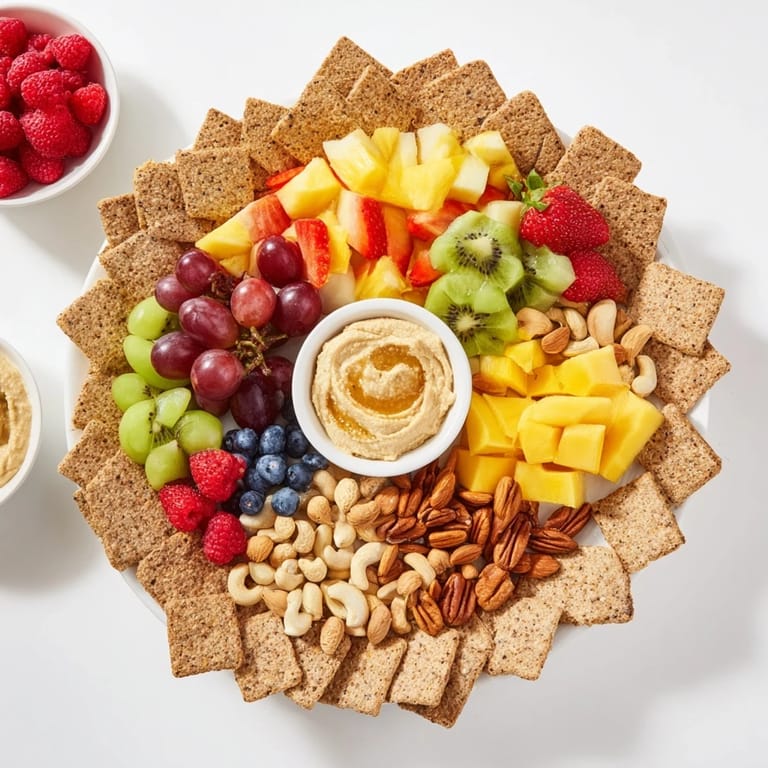
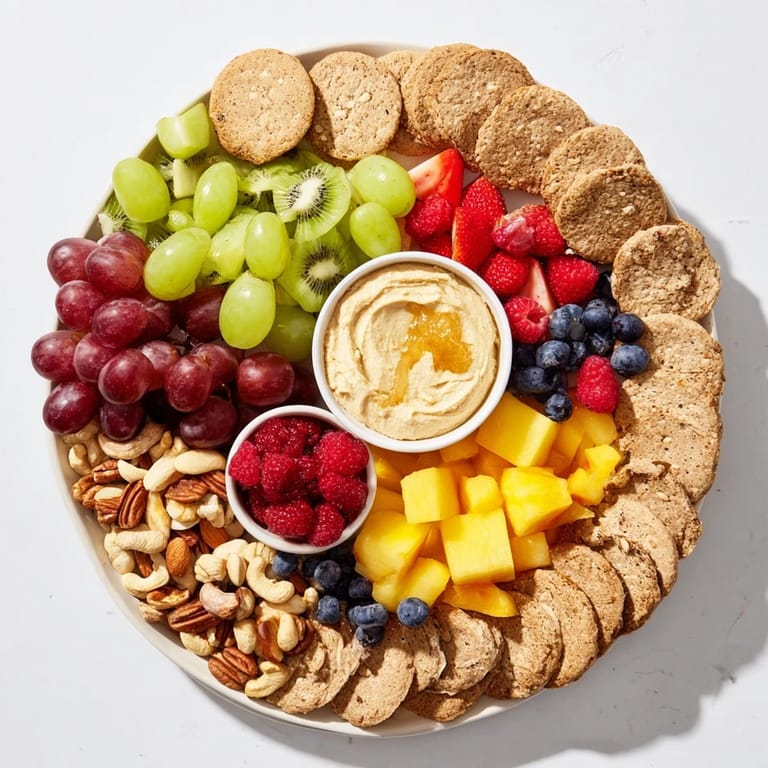
Save I discovered this platter by accident at a dinner party where I was tasked with bringing something impressive but had about thirty minutes before guests arrived. Standing in my kitchen, I grabbed what felt right—a handful of crackers, some nuts I'd been snacking on, fruit from the crisper drawer. When I arranged everything in concentric circles on my grandmother's blue platter, something clicked. The way the golden nuts caught the light against the jewel-toned berries, how the crackers stood like little soldiers around the edges—suddenly I had something that looked like it belonged in a magazine. My friend Sarah called it "The Hidden Oasis" because of how the creamy dips pooled in the center like water in a desert, and the name stuck.
The moment that really cemented this as my go-to platter was when my younger brother brought his girlfriend to a casual Sunday dinner. I made this without much fanfare, just set it on the coffee table while we watched a game. Halfway through, she paused the conversation to tell me it was the most beautiful food she'd ever seen served casually, and could she take a photo? That's when I realized this wasn't just about taste—it was about creating something that made people want to slow down and notice the simple pleasure of fresh ingredients arranged with intention.
Ingredients
- Assorted dry crackers (150 g): Water crackers, multigrain, and rye give you texture contrast and keep things interesting—avoid anything too flavored so the fruit stays the star.
- Mixed roasted nuts (100 g): Almonds, cashews, and pecans create that satisfying crunch and bridge the gap between the savory crackers and sweet fruit perfectly.
- Seedless grapes (1 cup): They add a juicy pop and their round shape balances the angular pieces of everything else on the board.
- Fresh berries (1 cup): Strawberries, blueberries, and raspberries are your color insurance—they catch light and make the whole platter feel alive.
- Kiwi (1 large): The bright green interior and tiny black seeds create visual interest and a subtle tartness that wakes up your palate.
- Mango (1 small): Golden cubes add tropical sweetness and that creamy texture that feels a little indulgent without being heavy.
- Pineapple chunks (1/2 cup): They bring acidity that cuts through the richness of the dips and adds another layer of visual appeal.
- Creamy hummus (100 g): The earthiness of chickpeas grounds the whole platter and gives hands something savory to reach for.
- Greek yogurt dip or tzatziki (100 g): Cool and tangy, it's the perfect companion to almost everything here—keep it chilled right until serving.
- Honey or fruit compote (100 g): A touch of sweetness that ties the whole arrangement together and gives you a reason to dip the crackers.
Tired of Takeout? 🥡
Get 10 meals you can make faster than delivery arrives. Seriously.
One email. No spam. Unsubscribe anytime.
Instructions
- Build your outer ring:
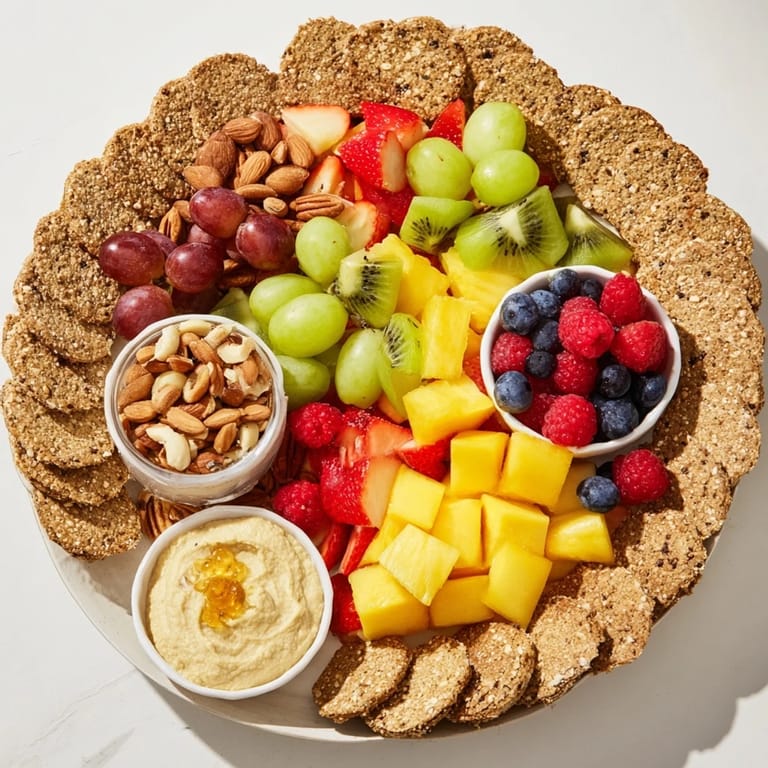
- Start with a large serving platter and arrange your crackers around the very edge, standing them upright or fanning them out—this is your moment to be a little theatrical with the presentation. Let them lean on each other naturally; it's more forgiving than trying to make them perfect.
- Tuck in the nuts:
- Nestle the roasted nuts between and around the crackers to complete that protective outer circle. They'll catch in the little gaps and make the whole ring feel purposeful rather than accidental.
- Create the fruit mound:
- In the center, start piling your fruit with intention—alternate colors and shapes as you go, thinking about how they'll look from above. Mix the grapes with berries, layer in your kiwi slices, scatter the mango cubes, and tuck pineapple pieces where there are gaps.
- Position the dips:
- Set small bowls in the middle of your fruit arrangement, nestling them so they feel like they belong rather than like an afterthought. The dips should look like they're rising from the fruit rather than sitting on top of it.
- Chill if needed:
- Serve immediately if your kitchen is cool, or cover the whole thing loosely with plastic wrap and refrigerate for up to an hour. The waiting actually helps everything settle together and taste fresher when you finally eat it.
 Save
Save There was a Tuesday night when I made this for my book club, and we ended up talking for three hours with this platter between us instead of the usual charcuterie board. Something about the brightness of it—the way each component stayed crisp and fresh through the evening—made the whole gathering feel lighter, more joyful. That's when I realized this wasn't just a platter; it was permission to slow down and enjoy the small act of feeding people you care about.
The Art of Color Balance
The secret to making this platter stop people mid-conversation is understanding that you're creating a visual experience first, a taste experience second. Think of your fruits like you're painting—the deep reds of strawberries next to golden pineapple, bright green kiwi against purple grapes. Don't arrange everything in neat rows; let it tumble and overlap slightly so it feels generous rather than controlled. The chaos is actually the order that makes it beautiful.
Making It Your Own
The bones of this platter are flexible enough that you can swap things based on what you have or what's in season. Winter? Add pomegranate seeds and dried apricots. Spring? Fresh figs and candied citrus peel. The core idea—crispy outside, juicy center, creamy dips in the middle—stays the same no matter what you use. I've made this with everything from persimmons to dragon fruit, and it always feels special because the arrangement itself is what catches attention, not any single ingredient.
Serving Suggestions and Variations
This platter works for everything from casual game nights to fancy dinner parties, which is probably why I keep coming back to it. For vegan guests, swap the Greek yogurt for a cashew cream dip and use maple syrup instead of honey—it tastes even better than the original, honestly. You can also add thin slices of good cheese or a handful of dried cranberries and apricots for textural variation.
- Make it vegan by using plant-based yogurt and maple syrup instead of honey.
- Add cheese cubes, dates, or candied nuts if you want to layer in more complexity.
- Pair with sparkling water with citrus or a crisp white wine to complete the experience.
 Save
Save This platter has become my answer to almost every entertaining question—when I'm short on time, when I want to impress without stress, when I just want people to feel welcomed. It's taught me that the best meals aren't always about complicated cooking; sometimes they're just about showing people you noticed what they love.
Recipe FAQs
- → What types of crackers work best for this platter?
Assorted dry crackers such as water crackers, multigrain, or rye provide a sturdy, crisp base and contrast well with softer fruits and dips.
- → Can the dips be substituted for dietary preferences?
Yes, plant-based yogurt alternatives and maple syrup can replace dairy yogurt and honey to accommodate vegan needs.
- → How should the fruits be prepared for best presentation?
Fruits like kiwi and mango should be peeled and sliced or cubed, mixed with whole grapes and berries for a vibrant, colorful mound.
- → Is it possible to prepare this platter in advance?
It's best to assemble shortly before serving, but you can prepare and refrigerate up to an hour ahead to maintain freshness.
- → What drinks pair well with this dish?
Crisp white wine or sparkling water with citrus complements the fresh and creamy flavors perfectly.