 Save
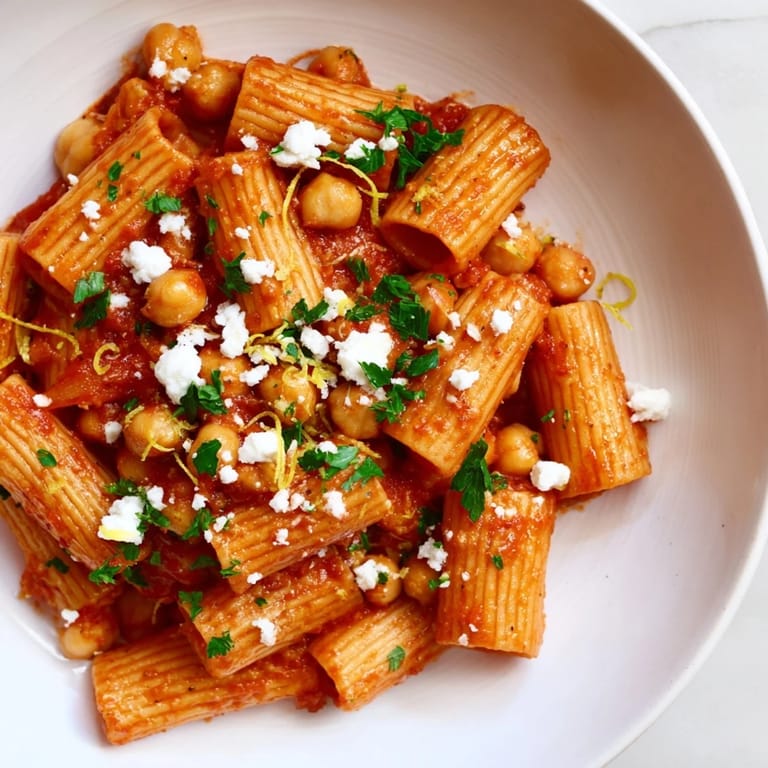
Save I discovered harissa paste at a farmers market on a drizzly Saturday morning, tucked between jars of preserved lemons and dukkah, and the woman behind the stall insisted I had to try it with chickpeas. That evening, I threw together whatever pasta I had with a can of tomatoes and that fiery red paste, and something clicked—the heat, the depth, the way the sauce clung to every piece. It's been a weeknight staple ever since, the kind of dish that tastes like it took hours but arrives on the table in less time than it takes to stream a movie.
I made this for a friend who was going through a rough patch, someone who'd been eating takeout salads for weeks trying to eat better but feeling deprived. When they tasted it, their whole face changed—they actually laughed and asked for the recipe before finishing the bowl. Now whenever they text about a bad day, I know what's coming next.
Ingredients
- 350 g dried short pasta (penne, rigatoni, or fusilli): The shape matters more than you'd think; ridges catch the spicy tomato sauce and hold it like little pockets of flavor.
- 2 tbsp olive oil: Use something you'd actually taste, not the industrial stuff—it's doing real work here.
- 1 medium onion, finely chopped: Dice it small so it softens into the sauce rather than staying chunky.
- 3 garlic cloves, minced: Fresh garlic makes a difference; jarred will taste dull in comparison.
- 2 tbsp harissa paste: This is your backbone—it brings heat, smokiness, and a complexity that takes the dish from simple to sophisticated.
- 1 tsp ground cumin and 1/2 tsp smoked paprika: Together they echo the spice notes in harissa and add warmth without making it hotter.
- 1 can (400 g) diced tomatoes: Good quality matters; San Marzano or fire-roasted are worth the extra dollar.
- 2 cans (400 g each) chickpeas, drained and rinsed: Rinsing removes the starchy liquid that would make your sauce muddy and gummy.
- 1/2 cup vegetable broth or water: This loosens the sauce so it coats rather than clings, and gives the spices room to bloom.
- 1 lemon, zest and juice: The acid cuts through the richness at the end and brightens everything; don't skip it.
- 2 tbsp fresh parsley or cilantro: Cilantro pairs beautifully with harissa, but use what feels right to you.
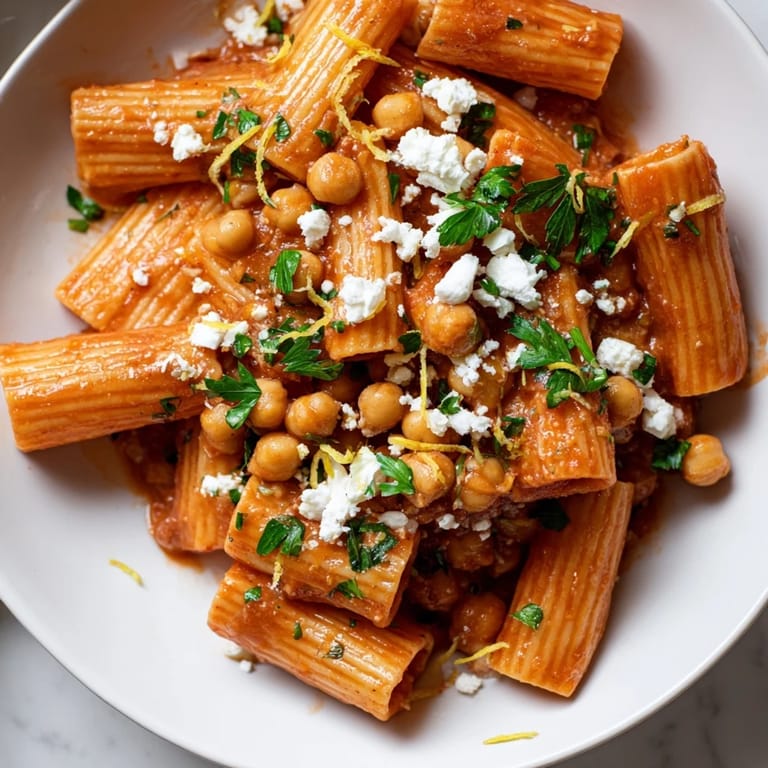
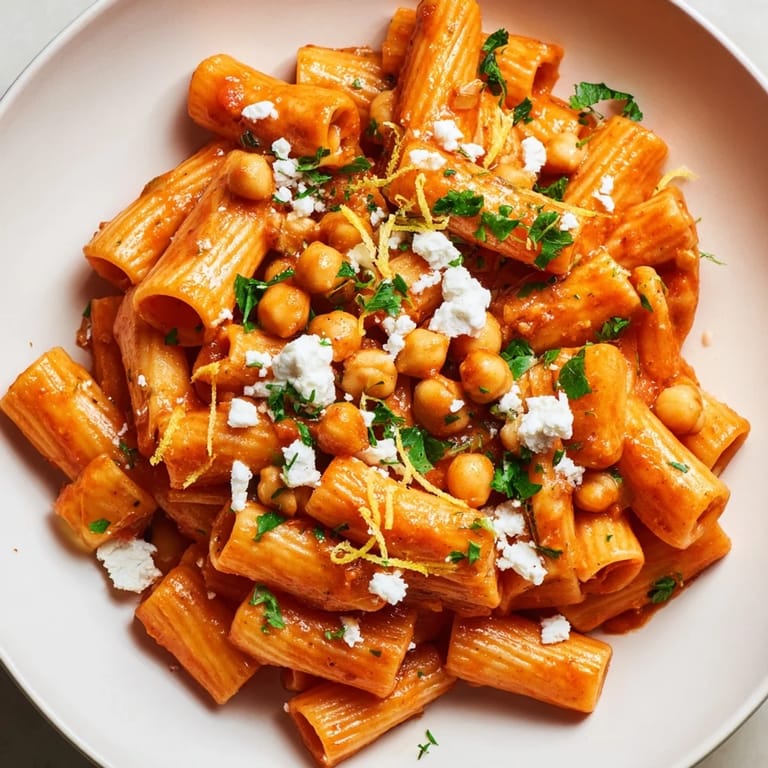
- Optional crumbled feta: It softens into salty pockets that contrast with the heat, but the dish stands perfectly well without it.
Tired of Takeout? 🥡
Get 10 meals you can make faster than delivery arrives. Seriously.
One email. No spam. Unsubscribe anytime.
Instructions
- Get your water boiling and pasta going:
- Salt your water until it tastes like the sea—this is your only chance to season the pasta itself. Start the pasta now so it's ready when your sauce is, and don't walk away; you want to catch it the moment it's tender enough to bend but still has resistance when you bite it.
- Build the base for your sauce:
- Heat olive oil in a large skillet over medium heat and let the chopped onion soften for about 4-5 minutes, stirring now and then. You're looking for it to turn translucent and smell sweet, which means the natural sugars are caramelizing slightly.
- Wake up the spices:
- Add minced garlic, harissa, cumin, and smoked paprika, and stir constantly for about one minute—you want to toast them just enough to release their oils but not burn them, which would turn everything bitter.
- Bring in the tomatoes and chickpeas:
- Pour in your diced tomatoes and add the drained chickpeas along with the vegetable broth, stirring everything together and crushing a few of the tomato pieces against the side of the pan. Season with salt and pepper, then let it bubble gently.
- Let the magic happen:
- Cover the skillet and let it simmer for 10-12 minutes, stirring occasionally, while the flavors settle and deepen and the sauce thickens slightly. You'll notice the color intensifying and the smell becoming more complex.
- Marry the pasta and sauce:
- Add your drained pasta to the skillet and toss everything together, adding a splash of reserved pasta water if it feels too thick. The starch in the water helps the sauce cling to each piece.
- Finish with brightness:
- Remove from heat and stir in lemon zest, lemon juice, and your chopped herbs, then taste and adjust the salt and pepper as needed. The lemon should feel like a revelation, cutting through the richness and making everything taste alive.
 Save
Save There was an afternoon when my sister called mid-panic about a dinner party and I talked her through this recipe over the phone, her texting back photos of each step. She served it to people she was nervous about impressing, and it became the thing they all asked about, the unexpected dish that felt personal rather than performed. Sometimes food is just about showing up for someone with something you know tastes good.
Playing with Heat and Flavor
Harissa is the star, but it's not a bully—the cumin and paprika are its backup singers, adding complexity so the heat doesn't feel one-note. If you're heat-sensitive, use less harissa and let the tomatoes carry more of the sauce. If you love fire, stir in a pinch of chili flakes or use a spicier harissa brand and watch people reach for water.
Variations and What Works
I've swapped in white beans, cannellini, and even lentils with equal success—the heartiness stays, just the color and texture shift slightly. Roasted red peppers, zucchini, or crumbled cauliflower can join the party without changing the character of the dish. The sauce is forgiving enough to accommodate what's in your pantry or what you're craving, and that's part of why I come back to it again and again.
Serving and Pairing
Serve it hot straight from the skillet, or let it sit for 10 minutes if you prefer the flavors slightly mellowed and more integrated. A wedge of feta crumbled over the top adds richness, and a crisp white wine or chilled rosé cuts through the spice in the most elegant way, but a simple glass of cold water works just as well. Leftovers reheat beautifully and taste even better the next day when the spices have had time to really settle into each other.
- A squeeze of lemon right before eating makes all the difference, even if the juice is already in the sauce.
- Fresh herbs scatter across the top moments before serving taste brighter than herbs cooked into the dish.
- If you're making this for a crowd, multiply everything and let it simmer a bit longer so the flavors fully meld.
 Save
Save This dish has taught me that vegetarian cooking doesn't mean deprivation—it means learning to build flavor from spice, acid, and texture instead of relying on a single protein to carry the show. It's become the recipe I make when I want to feel nourished without overthinking it.
Recipe FAQs
- → What pasta types work best for this dish?
Short dry pasta like penne, rigatoni, or fusilli hold the sauce well, balancing texture and flavor.
- → How spicy is the harissa in this meal?
Harissa provides a moderate heat that can be adjusted by adding more or less according to taste preferences.
- → Can I substitute the chickpeas with other ingredients?
White beans or roasted vegetables make excellent alternatives while keeping the hearty texture intact.
- → How do I keep the sauce from becoming too thick or dry?
Reserved pasta water can be added when tossing pasta and sauce to loosen consistency as needed.
- → What garnishes enhance the final dish?
Fresh parsley or cilantro add brightness, and optional crumbled feta offers a creamy contrast.