 Save
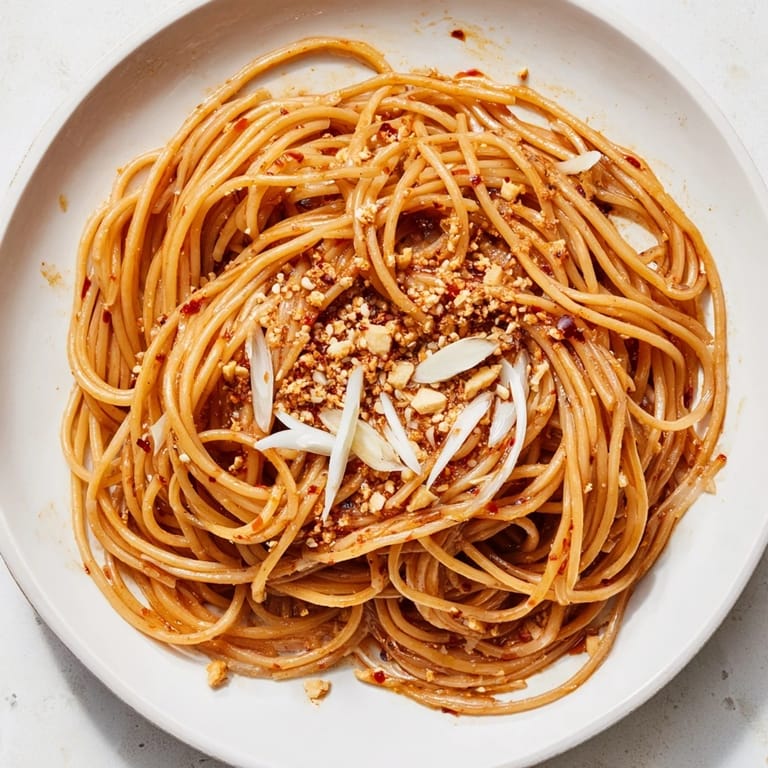
Save There's a Tuesday night I keep coming back to—standing in my kitchen with the windows fogged up, a late craving hitting hard, and exactly twenty minutes before I needed to be somewhere. I'd just discovered this garlic chili oil technique watching someone cook on their phone, and I had most of the ingredients scattered around. The noodles went into boiling water, the garlic hit hot oil and suddenly the whole apartment smelled like something I couldn't quite place but desperately wanted to eat. That night turned into dozens of nights, because once you taste noodles coated in that fragrant, fiery oil, the regular versions feel flat.
I made this for my roommate on a random Thursday when she came home looking defeated, and watching her face shift from tired to actually smiling while she ate was one of those small kitchen victories that stick with you. She asked for the recipe the next day, then started making it herself, and now I see her with chopsticks and a bowl of these noodles at least twice a week. Food that's this quick and this good has a way of becoming part of someone's regular rotation.
Ingredients
- 200g wheat noodles: Chinese wheat noodles work best if you can find them, but linguine gives you a similar chew and holds the oil beautifully.
- 4 cloves garlic, finely minced: Don't use a press here—mince it by hand so you get pieces that stay visible and textural throughout.
- 2 scallions, thinly sliced: Keep the white and green parts separate; the whites go into the oil, the greens stay fresh on top.
- 1 tablespoon toasted sesame seeds: Buy them already toasted if you can, because toasting them yourself is another step and these noodles are about speed.
- 2½ tablespoons chili flakes: Sichuan chili flakes are ideal, but Korean gochugaru works wonderfully too—adjust based on your heat tolerance and how brave you're feeling.
- ½ teaspoon Sichuan peppercorns: Optional, but if you try them once you'll understand why they're worth keeping around—they add a strange, tingly numbness that's weirdly addictive.
- ¼ teaspoon ground white pepper: This is quieter than black pepper and plays nicer with the other flavors.
- ½ teaspoon sugar and salt: These balance the heat and bring everything into focus.
- 3 tablespoons neutral oil: This needs to be hot enough to bloom the spices without burning them—it's the most important moment in the whole recipe.
- 1½ tablespoons light soy sauce, 1 tablespoon black vinegar, ½ teaspoon sesame oil: This combination creates the glossy, complex sauce that coats every strand.
Tired of Takeout? 🥡
Get 10 meals you can make faster than delivery arrives. Seriously.
One email. No spam. Unsubscribe anytime.
Instructions
- Get the noodles going:
- Boil water and cook the noodles until they're chewy but not mushy—taste them a minute before the package says to, because they'll keep cooking slightly in the residual heat. Drain and set aside, but don't throw away that cooking water; it's starch that will help the sauce coat the noodles.
- Build your chili oil base:
- In a heatproof bowl, combine the minced garlic, white parts of scallions, chili flakes, Sichuan peppercorns if you're using them, white pepper, sugar, and salt. Add the sesame seeds too. This is your flavor foundation, sitting there waiting for the heat.
- Heat the oil properly:
- Pour neutral oil into a small saucepan and heat it over medium-high heat until it shimmers and moves easily but doesn't smoke—you want it hot enough to release the aromatics, not so hot it burns them. This takes about three minutes of attention.
- The sizzle moment:
- Carefully pour the hot oil over your chili-garlic mixture and listen for that immediate sizzle—it should smell suddenly complex and spicy. Stir everything together gently; the heat will bloom those flavors into something fragrant and alive.
- Make the sauce:
- In a large bowl, whisk together light soy sauce, black vinegar, dark soy sauce if you're using it, and sesame oil. Add about two tablespoons of that reserved noodle cooking water—this starchy liquid will help everything coat evenly.
- Bring it together:
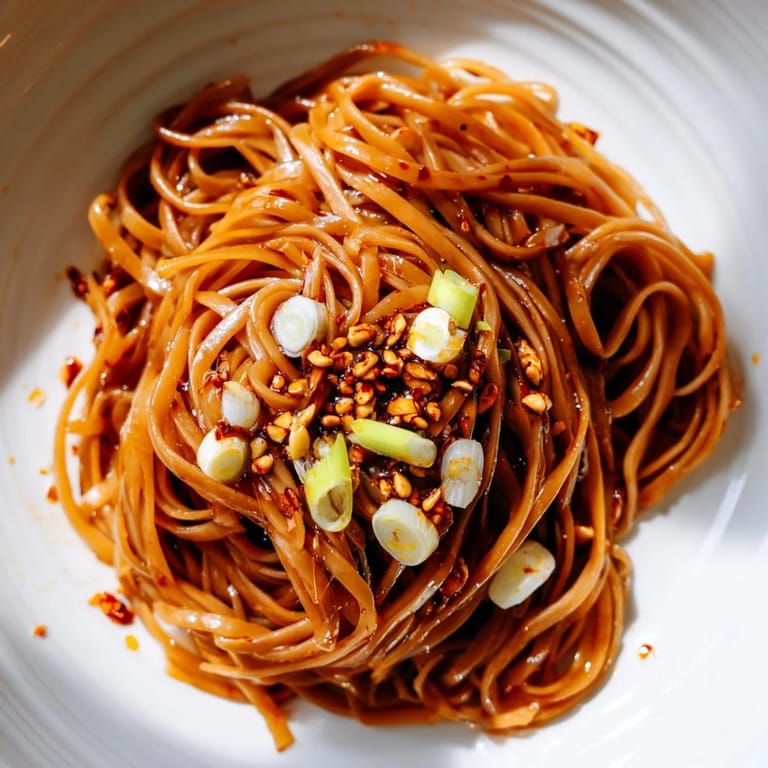
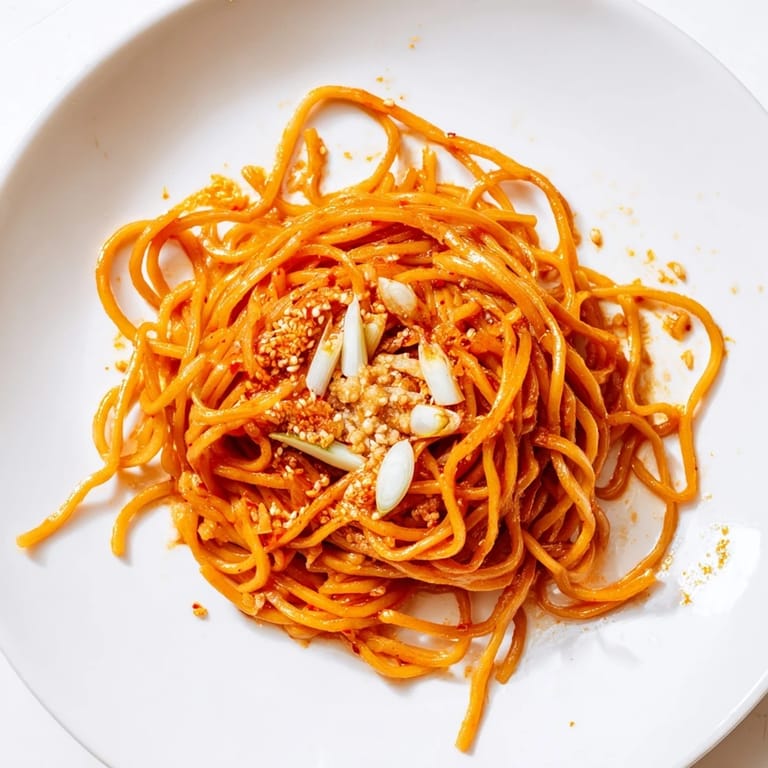
- Add your drained noodles to the sauce bowl, then pour the chili oil mixture over top. Toss everything with chopsticks or tongs, making sure every strand gets coated in that glossy, spiced oil.
- Finish and serve:
- Top with the green parts of scallions and an extra sprinkle of sesame seeds if you want. Eat it right away, because the noodles are best when they're still warm and the oil is still fragrant.
 Save
Save I've learned that the best meals don't have to take hours or require techniques you've never heard of. Sometimes the most satisfying food is the one that comes together in the time it takes to decompress from your day, filling your kitchen with smells that make you hungry for something you didn't even know you needed.
The Heat Question
Everyone has a different tolerance and preference for spice, and this recipe respects that. Start with 2 tablespoons of chili flakes if you're cautious, taste it, and add more if you want to turn up the volume. I've made this for people who add extra flakes and people who ask if we can tone it down, and both versions are genuinely good. The beauty is that the garlic and vinegar and sesame are strong enough to shine even if you dial back the heat.
Why This Works as a Quick Meal
There's something important about recipes that fit into real life instead of asking you to rearrange your whole evening. This comes together in the time between getting home and being hungry enough to make bad decisions. You're not doing anything complicated—boiling noodles, making an oil, whisking a sauce—but the timing and the technique make it taste like someone who knows what they're doing made it for you.
Building Your Own Version
Once you understand the structure—hot oil blooming aromatics, acid and salt cutting through the richness, noodles binding it all together—you can start playing around. Some nights I add crispy tofu cubes or sautéed mushrooms. Other times it's just the noodles and oil, which is often the best version. The core technique is strong enough to handle variations without falling apart.
- If you have fresh chiles, slice them thin and add them raw on top for a different kind of heat.
- Drizzle any leftovers with more sesame oil the next day and eat them cold for lunch.
- Toast your own Sichuan peppercorns in a dry pan if you can find the whole spice—they smell incredible and the flavor is fresher.
 Save
Save This recipe is proof that the most memorable meals aren't the complicated ones—they're the ones that feel like someone understood exactly what you needed and made it happen in twenty minutes. Make it when you're hungry, make it when you want to impress someone quietly, make it because you have noodles and chili flakes and an evening that needs something good.
Recipe FAQs
- → What type of noodles work best for this dish?
Wheat noodles like Chinese wheat noodles or linguine hold a chewy texture and absorb the chili oil well, making them ideal for this preparation.
- → How can I adjust the spiciness level?
Modify the amount of chili flakes according to your heat preference; you can also include or omit Sichuan peppercorns for numbing heat.
- → Is it necessary to reserve noodle cooking water?
Yes, reserving some cooking water helps loosen the sauce and ensures the noodles are evenly coated and glossy without drying out.
- → Can additional ingredients be added?
Vegetables, tofu, or proteins like shredded chicken can be mixed in to enhance texture and nutrition.
- → What oils are recommended for preparing the chili oil?
Neutral oils such as canola, sunflower, or grapeseed oil work best to infuse the aromatic spices without overpowering their flavors.