 Save
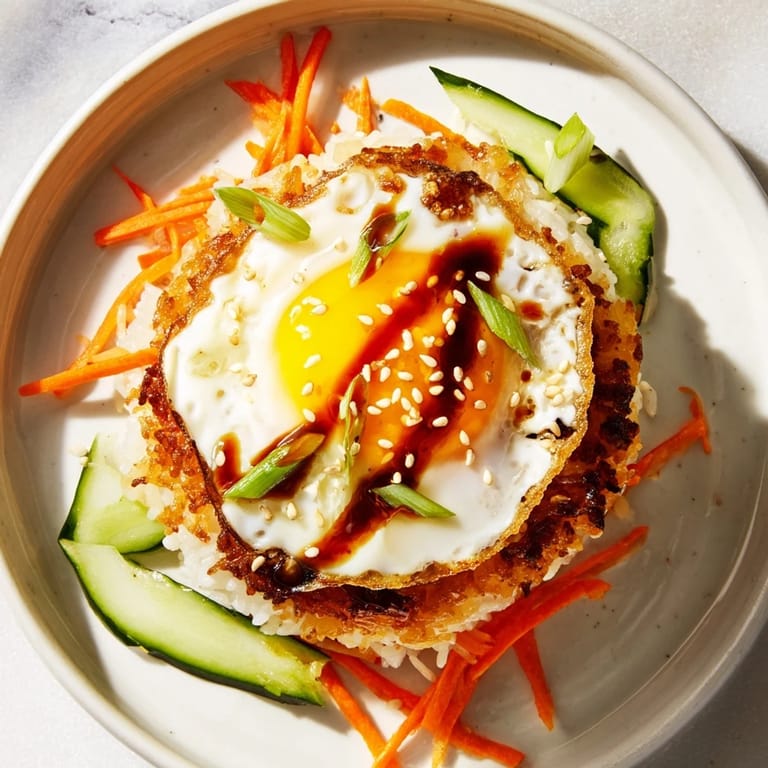
Save There's something magic about the moment rice hits a hot pan and starts to sing. I discovered this bowl on a lazy Sunday morning when I had leftover rice and an egg situation to resolve, but what emerged was something I'd end up making twice a week. The contrast between the shatteringly crispy base and the runny yolk that pools across everything is the kind of simple alchemy that makes you wonder why you haven't been doing this all along.
My roommate took one bite of this and immediately asked for the recipe, which I considered a small victory since they're usually too busy to sit down and eat. We ended up making two bowls side by side the next evening, and I realized this is the kind of dish that invites people into the kitchen naturally, no formal dinner party required.
Ingredients
- Cold cooked rice (2 cups): Day-old rice works best because the grains have dried out slightly and separate beautifully as they crisp up, while freshly cooked rice tends to clump.
- Large eggs (2): The yolk is the entire point here, so use the freshest ones you can find and don't be shy about leaving it runny.
- Carrot (1 small): Julienned thin so it stays delicate and slightly sweet against the crispy rice, adding texture without heaviness.
- Cucumber (1 small): The cool crispness cuts through the richness perfectly, sliced thin enough to fold into each bite.
- Scallions (2): A small handful sliced gives you that fresh, slightly oniony note that makes the whole bowl feel bright.
- Soy sauce (2 tablespoons): Use regular soy sauce unless you need gluten-free, then reach for tamari which tastes just as good.
- Rice vinegar (1 tablespoon): This is what keeps the sauce from tasting heavy, adding a gentle tang that wakes everything up.
- Sesame oil (1 teaspoon): A little goes a long way here, so don't pour with a heavy hand or it'll overpower the subtler flavors.
- Honey or sugar (1 teaspoon): Balances the salty and acidic notes so the sauce tastes round rather than aggressive.
- Toasted sesame seeds (1 tablespoon): Toast them yourself if you have time, the difference is noticeable, but store-bought works fine too.
- Vegetable oil (2 tablespoons): Any neutral oil will do here, but use enough to get the rice truly golden rather than pale.
Tired of Takeout? 🥡
Get 10 meals you can make faster than delivery arrives. Seriously.
One email. No spam. Unsubscribe anytime.
Instructions
- Mix your sauce first:
- Whisk together the soy sauce, rice vinegar, sesame oil, and honey in a small bowl and set it aside so the flavors can mingle while you work on everything else.
- Get the rice golden:
- Pour a tablespoon of oil into a nonstick skillet over medium-high heat and let it shimmer, then add your cold rice all at once and press it down firmly with your spatula into an even layer. Don't touch it for 5 to 7 minutes while the bottom develops that crackling, golden crust you're after.
- Crisp the edges:
- Once the bottom is golden, flip sections of the rice to expose the uncooked parts, or just break it up and let the new surfaces brown for another minute or two. Transfer to your serving bowls when it's as crispy as you like it.
- Cook your eggs:
- Return the skillet to the heat with the remaining tablespoon of oil, crack both eggs into the pan, and let them fry until the whites set solid and the edges curl up and turn crispy, about 2 to 3 minutes depending on how hot your pan runs. The yolks should still jiggle slightly when the pan moves.
- Assemble and dress:
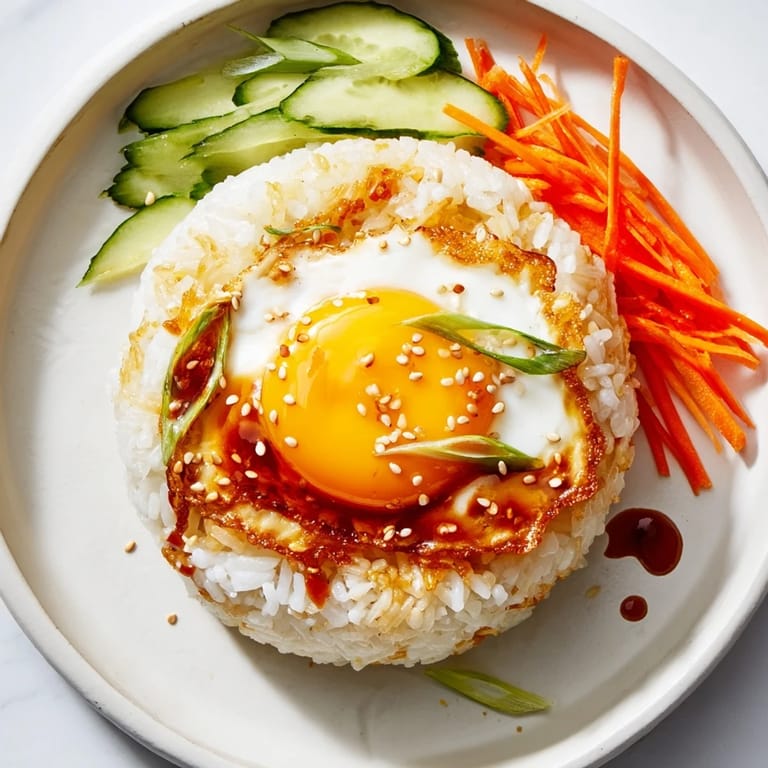
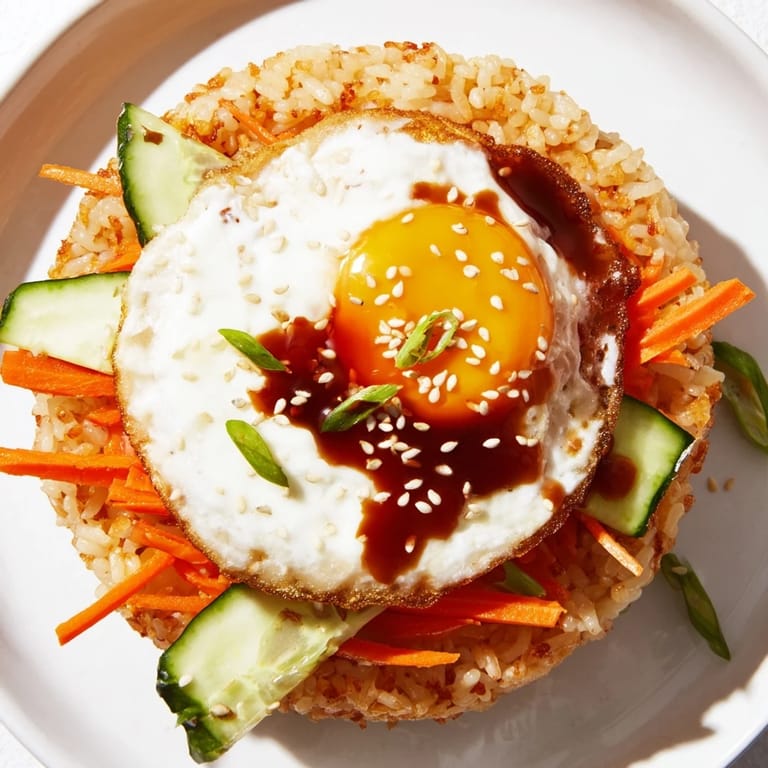
- Place one fried egg on top of each bowl of crispy rice, then arrange the carrot, cucumber, and scallions in little sections around it like you're plating something at a restaurant.
- Bring it together:
- Drizzle the sauce over everything, scatter the sesame seeds on top, and then stir it all together right before eating so every spoonful gets the crispy rice, creamy yolk, fresh vegetables, and tangy sauce all at once.
 Save
Save I made this for someone who claimed they didn't really love rice, and watching them scoop up that last bit of crispy edge coated in runny yolk completely changed the trajectory of that afternoon. Food has a way of surprising you when you stop overthinking it.
Why Cold Rice Changes Everything
The texture difference between cold rice and warm rice in a hot pan is the entire secret to this dish. Warm rice releases moisture and steams instead of frying, so it becomes soft and clumpy, which defeats the purpose entirely. Cold rice has lost its moisture, so each grain stays separate and can brown individually, creating that shattering crust that makes this bowl special instead of just another rice dish.
The Sauce Is Your Safety Net
You could eat this bowl with just salt and the runny yolk, but the sauce pulls everything into focus. It's balanced enough to taste intentional, acidic enough to cut through the richness, and takes exactly two minutes to make. If you find yourself without rice vinegar one day, a splash of regular vinegar diluted with a tiny bit of water works in a pinch, though the flavor shifts slightly toward sharper.
Make It Your Own
This bowl is a foundation, not a rule. I've added sliced avocado when I had one, crumbled crispy tofu for protein variation, and even scattered some quick-pickled ginger across the top on days when I wanted something brighter. The vegetables can change with whatever looks fresh at the market.
- Kimchi or quick-pickled vegetables add funk and brightness if you want to push the flavor profile in a different direction.
- Brown rice works perfectly here if you prefer the nuttier taste, though it takes slightly longer to crisp up.
- A drizzle of chili oil or sriracha transforms this into something with a spicy edge if you're in that mood.
 Save
Save This is the kind of meal that reminds you that delicious food doesn't require a long ingredient list or hours at the stove. Make it once and it becomes part of your regular rotation.
Recipe FAQs
- → How can I achieve a crispier rice base?
Use day-old cooked rice for less moisture and press firmly into the skillet. Cook undisturbed over medium-high heat until golden and crisp on the bottom before flipping or stirring.
- → What type of rice works best for this dish?
Day-old white or jasmine rice yields the best texture for crispiness. Brown rice can be used for a nuttier flavor but may require longer cooking.
- → Can I customize the toppings for this bowl?
Yes, you can add kimchi, sautéed mushrooms, avocado slices, or a drizzle of chili oil or sriracha for added flavor and spice.
- → How should the eggs be cooked?
Fry the eggs until the whites are fully set and edges crisp, leaving yolks runny if desired for extra richness.
- → What dietary considerations should be noted?
This dish contains eggs and soy from the soy sauce. Use gluten-free soy sauce if necessary and check ingredient labels for allergens.