 Save
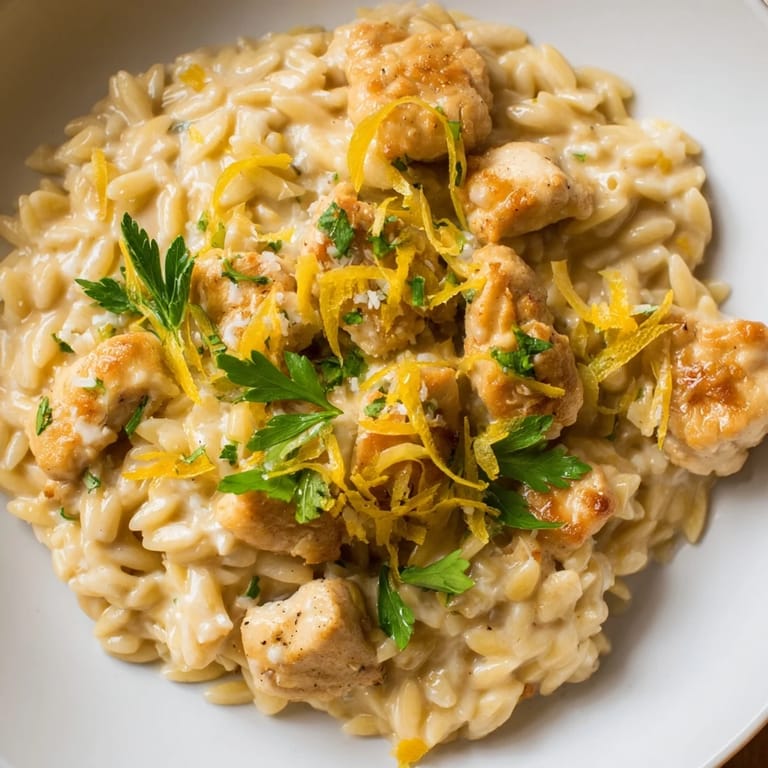
Save There's something about the smell of lemon zest hitting a hot pan that makes me stop whatever I'm doing. Years ago, I was rushing through a weeknight dinner when a friend mentioned she'd made creamy lemon chicken orzo on autopilot—no fuss, no complicated technique, just one skillet and thirty minutes. I tried it that night, and the bright, warm simplicity of it won me over completely. Now it's become my go-to when I want something that feels both impressive and entirely manageable.
I made this for my sister last spring when she was between jobs and needed comfort food without the stress. She watched the cream swirl into the broth and said it looked fancy, and I realized that's part of why I love cooking this—it looks like you've spent all day on it, but you really haven't. She still asks me for the recipe whenever we talk.
Ingredients
- Boneless, skinless chicken breasts: Cut into bite-sized pieces so they cook quickly and stay tender; avoid pounding them flat, as that can make them dry.
- Olive oil: Use a decent quality one for cooking the chicken—it makes a real difference in flavor.
- Unsalted butter: This lets you control the salt level and keeps the aromatics from burning.
- Yellow onion: The sweetness balances the lemon beautifully; chop it finely so it melts into the sauce.
- Garlic cloves: Fresh minced garlic, never the jarred kind—the difference is worth the extra thirty seconds.
- Orzo pasta: This tiny rice-shaped pasta absorbs the sauce like a dream; don't use regular pasta or it'll be a different dish entirely.
- Low-sodium chicken broth: Use homemade if you have it, but good-quality store-bought works just fine.
- Heavy cream: The richness is essential; if you want lighter, use half-and-half, but don't skip it completely.
- Lemon zest and juice: Zest the lemon before juicing it, and taste as you go—lemon strength varies.
- Dried thyme: It whispers in the background; fresh is lovely if you have it, but dried works.
- Red pepper flakes: Optional, but a tiny pinch adds intrigue without heat.
- Parmesan cheese: Freshly grated if possible—it melts better and tastes richer.
- Fresh parsley: A little green at the end lifts everything; don't skip this.
Tired of Takeout? 🥡
Get 10 meals you can make faster than delivery arrives. Seriously.
One email. No spam. Unsubscribe anytime.
Instructions
- Season and sear the chicken:
- Pat your chicken pieces dry with paper towels before seasoning—this helps them brown properly. Heat the oil until it shimmers, then add chicken in a single layer; resist the urge to move it around for the first few minutes so it develops a golden crust.
- Build the aromatics:
- After the chicken comes out, melt butter and cook the onion slowly until it's completely soft and starting to turn golden at the edges. This takes patience, but it's where so much of the flavor comes from.
- Toast the orzo:
- Stir the dry orzo into the butter and onions for a minute or two—you'll hear it click against the pan, and that's when you know it's getting toasty. This step deepens the pasta's flavor in a way that feels subtle but important.
- Build the sauce:
- Pour in the broth while stirring, scraping up all those brown bits stuck to the bottom of the pan; they're liquid gold. Add the cream, lemon zest, juice, thyme, and red pepper flakes if using, then bring everything to a gentle simmer.
- Finish cooking:
- Return the chicken to the pan and let it all cook together, stirring occasionally, until the orzo is tender and the sauce coats everything in a silky layer. Taste it as you go—lemon juice gets added a bit at a time because you can always add more but you can't take it out.
- Finish with cheese and herbs:
- Stir in the Parmesan and parsley off the heat so they don't cook out. A crack of fresh pepper and a final squeeze of lemon, and you're done.
 Save
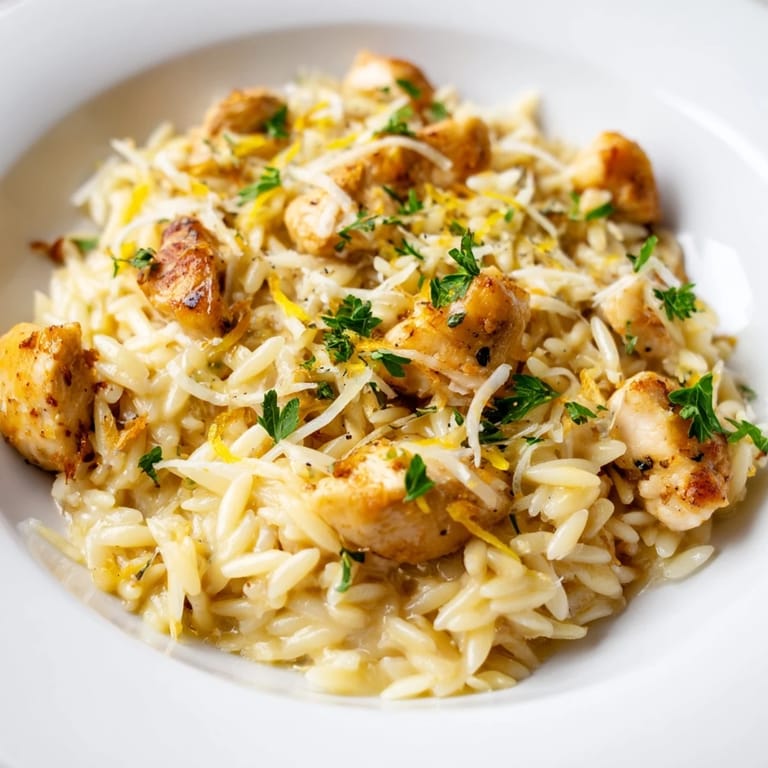
Save I made this for a dinner party last summer, and someone asked if I'd trained as a chef because it looked so polished. The truth is simpler—it's just good ingredients cooked with attention, which somehow feels more meaningful than technique. That's when food stops being fuel and becomes a way of saying 'I'm glad you're here.'
How to Make It Your Own
This recipe loves being played with, which is part of why I keep coming back to it. Stir in a handful of fresh spinach or frozen peas in the last two minutes if you want green, or add a splash of white wine to the broth for complexity. Some nights I add a pinch of nutmeg, and other times I'll toss in a small handful of sun-dried tomatoes for a different brightness. The lemon and cream are what hold it together, so everything else is just decoration.
The One-Pan Magic
There's a reason one-pan meals feel like they belong in a weeknight rotation—they're forgiving and they don't leave you staring at a sink full of dishes. With this one, you sear the chicken, build the sauce in the same pan, and everything simmers together. It feels almost meditative, the way the kitchen smells, the way the cream swirls in, the way it comes together in about the time it takes to set a table.
Wine and Table Moments
This dish pairs beautifully with a crisp white wine—Pinot Grigio or Sauvignon Blanc let the lemon and cream shine. I've served it to friends who were nervous about cooking, and it always comes out looking restaurant-quality, which gives them confidence. It's also the kind of meal that doesn't need much else—maybe a simple salad and bread to soak up the sauce, but honestly, it stands on its own.
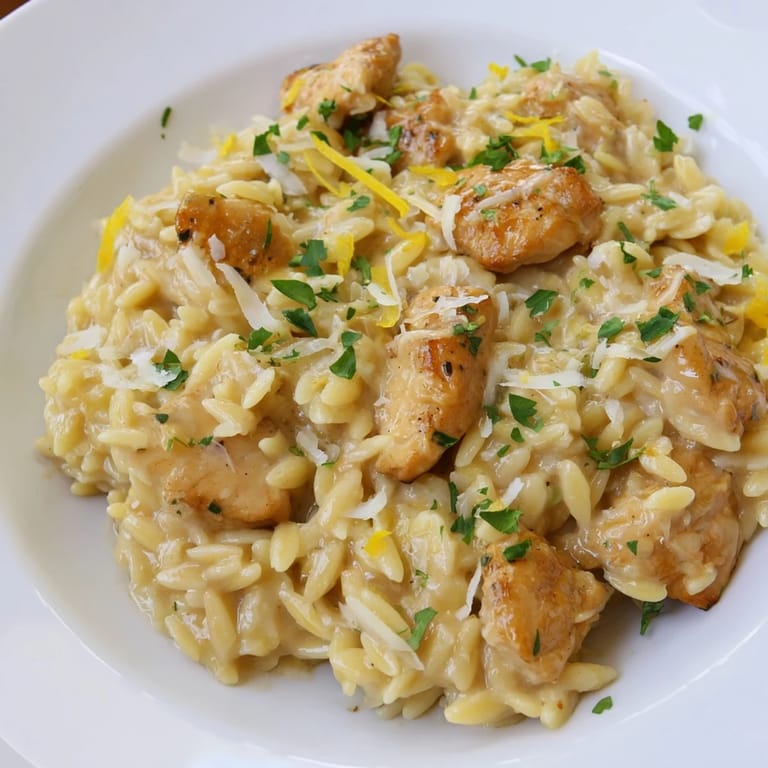
- Serve it in shallow bowls so the sauce pools around the orzo, which makes it feel more special than a flat plate.
- A squeeze of fresh lemon and a scatter of parsley at the table lets everyone adjust it to their taste.
- Save any leftovers for lunch the next day—the flavors actually get better after a night in the fridge.
 Save
Save This recipe has become a quiet favorite in my rotation, the kind of thing I make when I want to feel capable and the people I'm cooking for to feel cared for. It's proof that you don't need hours or complicated steps to cook something that matters.
Recipe FAQs
- → What type of chicken works best for this dish?
Boneless, skinless chicken breasts cut into bite-sized pieces ensure quick, even cooking and tender texture.
- → Can I substitute orzo with another pasta?
Yes, small pasta shapes like acini di pepe or fine couscous can replace orzo while maintaining similar cooking times.
- → How can I make this dish lighter?
Use half-and-half or whole milk instead of heavy cream to reduce richness without sacrificing creaminess.
- → What herbs complement the lemon and chicken flavors?
Thyme and fresh parsley add earthy and fresh notes that balance the citrus and creamy elements.
- → Is this dish suitable for nut-allergic individuals?
Yes, this preparation contains no nuts but includes dairy and wheat, so check for other allergies accordingly.
- → Can I add vegetables to this meal?
Adding baby spinach or peas in the final minutes enhances both nutrition and color without altering cooking time.