 Save
Save My kitchen gets its best light on weekend mornings, and one Saturday I stood there staring at a nearly-empty bread box, wondering what could transform a couple of thick slices into something special enough for brunch. That's when I remembered seeing Greek yogurt in the fridge and thought: what if custard didn't have to be cooked on the stovetop? What if it could bake right into the bread itself? That first attempt came out golden and warm, still slightly soft in the center, and it tasted like someone had figured out a secret that restaurants had been keeping all along.
I made this for my sister when she was visiting on a Sunday morning, half-joking that I'd invented a new breakfast. She took one bite and her eyes went wide in that way that means you've actually done something right. Now whenever she texts about coming over for brunch, this is what she asks for, which is the highest compliment any dish can receive.
Ingredients
- Brioche or challah bread (2 thick slices, about 1 inch): These rich, tender breads soak up the custard perfectly without falling apart; if you only have standard bread, it works but won't be quite as luxurious.
- Large egg: The backbone of your custard, providing that custardy set and richness.
- Plain Greek yogurt (3 tbsp): This is the secret—it adds protein and tanginess while keeping the custard creamy instead of rubbery.
- Honey or maple syrup (1½ tbsp): Your choice determines the flavor profile; honey is subtler, maple syrup brings earthiness.
- Vanilla extract (½ tsp): A whisper of warmth that ties everything together.
- Salt (pinch): Brings out the custard's sweetness and balances the richness.
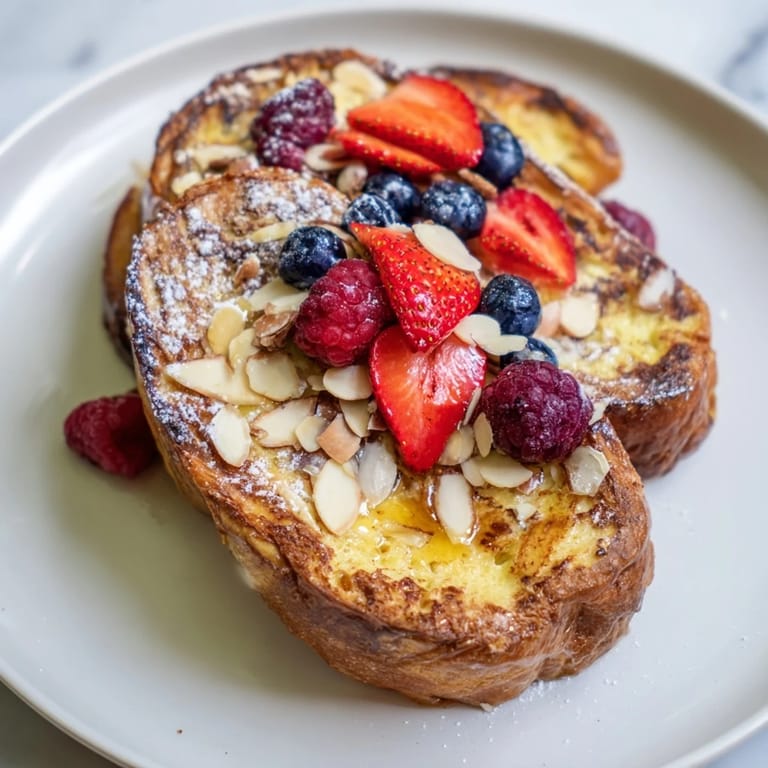
- Fresh berries (½ cup, optional): Strawberries, blueberries, or raspberries add brightness and natural tartness that cuts through the richness.
- Sliced almonds or pistachios (1 tbsp, optional): Adds a gentle crunch and earthiness that surprised me the first time I tried it.
- Powdered sugar and extra honey (optional): For finishing; they're not essential but turn a good breakfast into a moment.
Tired of Takeout? 🥡
Get 10 meals you can make faster than delivery arrives. Seriously.
One email. No spam. Unsubscribe anytime.
Instructions
- Set your oven to 375°F and prepare your stage:
- Preheat to 375°F (190°C) and line a baking sheet with parchment paper so your bread won't stick. A hot oven means crispy edges while the inside stays tender.
- Build your custard:
- Whisk together the egg, Greek yogurt, honey or maple syrup, vanilla, and salt in a small bowl until completely smooth. You want no lumps of yogurt hiding in there—this takes about a minute of actual whisking and makes all the difference.
- Create little wells in your bread:
- Place the bread slices on your prepared sheet and use the back of a spoon to gently press down in the center of each slice, creating a shallow well while leaving a border around the edges. Think of it like making an edible bowl—the edges will stay crisp while the center becomes custardy.
- Fill and top:
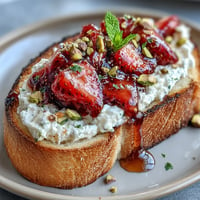
- Spoon or pour the custard mixture evenly into the wells. If you're using berries and nuts, add them now, pressing them gently into the custard so they don't roll off.
- Bake until golden:
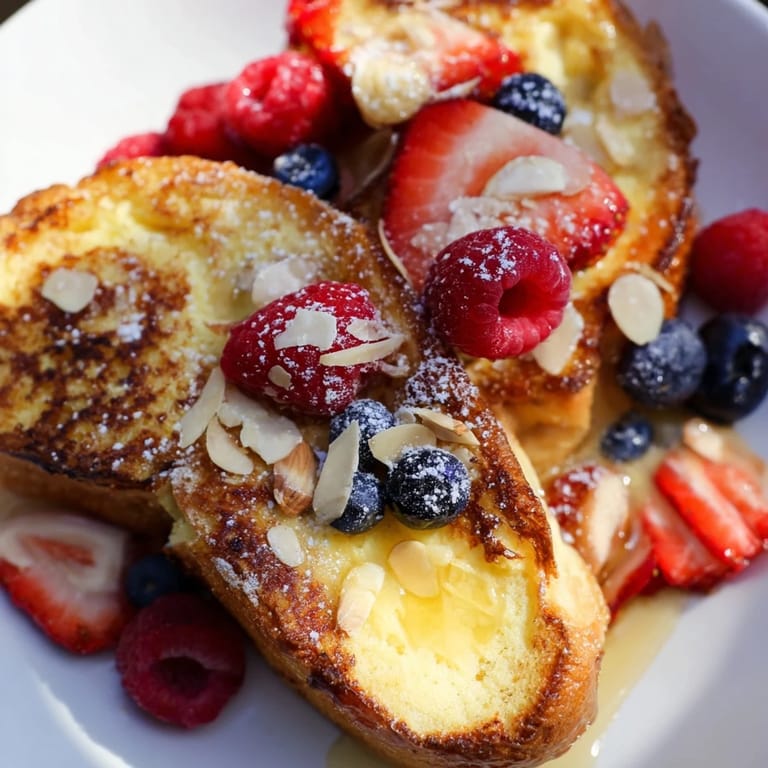
- Bake for 12–15 minutes, watching the color carefully—you want the bread edges to turn golden and slightly crisp while the custard sets but still jiggles just a little when you shake the pan. The residual heat will finish cooking it as it cools slightly.
- Finish with flair:
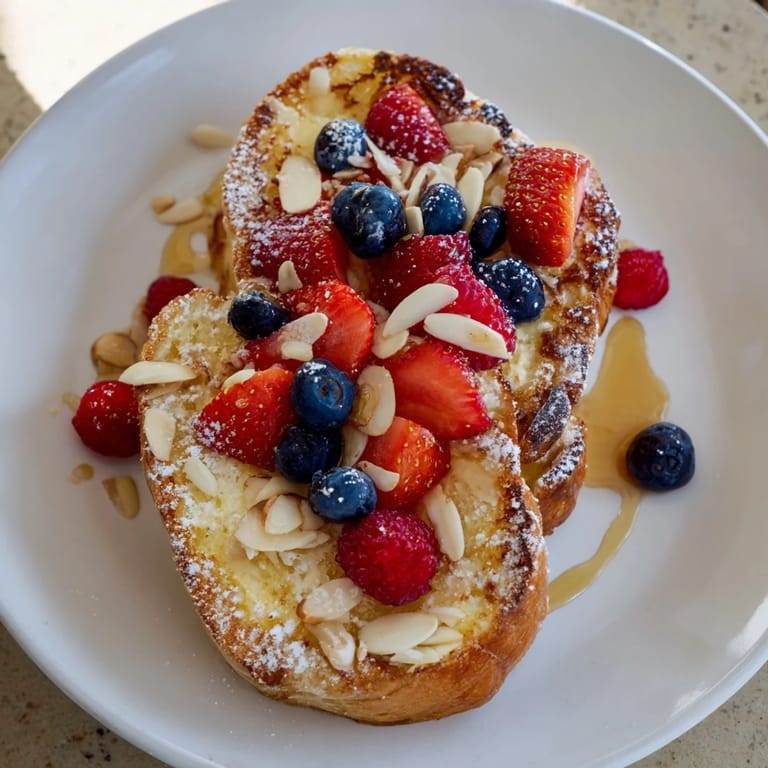
- Let cool for a minute or two, then dust with powdered sugar and drizzle with extra honey if you're feeling generous. Serve while it's still warm and the bread is at its crispiest.
 Save
Save The real magic happened the morning I pulled this out of the oven and the smell of caramelized bread and warm custard hit me at exactly the same moment the sun came through my kitchen window. That's when breakfast stopped being fuel and became an actual experience.
Why This Tastes Better Than You'd Expect
The combination of Greek yogurt and a single egg creates a custard that's silkier than you'd think possible, without needing cream or heavy dairy. The bread's job is to bake up with crispy edges while staying tender inside, and those little wells catch and hold the custard so every bite has that contrast you're actually after. It's engineered sweetness and texture working in harmony.
Flavor Variations Worth Trying
The first time I added a pinch of cinnamon to the custard, I felt like I'd discovered something people had somehow missed. Lemon zest does something similar—it brings a brightness that makes you want another bite. You could also try a tiny pinch of cardamom, or even a few drops of almond extract instead of vanilla, and each one shifts the whole dish into a different mood. I've even drizzled a little balsamic reduction over the berries on mornings when I wanted something less sweet and more complex.
Making It Work for Different Diets
The beauty of this recipe is that it bends without breaking. Gluten-free bread works perfectly if you need it, though brioche is harder to find that way so sourdough or a thick gluten-free loaf steps in nicely. For dairy-free mornings, swap the Greek yogurt for coconut yogurt or cashew cream, and use a flax egg instead of a regular one—mix 1 tbsp ground flaxseed with 3 tbsp water and let it sit for 5 minutes. The texture changes slightly but the spirit remains, and honestly, no one at my table has ever noticed the difference.
- Nut-free toppings work just as beautifully; try coconut flakes, granola, or seed-based sprinkles instead.
- Dairy-free yogurt brands are getting better every year, so taste yours before mixing to make sure it's not too sour for your preference.
- If you're cooking for someone with a lot of allergies, this is one of those recipes that actually becomes easier to modify than more traditional ones.
 Save
Save This breakfast has become the thing I make when I want to feel like I've taken care of myself without much fuss. It's simple enough to throw together on a Tuesday, but special enough that it makes you pause and actually taste what you're eating.
Recipe FAQs
- → What type of bread works best?
Thick slices of brioche or challah provide the perfect soft yet sturdy base that soaks custard evenly while holding shape during baking.
- → Can I substitute Greek yogurt with something else?
Yes, you can use dairy-free yogurt alternatives to accommodate dietary preferences without sacrificing creaminess.
- → How do I achieve a golden crust?
Baking at 375°F (190°C) until edges are crisp and golden ensures a delightful contrast between crunchy exterior and soft interior.
- → What toppings complement the custard toast?
Fresh mixed berries, sliced almonds or pistachios, and a dusting of powdered sugar add vibrant flavor and texture.
- → Can I prepare this ahead of time?
Mix the custard and soak bread in advance, then assemble and bake just before serving to maintain freshness and texture.
- → Are there flavor variations recommended?
Add a pinch of cinnamon or lemon zest to custard for an extra layer of aromatic excitement.