 Save
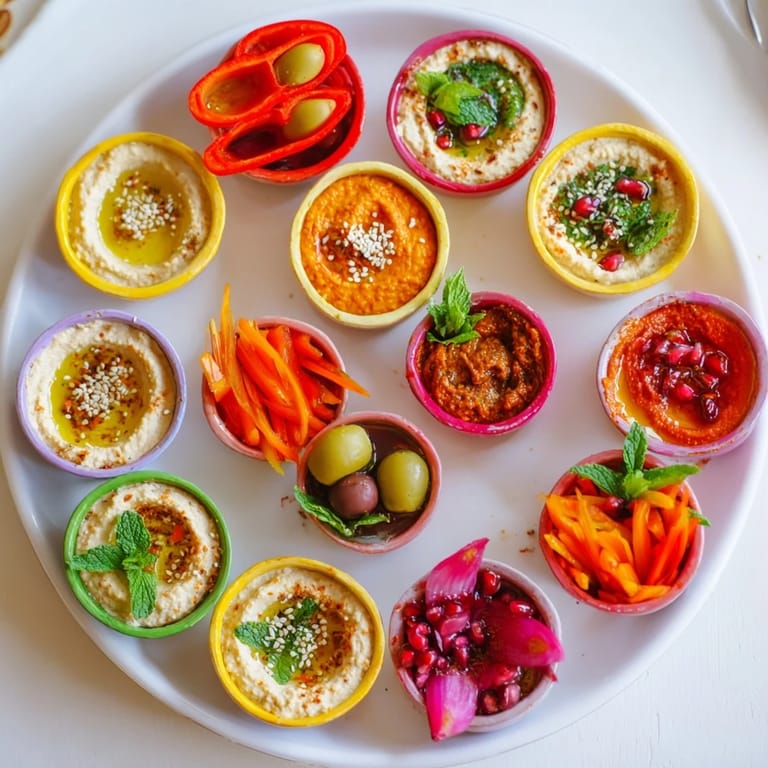
Save I'll never forget the first time I wandered through the medina in Marrakech, stumbling into a riad where a Moroccan family was preparing their evening mezze. The way they arranged dozens of small bowls on a massive tray, each one a jewel box of flavor and color, absolutely mesmerized me. It wasn't just food—it was edible art, a living, breathing mosaic that invited everyone to gather around and explore. That moment taught me that the most memorable meals aren't always the most complicated; they're the ones that celebrate abundance, color, and the joy of sharing.
I made this for a dinner party last spring when my best friend was visiting from out of town, and I'll never forget how everyone just naturally gathered around the board, picking and mixing, laughing and discovering flavors together. Within minutes, the formal seating arrangement dissolved and we were all huddled around the mosaic like kids at a candy shop. That's when I realized this platter does something special—it breaks down the usual dinner formality and creates genuine connection.
Ingredients
- Classic hummus: This is your creamy anchor, the familiar comfort that makes everyone feel welcome. A good hummus should be silky, almost cloud-like, so if you're making it from scratch, don't skimp on the tahini or the time spent blending.
- Baba ganoush: The smoky eggplant dip adds depth and earthiness—it's the ingredient that makes guests pause and ask what they're tasting. That charred eggplant flavor is non-negotiable.
- Muhammara: This red pepper and walnut dip is where the magic happens; it's slightly sweet, slightly spiced, and utterly addictive. Don't underestimate how much people will return to this one.
- Labneh or Greek yogurt with zaatar: The bright herbaceous coating on creamy yogurt provides a cooling counterpoint to all the richer dips. Zaatar is the secret—that subtle, tangy spice blend makes it taste authentic.
- Roasted red peppers: Buy them jarred to save time; they add sweetness and visual pop without requiring you to stand over a hot stove.
- Marinated artichoke hearts: These bring a tender, lemony brightness that refreshes the palate between bites of heavier ingredients.
- Moroccan carrot salad: Shredded carrots with lemon juice and cumin create this unexpected freshness and slight tang that keeps people tasting.
- Preserved lemon slices: This is the secret weapon of Moroccan cooking. Those salty, funky-bright slices are an acquired taste that, once acquired, becomes absolutely essential.
- Mixed Moroccan olives: Use a variety of colors and brines—some buttery, some salty, some herbaceous. This variety is what makes it a journey.
- Quick-pickled red onions: Thinly slice and cover with vinegar and salt; they'll be ready in minutes and add a sharp, vinegary pop that cuts through richness beautifully.
- Cornichons or baby gherkins: These tiny pickles are the palate cleansers, the little refreshing bites that keep people coming back.
- Roasted almonds and pistachios: Buy unsalted so you control the seasoning balance, and toast them lightly yourself if you have time—the aroma alone announces that something special is happening.
- Toasted sesame seeds: These add nutty texture and a slight crunch that makes each bite interesting.
- Bread and pita: Toast the baguette slices until they're golden and slightly crisp—they become little edible scoops rather than just bread. Warm pita quarters become soft vehicles for all these flavors.
- Pomegranate seeds: Don't skip these jewels. They add sweetness, tartness, beautiful color, and they catch the light in a way that makes the whole platter shimmer.
- Fresh mint and cilantro: These aren't just garnish; they're flavor bridges that tie everything together with brightness and freshness.
- Sumac: This lemony-purple spice is the signature touch that whispers 'Moroccan' to everyone's palate without saying a word.
- Extra virgin olive oil: The final drizzle is like adding a golden varnish to a painting—it brings everything together and adds richness.
Tired of Takeout? 🥡
Get 10 meals you can make faster than delivery arrives. Seriously.
One email. No spam. Unsubscribe anytime.
Instructions
- Gather and prepare your dips ahead of time:
- Make your hummus, baba ganoush, and muhammara at least a few hours before (or the day before) so the flavors have time to settle and meld. If you're buying prepared versions, that's absolutely fine—let them come to room temperature so they're at their most velvety. Transfer each one into its own small, preferably colorful bowl or ramekin. The containers are part of the beauty here.
- Prepare all your vegetables and marinated components:
- Slice your roasted red peppers into elegant strips, quarter the marinated artichoke hearts, prepare your carrot salad if making it fresh (it's just shredded carrots, fresh lemon juice, a pinch of cumin, and chopped parsley—takes five minutes), and arrange your preserved lemon slices. Each should have its own bowl; you're creating individual pieces of a puzzle.
- Set up your olives, nuts, and seeds:
- Put mixed olives in one bowl, the quick-pickled red onions in another, cornichons in their own little vessel. Arrange your almonds, pistachios, and sesame seeds in separate bowls too. This might seem like a lot of bowls, but trust me—it's what makes this stunning when it comes together.
- Toast your bread with intention:
- Slice your baguette on the bias (it looks more elegant and catches the toppings better), then either toast the slices in a hot oven until they're golden and crisp, or brush lightly with olive oil and toast them. Warm your pita breads gently—they should be warm enough to be pliable but not so hot they dry out. Tear or quarter them just before serving so they stay soft.
- Create your edible mosaic on a large surface:
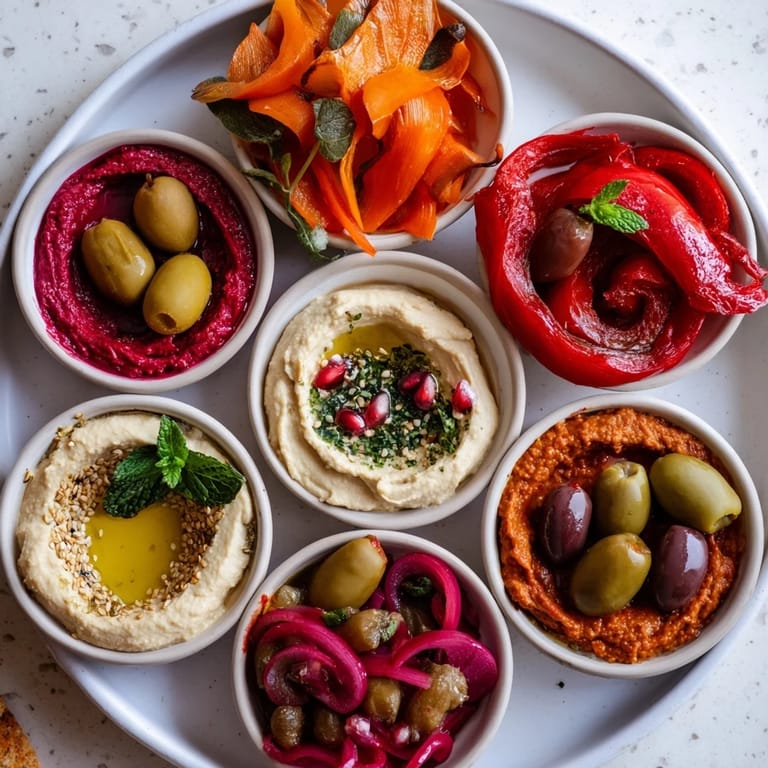
- Here's where the artistry happens. Take a large wooden board or serving tray and start arranging your bowls. Think of it like you're creating a painting—vary the heights by stacking some bowls on small overturned cups or books if needed, create color balance (reds near greens, creams near vibrant vegetables), and leave small gaps in your arrangement.
- Fill the gaps with living garnishes:
- Use those gaps between bowls to scatter pomegranate seeds, fresh mint leaves, and cilantro. Sprinkle sumac across open areas—it creates beautiful visual lines and hints at the flavors to come. It should feel abundant but not cluttered, like a carefully curated collection rather than everything thrown together.
- Give everything a final drizzle of golden oil:
- Just before serving, drizzle extra virgin olive oil over the dips and some of the vegetables. This isn't just for flavor—it catches the light and makes everything glow. It says to your guests: this was made with care.
- Bring to the table and encourage joyful exploration:
- Place this masterpiece where everyone can gather around it. Tell them there's no wrong way to eat this—mix flavors, combine unexpected ingredients, taste and discover. That's the whole point. Provide small spoons for the dips and let the feast become a conversation.
 Save
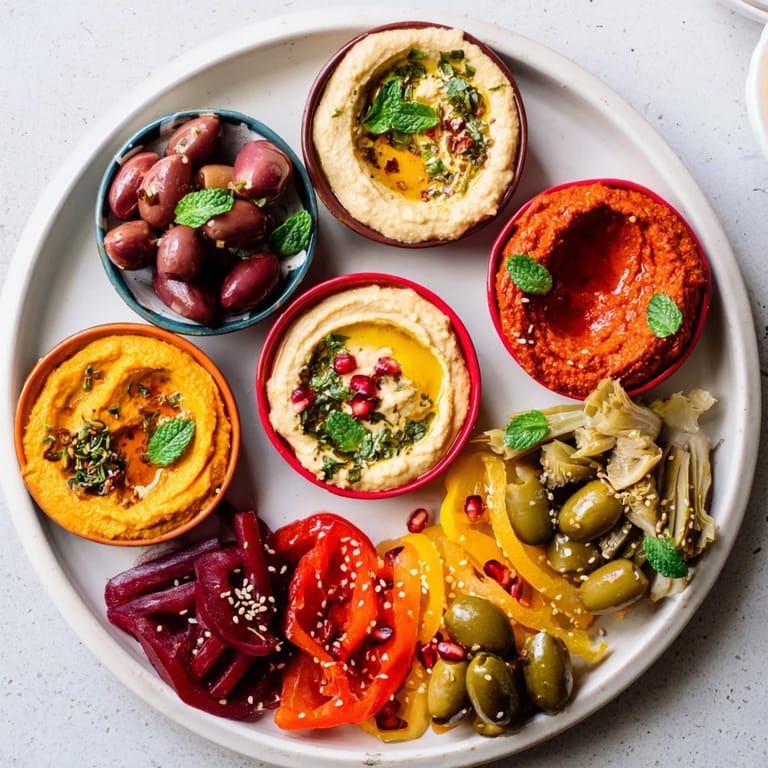
Save There's a moment that happens with this platter, usually about twenty minutes into a meal, when the formal eating dissolves completely and people are mixing flavors, passing bowls, leaning across each other to try combinations they've invented. That's when I know I've created something right. Food at its best brings people out of themselves and into connection with each other, and this Moroccan mosaic does exactly that.
Building Flavor Layers Like an Artist
When I first arranged this platter, I thought of it like creating a painting, and that shifted how I understood the food. Each dip has its own flavor story—earthy baba ganoush, warm muhammara, fresh hummus. The vegetables add brightness and texture. The olives bring saltiness. The nuts add crunch. The herbs tie everything together. But the real magic happens when your guests start combining these elements themselves. Someone will discover that preserved lemon with baba ganoush is transcendent. Another person will find that pistachios paired with muhammara is their new favorite thing. You're not just serving food; you're giving people the tools to discover their own favorite flavor combinations. That's a completely different kind of hospitality.
Timing and Temperature Matter More Than You'd Think
The temperature of each element changes how you experience it. Cold dips are refreshing but can taste muted. Room-temperature dips bloom with flavor—the garlic in hummus becomes more pungent, the spices in muhammara become more aromatic, the tahini becomes silkier. Warm bread transforms into a vehicle for flavors rather than just something to scoop with. This is why I always let my dips come to room temperature before serving, and why I always warm the pita. It's a small detail that makes an enormous difference in how the whole experience tastes. Temperature isn't just about comfort; it's about flavor delivery.
Making This Platter Your Own with Seasonal Variations
Once I understood the structure of this platter, I started treating it as a template rather than a fixed recipe. In spring, I add fresh fava beans. In summer, when tomatoes are at their peak, I make a quick chermoula-spiced tomato salad. In autumn, I roast cauliflower with za'atar. In winter, I add braised beets with cumin. The dips stay constant, but the vegetables and accompaniments become a celebration of what the season offers. You're not locked into these exact components—you're creating a framework that invites personalization. Some guests might add grilled halloumi for richness, others might include a fresh cheese like labneh or feta. The beauty of this platter is that it adapts to what you have, what you love, and what your guests enjoy.
- If you find yourself with extra time, roasting your own red peppers and charring your own eggplant for baba ganoush elevates everything and fills your kitchen with the most incredible aromas
- Keep preserved lemons on hand once you discover them—they're the secret ingredient that makes everyday vegetables taste restaurant-quality
- Remember that this is about abundance and sharing; there should be more than enough for everyone to try multiple elements and find their own favorites
 Save
Save This Moroccan mosaic is less about perfection and more about creating a moment where people gather, taste, discover, and connect. That's the real magic.
Recipe FAQs
- → What dips are featured in the mosaic platter?
The platter includes creamy hummus, smoky baba ganoush, spicy muhammara, and labneh drizzled with olive oil and zaatar.
- → How are the vegetables prepared for the mosaic?
Marinated vegetables such as roasted red peppers, artichoke hearts, Moroccan carrot salad, and preserved lemon slices add vibrant flavors and a range of textures.
- → Can this mosaic accommodate dietary restrictions?
Yes, it's vegetarian and can be made gluten-free by serving with gluten-free bread or crackers. Labneh can be substituted with plant-based yogurt for a vegan option.
- → What garnishes enhance the platter's presentation?
Fresh pomegranate seeds, mint leaves, cilantro, sumac, and a drizzle of extra virgin olive oil provide color contrast and aromatic appeal.
- → What tools are recommended for assembling the mosaic?
Use 8–12 small colorful bowls or ramekins, a large serving tray or wooden board, a bread knife, and small spoons for dips to create the mosaic effect.