 Save
Save My coworker brought this Korean beef bowl to our office potluck on a gray Thursday afternoon, and I watched everyone orbit around her container like it held secrets. The aroma alone—ginger, sesame, something deeply savory—had me asking for the recipe before I'd even taken my first bite. What struck me most wasn't just how good it tasted, but how alive it felt, with crisp vegetables and warm beef creating this conversation between textures that made a simple lunch feel intentional and nourishing.
I made this for my partner on a night when we were both too tired to think, and somehow the process of slicing vegetables and mixing the marinade became meditative. By the time we sat down with our bowls, the fatigue had lifted—not because of magic, but because we'd taken thirty minutes to build something intentional together. That bowl became the reason we started cooking more often, even on the exhausting days.
Ingredients
- Flank steak or sirloin, thinly sliced (500 g): Flank has enough marbling to stay tender even with high heat cooking, and thin slicing means it absorbs the marinade deeply—don't skip the slicing step or you'll chase tenderness.
- Soy sauce (2 tbsp): This is your umami anchor; use one you actually like because it's the backbone of the whole bowl.
- Sesame oil (1 tbsp): A little goes a long way here—it's potent and fragrant, so resist the urge to pour.
- Fresh ginger, grated (1 tbsp): Freshly grated tastes sharper and brighter than pre-minced; the extra thirty seconds of work genuinely matters.
- Garlic, minced (2 cloves): Raw garlic in the marinade adds punch without mellowing during cooking.
- Brown sugar (1 tbsp): This cuts through the saltiness and adds a subtle sweetness that makes the beef sing.
- Rice vinegar (1 tbsp in marinade, 1/3 cup for pickled carrots): Rice vinegar is gentler than white vinegar—it adds brightness without harshness.
- Gochujang (1 tsp, optional): This Korean chili paste brings fermented depth; if you skip it, the bowl is still delicious but loses an edge of complexity.
- Black pepper (1/4 tsp): A grind of fresh pepper at the end matters more than this initial pinch.
- Jasmine or short-grain white rice (2 cups cooked): Short-grain rice holds the sauces better than long-grain, creating a cohesive bite throughout.
- Carrots, julienned (1 cup): The pickling softens them just enough while keeping their crunch—this is your textural bridge between the warm beef and cool vegetables.
- Salt and sugar for pickling: These balance each other; taste as you go and adjust if your carrots end up too sharp.
- Cucumber, thinly sliced (1 cup): Watery vegetables like cucumber are what make this bowl feel light despite being protein-packed.
- Fresh jalapeño, thinly sliced (1): Start with half if you're heat-shy; you can always add more heat with the sriracha mayo.
- Toasted sesame seeds (2 tbsp): Toast them yourself if possible—the difference between raw and toasted is the difference between forgettable and memorable.
- Green onions, thinly sliced (2): These add a sharp, fresh note at the very end that ties everything together.
- Mayonnaise (1/3 cup): This is your binding element; it mellows the sriracha and creates creaminess without heaviness.
- Sriracha (1-2 tbsp): Start conservative and build; everyone's heat tolerance is different, and you can always drizzle more.
- Lime juice (1 tsp): A squeeze of acid at the end brightens everything and prevents the bowl from feeling one-note.
Tired of Takeout? 🥡
Get 10 meals you can make faster than delivery arrives. Seriously.
One email. No spam. Unsubscribe anytime.
Instructions
- Start with the carrots:
- Whisk vinegar, sugar, and salt together until the sugar dissolves, then toss with julienned carrots. Let them sit for at least twenty minutes while you handle everything else—they'll transform from raw and sharp to tender and bright. If you're short on time, even ten minutes helps.
- Build your marinade:
- Combine soy sauce, sesame oil, ginger, garlic, brown sugar, rice vinegar, gochujang if you're using it, and black pepper in a bowl big enough for the beef. The mixture should smell fragrant and balanced, not aggressively salty or sweet. Taste a tiny bit with your finger to calibrate before adding the beef.
- Coat the beef:
- Add your thinly sliced beef to the marinade and toss until every piece glistens. Fifteen to twenty minutes is the sweet spot—long enough to flavor the meat, short enough that the acid doesn't start breaking down the proteins too much.
- Prepare your rice:
- If you haven't already, cook jasmine or short-grain rice according to package directions. Warm rice matters here because it'll absorb the sriracha mayo and beef juices, creating something more cohesive than cold grains.
- Make the sriracha mayo:
- Whisk mayo, sriracha, and lime juice together in a small bowl. Taste and adjust the heat level—this is your personal dial. Some people want it barely pink, others want it to glow; there's no wrong answer.
- Sear the beef with intention:
- Heat a large skillet or wok over high heat until it's almost smoking. Working quickly, spread the marinated beef in a single layer and don't touch it for two to three minutes—the browning is where the flavor lives. Flip and cook the other side for another two to three minutes. The beef should be deeply browned outside but still tender inside; overcooked beef here turns the whole bowl rigid.
- Assemble with care:
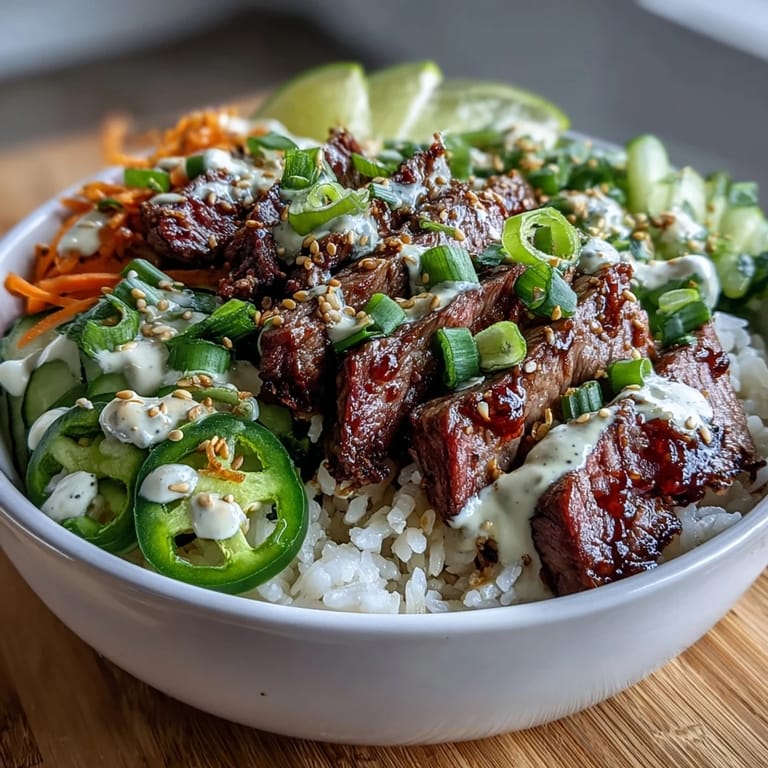
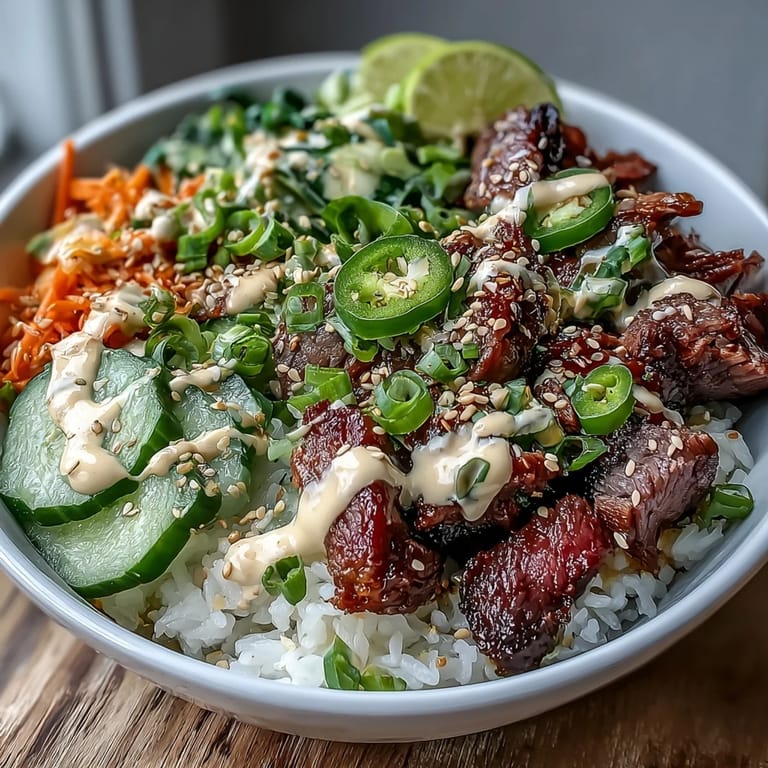
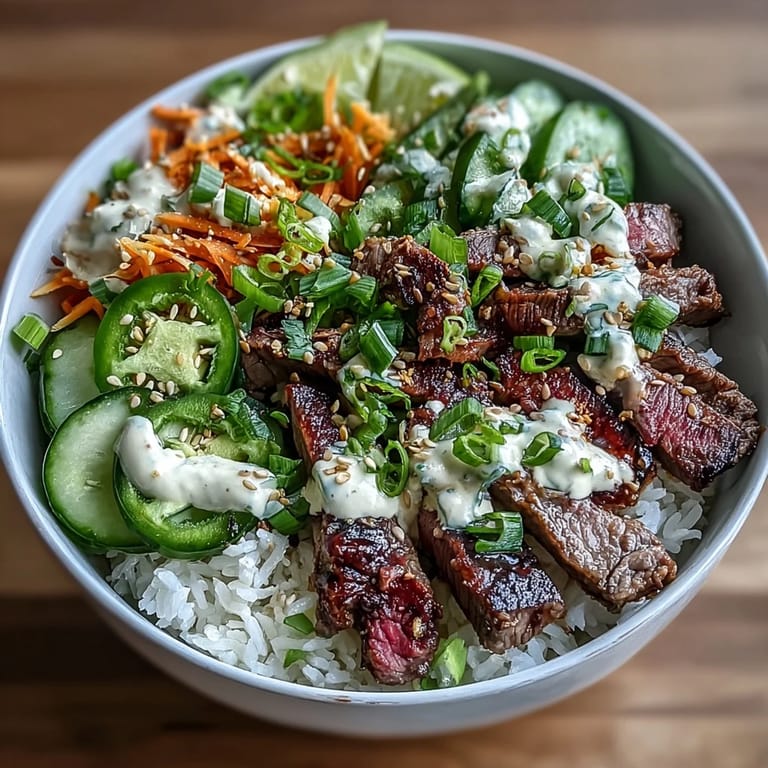
- Divide warm rice among four bowls, then layer beef, drained pickled carrots, cucumber, jalapeños, green onions, and sesame seeds on top. Drizzle sriracha mayo across everything in a generous zig-zag pattern—don't be shy.
- Serve right away:
- These bowls taste best when the rice is still warm and the vegetables are still crisp, so eat them within minutes of assembling.
 Save
Save I realized this bowl works because it's built on contrast—warm against cool, soft against crisp, savory against the brightness of lime and pickled vegetables. There's a moment when you've got all the components in front of you, rice still steaming, beef just off the heat, everything waiting, and you know this is going to be good before you even take a bite.
Why This Bowl Became a Rotation Staple
The genius of bowl-format meals is that you can prep components ahead and assemble when you're hungry, which means it works equally well for meal prep Sunday or a quick weeknight dinner. I started making double batches of the beef marinade on weekends, freezing portions so I could thaw and cook on Wednesday when I was too tired to think. The pickled carrots actually taste better after a day or two, and the sriracha mayo keeps for almost a week in the fridge.
Customization Without Compromise
This recipe thrives on flexibility—your vegetables don't have to be exactly what I've listed, just keep the textures varied. Swap the beef for tofu or chicken thighs if that's what you're cooking with. Use brown rice or cauliflower rice for something lighter, or go full richness with butter rice.
The Small Moments That Matter
The most important thing I've learned making this bowl repeatedly is that quality of ingredients shows instantly—use good sesame oil and you'll taste it, skip toasting the sesame seeds and something intangible disappears. This isn't a dish that hides shortcuts, but it rewards the small attentions you give it.
- Make the marinade while you're prepping vegetables so the beef has maximum time to absorb flavor without you having to wait around.
- If you're short on time, skip the jalapeños at the end and build extra heat into the sriracha mayo instead.
- Save the rice water in case you want to loosen the sriracha mayo—sometimes a tiny drizzle of starchy water creates better texture than more mayo.
 Save
Save This Korean beef power bowl is the kind of meal that proves cooking doesn't have to be complicated to feel special. The first time you balance that bite—warm beef and rice, cool crisp vegetables, creamy spicy sauce—you'll understand why it becomes a favorite.
Recipe FAQs
- → What cut of beef works best?
Flank steak or sirloin sliced thinly against the grain ensures tender bites. Skirt steak works well too.
- → Can I make this ahead?
Pickle carrots up to 3 days ahead. Marinate beef overnight for deeper flavor. Assemble bowls just before serving.
- → How do I adjust the heat level?
Reduce sriracha in the mayo or omit gochujang from the marinade. Remove jalapeño seeds for milder spice.
- → What rice alternatives can I use?
Brown rice adds nutty flavor and fiber. Cauliflower rice offers a low-carb option. Quinoa works for added protein.
- → Is this gluten-free?
Use tamari instead of soy sauce and check all condiment labels. Serve over rice for a naturally gluten-free meal.
- → Can I grill the beef instead?
Grill marinated beef strips on skewers or in a grill basket for 2-3 minutes per side over high heat.