 Save
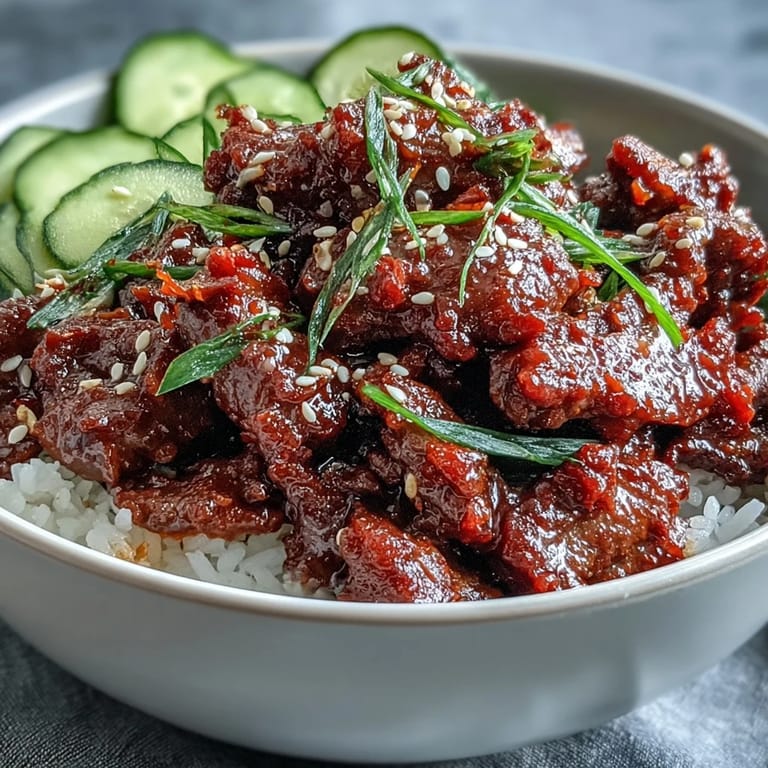
Save My coworker brought this Korean beef bowl to a potluck last spring, and I watched three people go back for seconds before I even got a plate. The combination of that deep, spicy gochujang coating on tender beef with the crisp vegetables felt both comforting and exciting at the same time. When she mentioned it took less than thirty minutes total, I immediately asked for the recipe that same day. Now it's become my go-to when I want something that tastes like I spent hours cooking but actually gives me back my evening.
I made this on a random Tuesday night when my partner came home stressed from work, and watching their face light up at that first bite was genuinely touching. The bowl felt nurturing without being fussy, which seemed to be exactly what we both needed. Since then, it's become our quiet comfort meal, the kind you make when you want to show care without the performance of a big production.
Ingredients
- Ground beef: Use lean for less grease, but don't go too lean—a little fat keeps the meat tender and helps it absorb the sauce beautifully.
- Gochujang: This Korean chili paste is the soul of the dish; it brings heat, depth, and a slight fermented tang that makes everything taste more complex than it actually is.
- Soy sauce: Low-sodium gives you control over saltiness, but if you're going gluten-free, tamari works just as well and honestly tastes cleaner.
- Brown sugar: The sweetness cuts through the spice and helps create that glossy sauce that clings to every grain of rice.
- Sesame oil: A small amount goes a long way—it's potent, fragrant, and essential for that authentic Korean flavor base.
- Fresh garlic and ginger: Minced small and added together, these two create the aromatic backbone that makes your kitchen smell incredible.
- Rice vinegar: Just enough to brighten everything and prevent the sauce from feeling heavy.
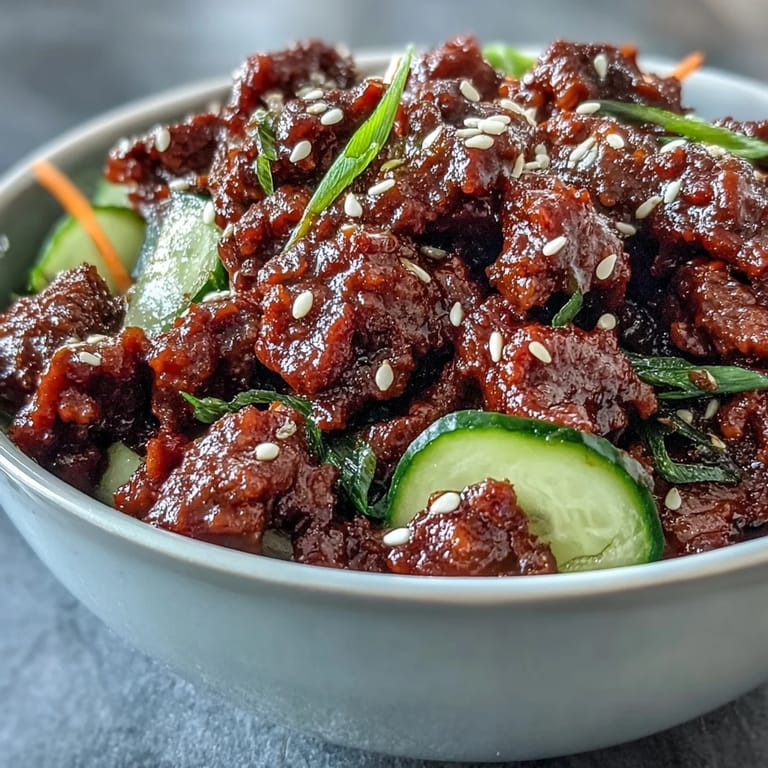
- Fresh toppings: The cucumber, carrot, and green onions aren't just pretty—they add crunch and freshness that balances all that savory sauce.
Tired of Takeout? 🥡
Get 10 meals you can make faster than delivery arrives. Seriously.
One email. No spam. Unsubscribe anytime.
Instructions
- Heat your skillet and brown the beef:
- Get that sesame oil shimmering over medium-high heat before adding the ground beef. Break it apart with a wooden spoon as it cooks—you want pieces rather than one solid clump, which takes about 4 to 5 minutes until there's no pink left. The edges should be slightly caramelized, which adds depth to the final dish.
- Bloom the aromatics:
- Once the beef is cooked through, add minced garlic and ginger and give it a full minute to become fragrant. This isn't just for smell—it wakes up the flavors and prepares them to meld into the sauce.
- Build the sauce:
- Stir in the gochujang, soy sauce, brown sugar, rice vinegar, and black pepper all at once, mixing thoroughly so the paste breaks down and coats everything evenly. Lower the heat slightly and let it simmer for 2 to 3 minutes—you'll see it thicken and become glossy, which means it's ready.
- Taste and adjust:
- Before you finish, take a small spoonful and taste. If it needs more heat, add more gochujang or a splash of sriracha; if it feels too spicy, a pinch of brown sugar tames it.
- Assemble your bowls:
- Divide your rice or cauliflower rice evenly among four bowls, then spoon the beef and all that beautiful sauce over top. The heat from the beef warms the rice perfectly without overcooking anything.
- Finish with fresh toppings:
- Layer on the cucumber slices, julienned carrot, green onions, and a generous sprinkle of toasted sesame seeds—then step back and admire how vibrant it looks before eating.
 Save
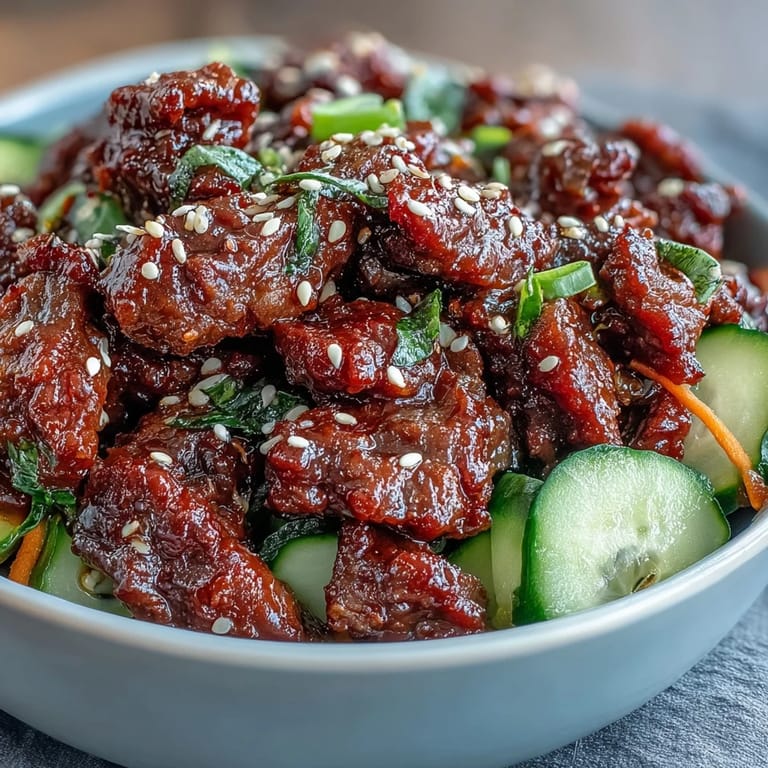
Save There's something about serving this in a bowl that makes people slow down and actually enjoy their meal instead of eating quickly. My nephew, who normally just eats, noticed the colors and asked why everything looked so alive, which made me realize how much the fresh toppings matter. Food like this reminds me that eating is as much about the whole experience as it is about being full.
Why This Works as a Weeknight Dinner
The genius of this bowl is that it feels fancy enough to serve guests, but simple enough that you're not stressed while cooking. Everything happens in one skillet except the rice, so cleanup is minimal and your weeknight doesn't disappear into dishes. Most importantly, it's flexible enough to work with whatever you have in your fridge—tired tonight and only have regular rice? Perfectly fine. Want to throw in some sautéed mushrooms or a soft-boiled egg? Go for it, the sauce can handle anything.
The Secret of Sauce Balance
The magic moment happens when you combine the gochujang, soy sauce, brown sugar, and vinegar—each ingredient has a job, and together they create something more interesting than the sum of their parts. The gochujang brings heat and funk, the soy sauce adds umami and salt, the brown sugar rounds everything out with sweetness, and the rice vinegar keeps it from becoming too heavy. That simmer time is crucial because it lets everything meld rather than taste like separate ingredients.
Customization and Make-Ahead Options
One of my favorite things about this recipe is that you can prep ahead or adapt it depending on your dietary preferences and what you're craving. The sauce actually tastes slightly better the next day after flavors have settled, so you can brown the beef and make the sauce the night before, then just reheat gently while you prep fresh toppings. Here are some ways to make it work for you:
- Use ground turkey or chicken for a lighter protein that still holds up beautifully to the bold sauce.
- Swap the rice base for cauliflower rice, regular rice, or even quinoa—the sauce is what makes it delicious.
- Add extra heat with a pinch more gochujang, a drizzle of sriracha, or those thin slices of fresh red chili on top.
 Save
Save This bowl has become one of those recipes I make when I want to feel both accomplished and relaxed, which is increasingly rare in weeknight cooking. It's proof that you don't need complicated techniques or exotic ingredients to create something genuinely satisfying.
Recipe FAQs
- → Can I make this beef bowl gluten-free?
Yes, simply use tamari instead of soy sauce and verify your gochujang is certified gluten-free. The flavors remain identical while accommodating dietary restrictions.
- → Is gochujang very spicy?
Gochujang offers moderate heat with a rich, fermented depth. You can easily adjust spice levels by using less paste or adding sriracha for extra kick if desired.
- → Can I substitute the ground beef?
Ground turkey or chicken work beautifully for a lighter version. Cooking times remain the same, though you may want to add a touch more sesame oil to maintain richness.
- → How long do leftovers keep?
The seasoned beef stores well in an airtight container for 3-4 days. Reheat gently on the stovetop with a splash of water to refresh the sauce. Rice and toppings are best added fresh.
- → What other toppings work well?
Sliced radishes, shredded cabbage, steamed edamame, or a fried egg all complement the flavors. A drizzle of sesame oil or extra gochujang boosts serving portions.
- → Can I meal prep this dish?
Absolutely. Cook the beef in batch and portion over pre-cooked rice. Keep fresh toppings separate and assemble when ready to eat for best texture and flavor.