 Save
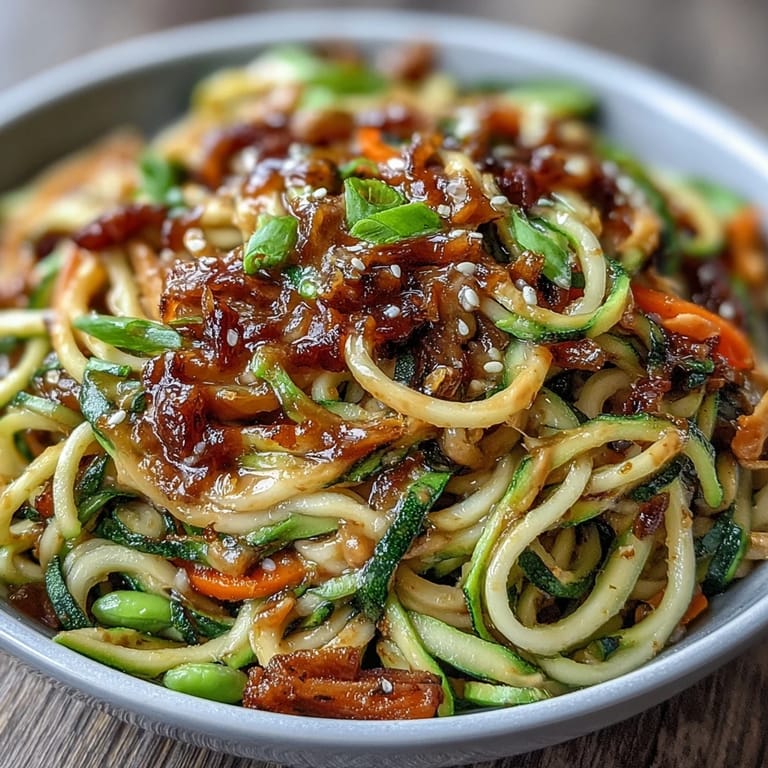
Save There's this moment every spring when I realize my spiralizer has been gathering dust, and suddenly zucchini season sneaks up on me with a garden full of possibilities. One Tuesday evening, running late and genuinely starving, I threw together whatever vegetables were within arm's reach and made a peanut sauce on instinct—no measuring, just tasting and adjusting. What came together was so bright and satisfying that I've been making it ever since, though now I actually write things down.
I made this for my friend Marcus during a surprise lunch visit, and watching him scrape the bowl clean while saying absolutely nothing—just eating—told me everything. That quiet satisfaction when food stops being about what it's not and starts being about what it is, that's when I knew this recipe had staying power.
Ingredients
- Zucchinis, spiralized: These are the foundation, and the trick is not to panic about water content—spiralize them just before cooking, and they'll release minimal liquid if you keep the heat high and don't linger.
- Red bell pepper: The sweetness and slight crunch balance the nutty sauce, and slicing thin ensures they cook through in minutes.
- Carrot, julienned: Adds textural contrast and a whisper of earthiness without overpowering the other vegetables.
- Snap peas: These are non-negotiable for me—they stay snappy and add this bright, almost grassy note that makes the whole dish feel alive.
- Green onions: Keep some raw for the garnish so you get that sharp, fresh bite at the end.
- Natural peanut butter: The creamy base that ties everything together—smooth works better here than crunchy because you're already getting texture from the vegetables.
- Soy sauce or tamari: The umami anchor that prevents the sauce from tasting one-dimensional or overly sweet.
- Rice vinegar: A small amount cuts through the richness and brightens everything without being aggressive.
- Lime juice: Fresh citrus makes this taste alive rather than heavy—don't skip it or use bottled.
- Maple syrup or honey: Just enough to round out the peanut butter and create harmony with the acidic elements.
- Toasted sesame oil: A little goes far—it's the whisper of depth that makes people ask what's in this.
- Garlic and ginger: Minced fresh, never powdered, because you want them to speak clearly without shouting.
- Warm water: Emulsifies the sauce and gives you control over thickness—start conservative and add gradually.
- Red pepper flakes: Optional but worthwhile if you like a gentle heat that doesn't dominate.
Tired of Takeout? 🥡
Get 10 meals you can make faster than delivery arrives. Seriously.
One email. No spam. Unsubscribe anytime.
Instructions
- Set Up Your Mise en Place:
- Spiralize your zucchini and carrots right before cooking—this matters more than you'd think. Slice everything else and arrange it where you can reach it without searching, because the actual cooking happens fast.
- Make the Peanut Sauce:
- Whisk together peanut butter, soy sauce, rice vinegar, lime juice, maple syrup, sesame oil, garlic, and ginger in a bowl. Add 2 tablespoons of warm water first, then drizzle in more, whisking constantly, until the sauce flows like thick cream—it should coat a spoon but still pour.
- Heat Your Pan:
- Get a large nonstick skillet or wok screaming hot over medium-high heat. A splash of sesame oil is optional but adds a gentle fragrance that makes the whole kitchen smell like something good is happening.
- Cook the Heartier Vegetables:
- Throw in the bell pepper, carrot, and snap peas and stir-fry for 2 to 3 minutes until they're tender but still have structure—you're looking for cooked, not collapsed. Listen for that gentle sizzle; if it quiets down, your heat might be too low.
- Add the Zucchini Noodles:
- Toss in the spiralized zucchini and cook for just 2 to 3 minutes, stirring gently but constantly to distribute heat evenly. The zucchini releases water quickly, so undercooking is your friend here—they'll soften as they sit.
- Bring It Together:
- Pour the peanut sauce over everything and toss until every strand and slice is coated. Cook for another minute or two, stirring gently, just until the sauce warms through and everything feels united.
- Finish and Serve:
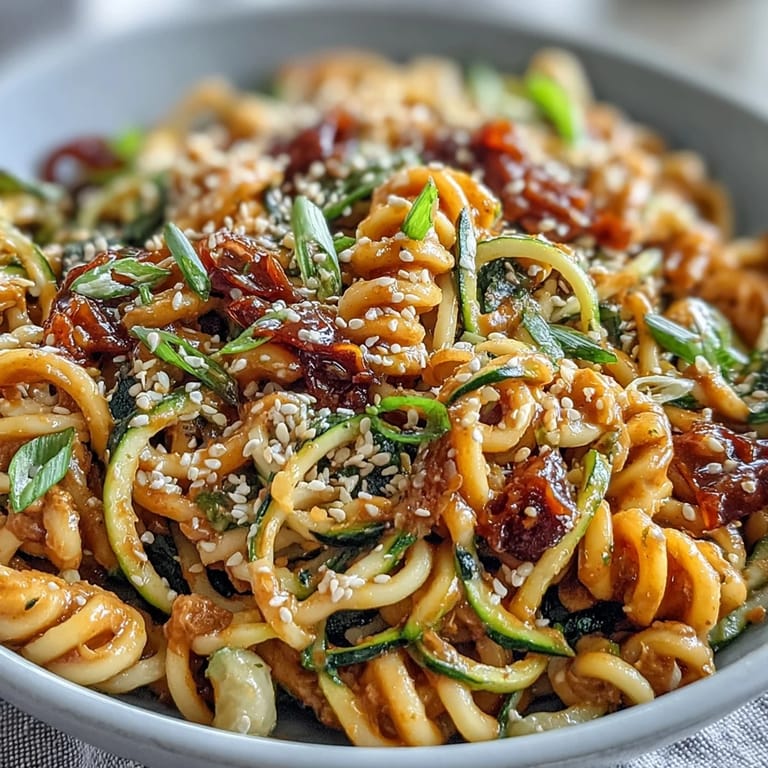
- Transfer to plates or a serving bowl immediately and scatter with chopped peanuts, raw green onions, and cilantro if you're using it. The freshness of the garnish is what tips this from good to memorable.
 Save
Save There was this afternoon when my partner came home stressed about work, and I handed them a bowl of this still warm from the pan. They ate slowly, deliberately, and by the last bite something had shifted—their shoulders weren't so tight. Food doesn't solve problems, but sometimes it creates a pause where better thinking can happen.
Why the Spiralizer Finally Feels Worth It
I resisted buying a spiralizer for years, convinced it was a gadget that would live in a cabinet gathering judgment. Then I realized that spiralized vegetables cook faster and feel less like a compromise and more like an actual choice. The thin strands of zucchini take on sauce and heat in ways that thick noodles never could, and suddenly you're eating something that feels elegant and deliberate rather than diet-focused.
The Peanut Sauce Equation
Peanut sauces can be intimidating, but this one works because it's built on balance—sweet, salty, acidic, and nutty all pushing and pulling against each other rather than one note drowning out the others. If your first attempt tastes flat, it's almost always because you need more lime juice or a pinch more salt. Taste as you build it, and don't be shy about adjusting; your palate knows what it wants even if you haven't cooked this exact sauce before.
Ways to Make This Your Own
This recipe is a foundation, not a rule book, and that's the best part about it. Swap in whatever vegetables you have or love—mushrooms add earthy depth, broccoli brings structure, baby bok choy makes it feel more traditionally Asian. Add shredded cooked chicken or crispy tofu if you want protein staying power. Even the peanut butter can be swapped for almond or sunflower seed butter if allergies or preferences require it.
- Push the sauce through a fine sieve if you want it completely smooth and restaurant-polished, or leave it slightly chunky for texture and character.
- Double the sauce recipe and use the extra as a dip for spring rolls or drizzled over rice bowls throughout the week.
- Make this ahead without the zucchini noodles and reheat gently, adding fresh spiralized zucchini just before serving to avoid the water-release problem.
 Save
Save This is the meal I make when I want to feel like I'm taking care of myself, when nutrition and satisfaction happen to be the same thing instead of opposing forces. Make it tonight and taste the difference.
Recipe FAQs
- → What vegetables are best for this stir-fry?
Fresh zucchini noodles, bell peppers, carrots, snap peas, and green onions work well to provide crunch and color.
- → Can I substitute peanut butter for allergies?
Yes, almond or cashew butter can replace peanut butter to avoid allergens while maintaining creaminess.
- → How do I prevent zucchini noodles from getting soggy?
Cook zucchini noodles briefly and avoid over-stirring to keep them crisp and prevent excess water release.
- → What proteins pair well with this dish?
Grilled tofu, chicken, or shrimp can be added for extra protein and texture variety.
- → Is this dish gluten-free?
Yes, using tamari instead of soy sauce ensures it remains gluten-free while retaining flavor.
- → How can I adjust spice levels?
Crushed red pepper flakes are optional; adjust quantity or omit for a milder taste.