 Save
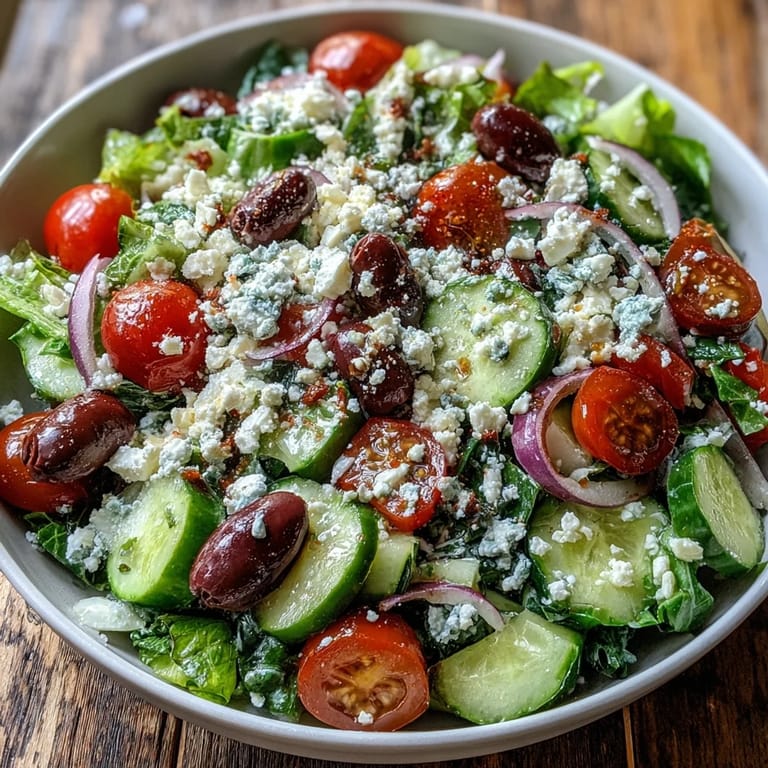
Save My neighbor Maria handed me a container of this salad one summer afternoon, and I remember being struck by how something so simple could taste like a vacation. The bright snap of the cucumber, the way the feta crumbled on my tongue, the olives' gentle brine—it felt less like eating a salad and more like sitting at a taverna overlooking the Aegean. I spent the next week making it constantly, tweaking nothing, because sometimes a recipe doesn't need reinvention, just respect.
I made this for a potluck at my daughter's school, nervous it was too plain next to the elaborate casseroles and desserts lining the table. But it disappeared first, and three other parents asked for the recipe before I'd even wiped down my serving spoon. That's when I realized this salad has quiet confidence—it doesn't need to be fancy to win people over.
Ingredients
- Romaine lettuce: Chop it just before assembling so it stays crisp and doesn't wilt from its own moisture.
- Cherry tomatoes: Halving them instead of leaving them whole lets the dressing coat them better and prevents them from rolling around on your plate.
- Cucumber: Slice it thin enough to be delicate but thick enough that it doesn't turn into mush when tossed.
- Red onion: Slicing it paper-thin mellows its sharpness while keeping that bright peppery bite that makes the salad interesting.
- Feta cheese: Get the crumbly kind, not the block, because the way it catches the vinaigrette is part of the magic.
- Kalamata olives: Pit them yourself if you can find unpitted ones—they taste fresher and you'll feel like you're doing something intentional in the kitchen.
- Extra-virgin olive oil: This is not the time to use the cheap stuff; the oil is half the dressing, so it deserves to be good.
- Red wine vinegar: Its subtle fruitiness is what separates a Greek vinaigrette from just oil and acid.
- Dried oregano: Crush it between your palms before adding it to release the oils and deepen the flavor.
- Garlic: Mince it fine so it distributes evenly and doesn't bite too hard in any single forkful.
- Dijon mustard: A small amount acts like an emulsifier, helping the oil and vinegar stay friends instead of separating.
Tired of Takeout? 🥡
Get 10 meals you can make faster than delivery arrives. Seriously.
One email. No spam. Unsubscribe anytime.
Instructions
- Assemble your vegetables:
- Tear the romaine into bite-sized pieces and pile it into a large bowl alongside the halved tomatoes, sliced cucumber, and thin ribbons of red onion. Don't overthink it—just arrange them casually, like you're building a foundation for something good.
- Add the cheese and olives:
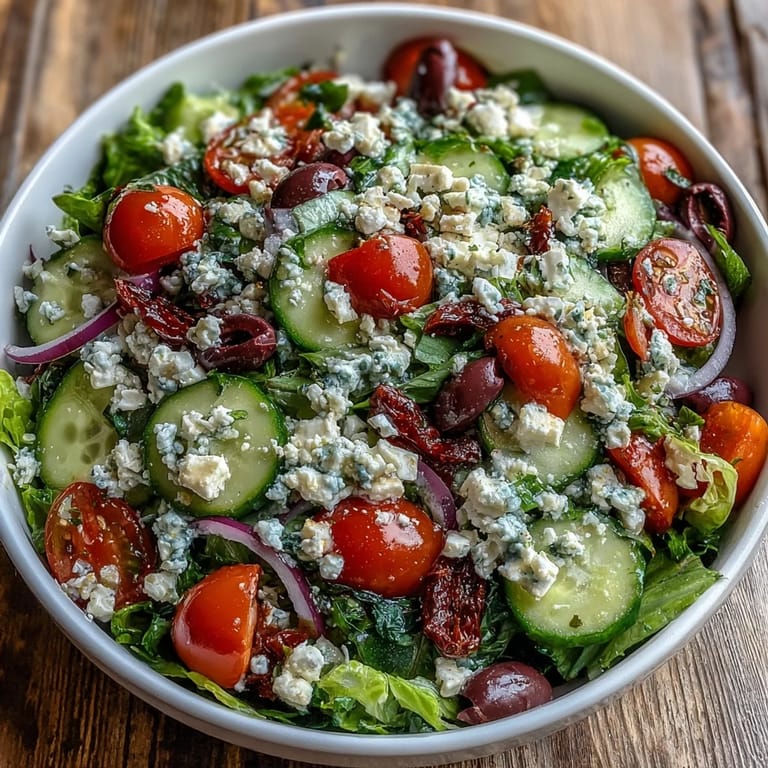
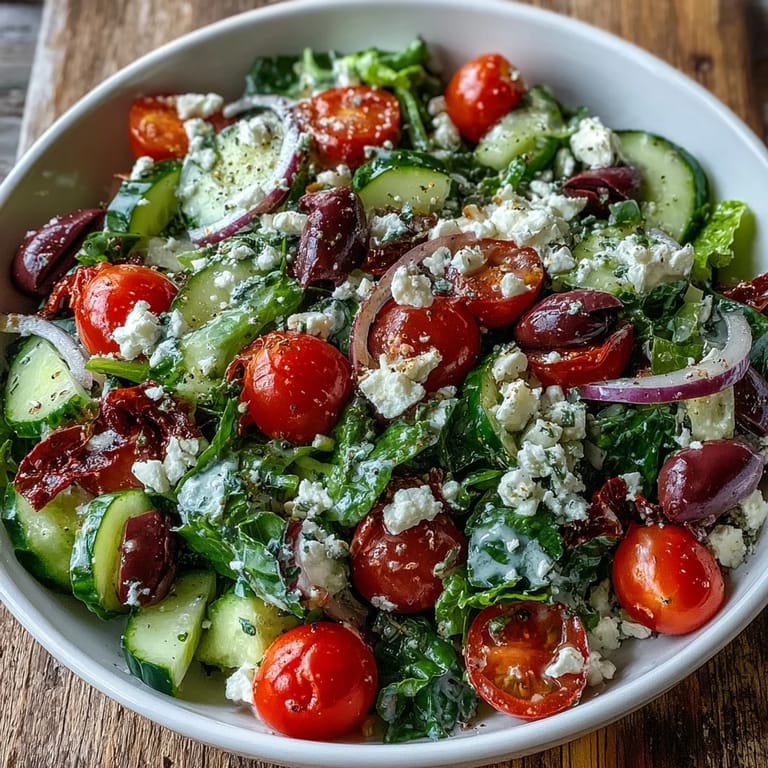
- Scatter the crumbled feta and halved olives across the vegetables, letting them nestle into the leaves. This is when the salad starts to look like itself.
- Make the vinaigrette:
- In a small jar or bowl, combine the olive oil, red wine vinegar, crushed oregano, minced garlic, Dijon mustard, salt, and pepper. Whisk vigorously for about thirty seconds until the dressing looks slightly cloudy and unified—that's the mustard doing its job.
- Dress and serve:
- Pour the vinaigrette over the salad just before eating and toss gently, using your hands if it feels right, until everything is lightly coated. Serve immediately so the lettuce stays crisp and the salad tastes like an afternoon in Greece.
 Save
Save One evening my partner came home stressed from work, and I quietly set a bowl of this salad in front of them without saying anything. They ate it in silence, and when they looked up, the tension in their shoulders had softened. Sometimes the simplest foods do the most honest work.
The Art of the Salad Bowl
There's something about assembling a salad that feels meditative when you're not rushing. The rhythm of chopping, the way colors layer together, the decision of how much onion is too much—it's a conversation between you and the ingredients. I've learned to use a bowl large enough that you're not cramming everything together, because a salad wants room to breathe before it meets the dressing.
When Less Really Is More
I once made this salad and added grilled chicken, toasted nuts, dried cranberries, and homemade croutons, thinking I was improving it. It was delicious but it stopped being this salad—it became something else entirely, something heavier. The original version taught me that sometimes a recipe whispers instead of shouts, and that's its strength.
Making It Your Own
The beauty of this salad is that it's flexible enough to bend with what you have or what you're craving. I've added thinly sliced bell peppers on weeks when they're perfect at the market, stirred in fresh dill because it was growing on my windowsill, and served it alongside grilled chicken when we needed something more substantial. The core is honest enough that it can handle gentle variations without losing its soul.
- A handful of fresh mint or dill scattered over the top just before serving adds a brightness that feels like a small celebration.
- If you make extra vinaigrette, keep it in a jar in the refrigerator and use it on roasted vegetables or drizzled over hummus and pita the next day.
- Taste the dressing before it goes on the salad—sometimes you'll want it a touch more acidic or another tiny pinch of salt, and that moment of adjustment is when cooking becomes personal.
 Save
Save This salad has become my answer to the question of what to bring to a gathering when I want to give something with my own hands. It tastes like care without trying too hard.
Recipe FAQs
- → Can I make the vinaigrette ahead of time?
Yes, prepare the vinaigrette up to a week in advance and store it in an airtight container in the refrigerator. Give it a good shake or whisk before using to recombine the ingredients.
- → What can I substitute for feta cheese?
Try dairy-free feta for a vegan option, or use crumbled goat cheese, cotija, or halloumi for different flavor profiles. Each brings unique characteristics to the bowl.
- → How do I prevent the salad from getting soggy?
Prepare the vegetables and dressing separately, then toss them together just before serving. If meal prepping, store the vinaigrette in a separate container and dress individual portions as needed.
- → Can I add protein to make it more filling?
Absolutely. Grilled chicken, shrimp, or chickpeas work beautifully. Simply prepare your chosen protein separately and arrange it on top or mix it through when assembling.
- → What type of olives work best?
Kalamata olives are traditional for their rich, briny flavor. You can also use black olives, green olives, or a Mediterranean blend depending on your taste preference.
- → How long will leftovers keep?
Store any leftovers in an airtight container in the refrigerator for up to 2 days. The vegetables will soften over time, so it's best enjoyed fresh when the texture is at its peak.